Roma Pass: Official City Card with Transportation
Unlock Rome's treasures with priority access to 45+ iconic sites. Enjoy unlimited public transport for 72 hours and save up to 40% compared to individual tickets.
From 55,57 €
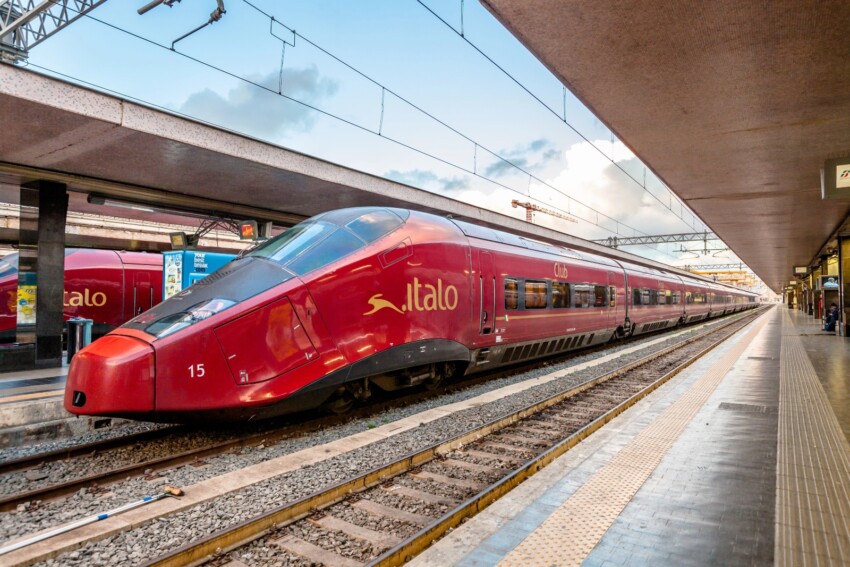
Train is one of the most convenient and sustainable ways to reach Rome, whether you’re arriving from another Italian city or travelling from abroad. The capital is one of Europe’s most important railway hubs: the High-Speed network connects it in under three hours to Italy’s main cities, whilst international connections link it with Paris, Munich, Zurich and Vienna via overnight and daytime trains. Compared to flying, train travel offers the advantage of arriving right in the heart of the city, without airport transfers and with a much lower environmental impact.
Rome has four main railway stations: Termini, Tiburtina, Ostiense and Trastevere. Each serves different lines and is located at different distances from the historic centre. Understanding the differences between these stations is essential for organising your arrival smoothly and planning onward journeys without surprises.
In this guide you’ll find everything you need to arrive in Rome by train: the stations, connections from Italian cities and abroad, tips for buying tickets at the best price, and practical information for reaching the centre once you step off the train. For those keen to explore Rome and the surrounding areas with maximum freedom, it may also be helpful to consult our guide to car hire and transport in Rome.
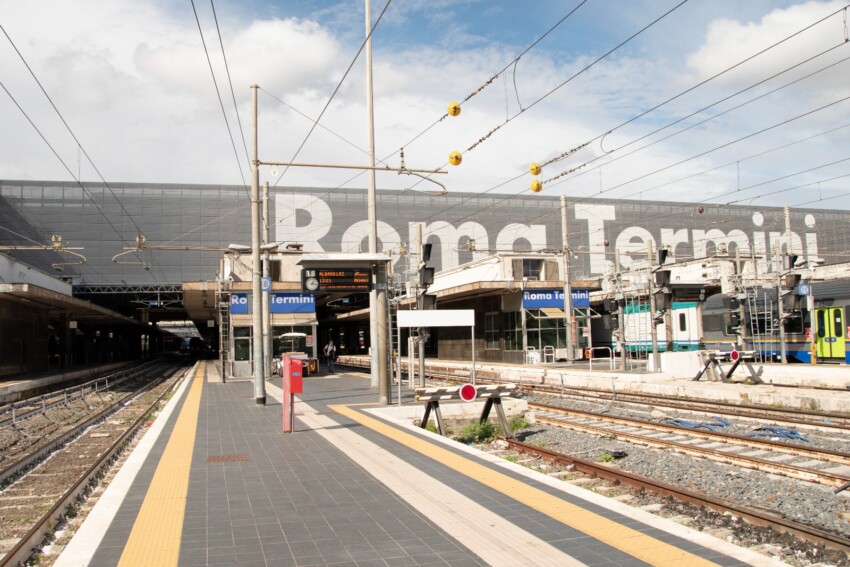
Roma Termini is the city’s main station and one of Europe’s largest railway hubs, with over 150 million passengers annually. Located in the Esquilino district, it’s about 2 kilometres from the Colosseum and less than 3 kilometres from Piazza Navona. Practically all long-distance trains — Frecciarossa, Frecciargento, Frecciabianca, Intercity and international trains — stop here. The station is equipped with shops, restaurants, supermarket, pharmacy, currency exchange offices and left-luggage facilities. Below the station you’ll find metro lines A and B, which connect Termini with almost all the city’s tourist areas.
It’s worth noting that the area around Termini, especially in the evening, requires the normal vigilance you’d exercise at any major international station: pickpockets and persistent street vendors are present especially in the evenings. Keep your luggage in sight and be wary of anyone offering to help with your suitcases without being asked. Just outside the station you’ll find official taxis (white, with metres) in the square in front: this is the most convenient option for reaching your accommodation with luggage.
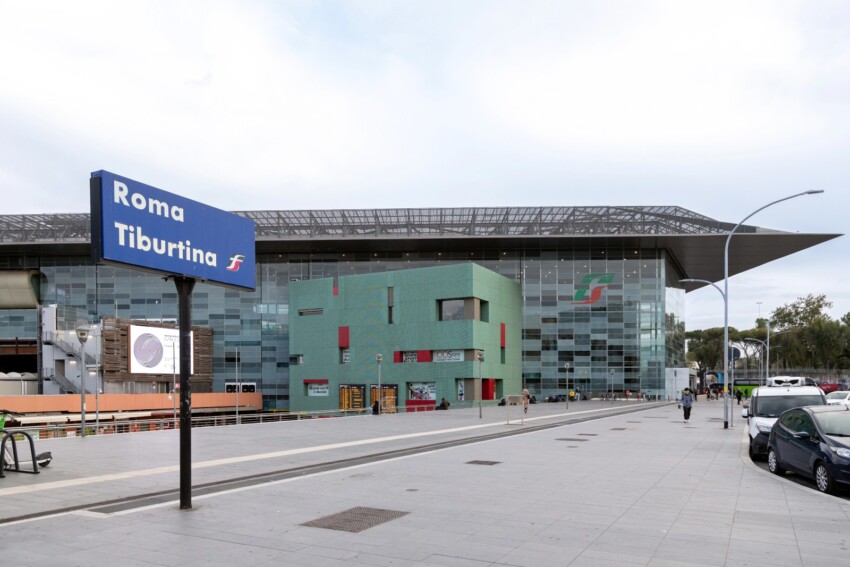
Roma Tiburtina is the second most important station and in recent years has taken on an increasingly significant role as a high-speed stop. Located in the Tiburtino district, about 4 kilometres from the centre, it’s served by metro line B (Bologna stop, with a change at Termini). Many Frecciarossa and Frecciargento trains from Milan, Turin, Bologna and Naples stop at both Termini and Tiburtina: if your accommodation is in Rome’s north-east area (Parioli, Nomentano, university district), getting off at Tiburtina may be more convenient than continuing to Termini.
The station was completely renovated in 2011 according to a design by architect Paolo Desideri and offers all essential services. The overnight night buses connecting Rome to Italy’s main cities depart and arrive almost entirely from Tiburtina, making it the reference point for those travelling with long-distance bus services such as FlixBus and BlaBlaCar Bus.
Roma Ostiense is a medium-sized station in the district of the same name, about 2 kilometres from the Circus Maximus. It mainly serves regional trains to southern Lazio and the line to Ostia Antica and the Roman coast. It’s the departure point for those wanting to reach Ostia by train: the Rome-Lido railway departs from Ostiense and takes about 30 minutes to reach the sea. Some international overnight trains stop here.
Roma Trastevere is the station in the district of the same name, about 2 kilometres from Piazza Navona. It serves regional trains to north-western Lazio and the line to Viterbo (FL3 railway). It’s not a high-speed station but can be convenient for those staying in the Trastevere, Gianicolo or Prati districts. It’s accessible by tram line 8 from the historic centre.
The Milan-Rome connection is Italy’s busiest railway route and one of Europe’s most efficient. Trenitalia’s Frecciarossa trains cover approximately 570 kilometres in 2 hours and 55 minutes (in the fastest version, with only three stops), whilst Frecciargento trains take about 3 hours and 20 minutes. Departures are very frequent: during peak daytime hours there are trains every 15-20 minutes. Italo, the private operator, offers the same route with comparable times and often competitive fares.
Departures are from Milano Centrale and arrival is at Roma Termini, with intermediate stops at Milano Rogoredo, Bologna Centrale, Firenze Santa Maria Novella and sometimes Roma Tiburtina. Prices vary considerably based on how far in advance you book and the class: from around €19-25 for promotional second-class tickets purchased well in advance to €90-120 for first-class tickets purchased on the day. Booking at least two weeks ahead almost always guarantees excellent savings.
The train from Naples to Rome is the most sensible choice compared to driving or flying: Frecciarossa trains connect Napoli Centrale to Roma Termini in just 1 hour and 10 minutes, with departures every 20-30 minutes during peak hours. Promotional fares start from around €9-15 in second class. Intercity trains also cover the route in about 2 hours with reasonable prices and no additional booking requirement.
Those arriving from the Amalfi Coast, Salerno or Calabria can take a regional train to Napoli Centrale and then change to the high-speed service to Rome. From Salerno, Frecciarossa trains take about 2 hours to reach Rome. From Reggio Calabria, direct Intercity Notte trains reach Roma Termini in about 7-8 hours: a convenient option for those who prefer to travel overnight.
The Florence-Rome route is very short with high-speed trains: Frecciarossa trains cover the 260 kilometres from Firenze Santa Maria Novella to Roma Termini in 1 hour and 27 minutes. Departures are very frequent — almost every 15 minutes during central hours — and promotional fares start from around €9-19. Firenze Campo di Marte serves some Frecciargento trains that don’t stop at Santa Maria Novella. Those coming from southern Tuscany (Siena, Grosseto) can use regional trains to Florence or to Chiusi, where they can catch the high-speed train to Rome.
From Bologna Centrale Frecciarossa takes about 2 hours and 5 minutes to Roma Termini. Bologna is northern Italy’s railway hub: those coming from Turin, Venice, Verona, Padua, Trieste or the Romagna region almost always pass through Bologna to catch the high-speed train to Rome. From Venezia Santa Lucia the direct journey takes about 3 hours and 45 minutes. From Torino Porta Nuova the journey takes about 4 hours and 20 minutes with a direct Frecciarossa.
Those arriving from Bari and Puglia have Frecciarossa and Frecciargento trains available on the Adriatic line: the journey from Bari Centrale takes about 3 hours and 50 minutes. From Reggio Calabria and Sicily (via Villa San Giovanni and ferry) journey times are longer, but Intercity overnight trains allow you to travel while sleeping and arrive in Rome early in the morning.
For those moving within the region, Trenitalia regional trains connect Rome to Lazio’s main cities at very reasonable fares. From Viterbo you reach Roma Ostiense in about 1 hour and 45 minutes by regional railway FL3. From Latina regional trains reach Roma Termini in about 1 hour. From Frosinone the journey takes about 1 hour and 10 minutes. From Civitavecchia, the main cruise port on the Tyrrhenian coast, regional trains reach Rome in about 1 hour and 20 minutes.
The most convenient Paris-Rome rail connection is the Thello/Intercity Notte, an overnight train departing from Gare de Lyon in the late afternoon and arriving at Roma Termini the following morning after approximately 14-15 hours of travel, with stops in Turin, Genoa, Pisa and Florence. It’s available in couchettes (6 seats per compartment) or in sleeping cars with double or single cabins. The advantage of an overnight train is clear: you save a night’s hotel and arrive refreshed in the morning. Alternatively, you can travel during the day by changing in Turin or Milan.
From Paris by daytime train the quickest combination involves the TGV Inouï from Gare de Lyon to Torino Porta Susa (about 3 hours and 30 minutes), then Frecciarossa from Turin to Roma Termini (about 4 hours and 20 minutes), for a total of just under 8 hours with one change. The entire route has reasonable frequency during peak seasons.
The Austrian Railways Nightjet overnight train (ÖBB) connects Munich to Roma Termini with evening departure and morning arrival, passing through Innsbruck, Verona and Bologna. The journey takes about 11-12 hours. The same service is available from Vienna and Zurich with slightly different routes. Nightjet trains offer seated accommodation, couchettes and private sleeping compartments, the latter being particularly appreciated for comfort similar to a miniature hotel room.
For those who prefer daytime travel, the Munich-Verona combination (Eurocity, about 4 hours) plus Verona-Roma Termini (Frecciarossa, about 3 hours) allows you to reach Rome in one day with one change. From Frankfurt you can take an ICE to Munich or Basel, then continue with Italian connections. Fares vary greatly: book on DB Bahn or ÖBB Nightjet for a complete overview of options.
There is no direct rail connection between Spain and Rome. The most convenient route involves an AVE from Madrid or Barcelona to Marseille or Nice, then a regional or Intercity train along the Riviera coast to Genoa or Milan, and finally high-speed service to Rome. The total journey from Barcelona requires about 11-13 hours with two or three changes. An alternative is to take a low-cost flight to Nice or Marseille and continue by train, or consider a direct flight.
From Roma Termini the centre is reachable in several ways. The metro is the quickest solution: line A goes directly to Piazza di Spagna (2 stops), Piazza del Popolo (Flaminio stop, 3 stops) and Vatican City (Ottaviano stop, 4 stops); line B connects Termini to the Colosseum in just one stop. A single ticket costs €1.50 and is valid for 100 minutes on all urban public transport. Consult the guide to Rome’s transport for full details on lines and fares.
Official white taxis are stationed in the square in front of Termini and have metres: a ride to the historic centre typically costs €10-15. Avoid unlicensed taxi drivers who approach you inside the station. The ItTaxi and FREE NOW apps let you call official taxis with an estimated fare given in advance. For those travelling without heavy luggage, several e-scooter and e-bike services (Lime, Tier, Bird) are available just outside the station.
From Roma Tiburtina metro line B (Bologna stop) reaches Termini in two stops, with frequencies of about 5-7 minutes during central hours. The journey takes less than 5 minutes. Numerous surface bus lines connect Tiburtina to districts in the city’s eastern and northern quadrants. Taxis are stationed in the area in front of the station.
High-speed train tickets can be purchased online on the Trenitalia and Italo Treno websites, as well as at automated ticket machines and counters in stations. Booking in advance is the safest way to find the lowest fares: both operators use dynamic revenue management, so prices increase as the train fills up and the departure date approaches.
Trenitalia’s promotional fares (Super Economy, Economy) are non-refundable and non-changeable, whilst Base and Flex fares allow changes and refunds with variable penalties. Italo offers a similar structure with Low Cost, Economy and Flex categories. For regional trains, a ticket doesn’t require a reservation and can be purchased at the automated machines in the station up to a few minutes before departure: the price is fixed and doesn’t increase as the date approaches.
Remember that regional train tickets must be validated (stamped) before boarding, using the designated yellow machines in the station. High-speed trains don’t require validation: the booking code or digital QR code is sufficient. Travelling without a valid ticket or without validation incurs heavy fines: ticket inspectors are frequent and make no exceptions.
Roma Termini is the main station, with the highest number of incoming and outgoing trains and the best connection with the urban public transport network (Metro A, Metro B, buses). Almost all long-distance trains stop here.
Yes, Roma Termini is located in the Esquilino district, about 2 kilometres from the Colosseum and less than 3 kilometres from Piazza Navona. By metro, you can reach Piazza di Spagna in 4 minutes and the Colosseum in 2 minutes.
Yes, at both self-service automated ticket machines and staffed counters. However, for high-speed trains, it’s always worth booking online in advance to find the most attractive promotional fares.
Regional train tickets must be validated in the yellow machines before boarding. High-speed train tickets (Frecciarossa, Frecciargento, Italo) don’t require validation: your booking number is sufficient.
Yes, Roma Termini has the Kipoint luggage storage service near platform 24, open every day with extended hours. The cost is approximately €6 for the first 5 hours and €1 for each additional hour. Similar services are also available at Roma Tiburtina.
For those travelling from Italian cities such as Milan, Florence, Naples or Bologna, the train is generally more convenient than flying when you factor in airport transfer times, security checks and boarding procedures. For those arriving from abroad from destinations not served by direct rail connections, flying remains often the most practical choice, although international overnight trains offer a sustainable and comfortable alternative.
City Card allow you to save on public transport and / or on the entrances to the main tourist attractions.
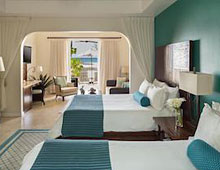 Hotel
Hotel 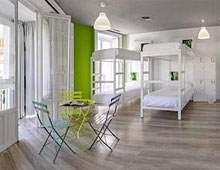 Budget accommodations
  Apartments
  Family Hotel
 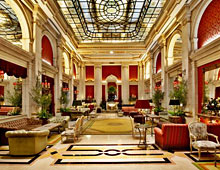 Luxury Hotel
  Resorts