Catacombs of Saint Callixtus: Guided Tour
1.451 reviews
There are catacombs all over Rome. The Catacombs of St.
Buy now
From 15,00€ per person
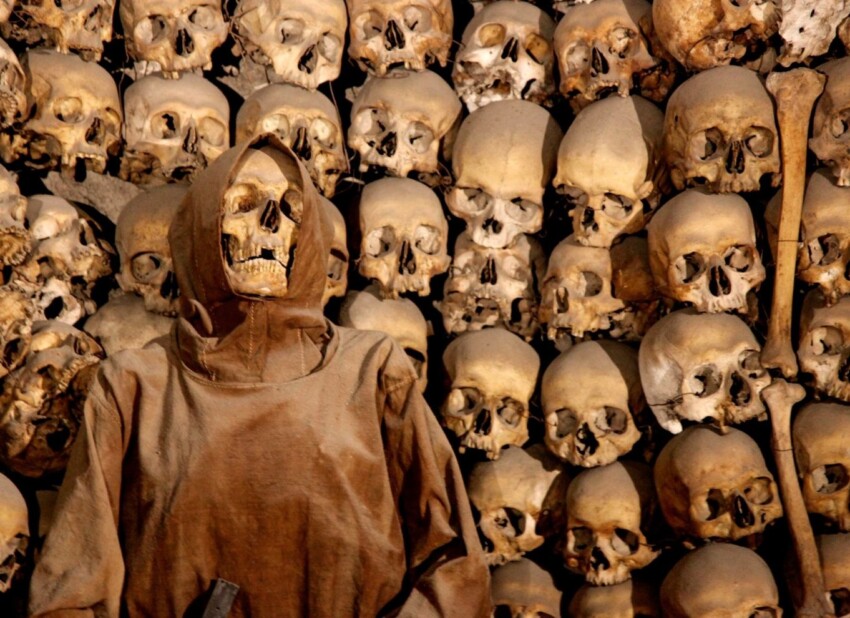
From the 2nd century onwards, Rome saw the creation of several underground cemetery areas, established by both the Jewish and Christian communities. These are the catacombs, essentially a series of galleries carved into rock, laid out across multiple levels and dedicated to burial and interment.
There are countless numbers scattered throughout the city, with over 50 in total, forming a network of more than 150 kilometres of galleries. Many of them are closed to the public or inaccessible, whilst others can be visited by appointment or for research purposes. Some, however, are regularly open to visitors, accessible to the public via an entrance ticket.
Among these, which naturally represent the category of interest to tourists, worth noting are the Catacomb of Domitilla, the Catacombs of San Callisto, the Catacombs of Sebastiano, the Catacombs of Saints Marcellino and Pietro, the Catacomb of Sant’Agnese, the Catacombs of San Pancrazio and the Catacombs of Priscilla.
The catacombs of Rome have a broadly similar structure to one another: they are galleries carved into tufa with loculi – burial niches – opening out from the walls on either side. Sometimes there are also private areas, the so-called cubicula, reserved for the burial of wealthy families. Very often, the cubicula are decorated with frescoes and mosaics to emphasise the family’s affluence.
The Jewish catacombs, on the other hand, often feature oven-style tombs, known as kokhim.
Alongside this, Rome is also home to several hypogea, the pagan equivalent of catacombs. They are generally smaller in extent and are known as “private hypogea” as they were usually built by private citizens rather than religious institutions.
Among the catacombs of Rome, those of San Callisto are certainly the most famous and visited. They were indeed the official cemetery of the Church of Rome during the 3rd century; over 500,000 people were buried here in total, along with dozens of martyrs and 16 popes.
Among the main attractions of the Catacomb of San Callisto, we would highlight the Crypt of the Popes, where 9 popes and 8 bishops of the 3rd century were buried, the Crypt of Santa Cecilia, where you can admire a beautiful statue dating back to 1599, and the region of Pope Miltiades, excavated in the second half of the 3rd century, with galleries and cubicula decorated with Christian and religious symbols.
Managed by the Salesians of Don Bosco since 1930, the Catacombs of San Callisto are located on via Appia Antica, between the Church of Quo Vadis and the Basilica of San Sebastiano. You can reach them by metro line A to San Giovanni in Laterano station, then continuing by bus 218 towards Ardeatina until the Fosse Ardeatine stop. Alternatively, take metro line A to Arco di Travertino station and continue by bus 660 to the Appia Pignatelli/Appia Antica stop.
The Catacombs of San Callisto are closed on Wednesdays; on other days of the week they are open from 9.00am to 12.00pm and from 2.00pm to 5.00pm. The ticket office closes 10 minutes before closing time. Entry is only permitted in groups of a minimum of 2 people, accompanied by a guide; the last guided visit of the morning begins at 12.00pm, whilst the last afternoon visit begins at 5.00pm. The catacombs remain closed on New Year’s Day, Christmas and Easter.
Entrance tickets can be purchased directly at the site entrance or online, which is very convenient for avoiding queues at the ticket office. Reduced rates are available for young people aged 7 to 16, student groups and priests, whilst children up to 6 years old, disabled visitors and tour guides are entitled to free admission.
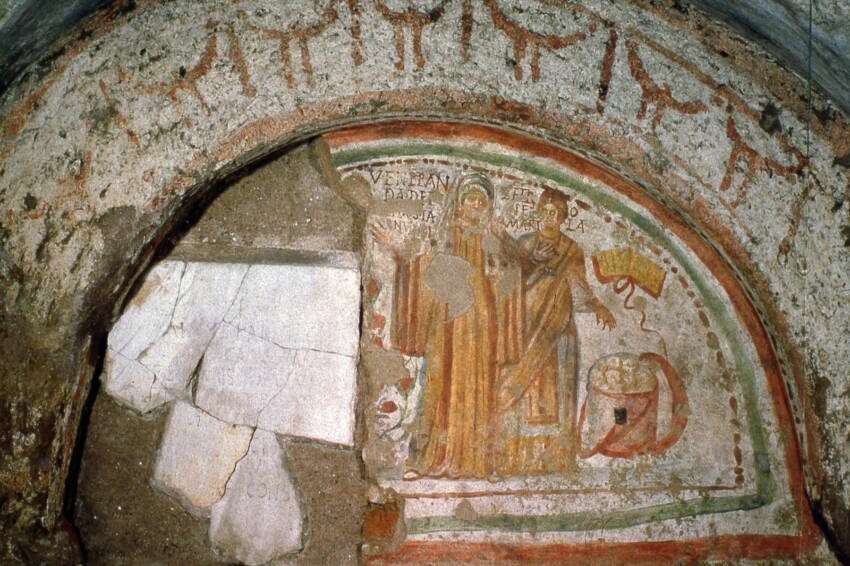
The Catacombs of Domitilla are located on via Ardeatina, in the district of the same name situated south of the city. To be precise, they are situated within the ancient praedium Domitillae, and to this day the origin of its name remains unclear, as in antiquity there were two female figures named Domitilla of sufficient importance to “merit” a catacomb.
A distinctive feature of the Catacombs of Domitilla is that it houses both Christian and pagan burials. The size of the area is considerable, and it also preserves the remains of the martyrs Nereus and Achilleo, who lived in the 5th–6th century AD. Today, the Catacombs of Domitilla are managed by the Divine Word Missionaries, a religious congregation founded in 1875 by Father Arnold Janssen.
The Catacombs of Domitilla are open Monday to Sunday from 9.00am to 12.00pm and from 2.00pm to 5.00pm. The entrance ticket includes a guided tour. The last guided visit begins 20 minutes before closing time, both in the morning and afternoon.
By reservation, it is also possible to celebrate the Eucharist, or to organise services and ecumenical liturgies in the basilica or in the chapels directly within the catacomb. The basilica is able to accommodate approximately 500 people in total.
Along via Appia Antica, in the Ardeatino district, the Catacombs of San Sebastiano extend, one of the few Christian cemeteries that has remained continuously accessible, although one of the four levels that make up the structure has been almost completely destroyed.
Three Christian martyrs are buried here: San Sebastiano, from whom the structure takes its name although little is known about him, Quirinus, the bishop of Pannonia, and Eutychius, the latter almost completely unknown.
The excavations that led to the rediscovery of the Catacombs of San Sebastiano were carried out between the late 19th and early 20th centuries, as the area was originally an abandoned quarry. Above the Catacombs of San Sebastiano, a basilica was built, the Basilica of San Sebastiano fuori le mura (St Sebastian’s Basilica Outside the Walls), which is worth visiting for its Baroque style and for its interior decorated with works of sacred art.
On via Casilina, at the third milestone of the ancient via Labicana, lie the Catacombs of Saints Marcellino and Pietro, also known as the Catacombs of Sant’Elena or the Catacombs of San Tiburzio.
Dating back to the first years after Christ’s death, they are accessed from the Church of Saints Marcellino and Pietro ad Duas Lauros. This, together with the ancient mausoleum of Helena and the cemetery of the Equites Singulares, forms a single complex called Ad Duas Lauros, meaning “at the two laurels”.
The catacombs extend for 18,000 square metres at a depth of 16 metres, and it is estimated that in the 3rd century alone they housed over 15,000 underground burials, in addition to several thousand burials at ground level. The latest discovery at the catacombs occurred only in 2006, when a series of previously unexplored rooms came to light, rich in frescoes, and also a mass grave where over 1,200 bodies rest, presumably those who died simultaneously, perhaps from a plague epidemic.
The definitive restoration of the Catacombs of Saints Marcellino and Pietro took place in 2014, thanks to funding from Azerbaijan; since then the area has been regularly open to visitors. To access the site, you must make a reservation by emailing santimarcellinoepietro@gmail.com or by calling +39-3396528887.
There are 4 visiting slots: at 10:00, 11:00, 3:00pm and 4:00pm. The site is open every day of the week except Thursday; it remains closed throughout the month of August. The entrance ticket also includes a guided tour of the catacombs, lasting approximately 35 minutes.
You can reach the Catacombs of Saints Marcellino and Pietro by ATAC train heading towards Centocelle, getting off at Berardi station. From Termini station, bus 105 also departs, heading towards Centocelle, getting off at Berardi stop. From Tiburtina station, you need to take bus 409, heading towards Arco di Travertino, getting off at Torpignattara stop. From here you can reach the catacombs by walking for about 10 minutes along via Casilina.
At the second milestone of via Nomentana, in the Trieste district, lie the Catacombs of Sant’Agnese. They form part of the monumental complex of Sant’Agnese fuori le mura, and take their name from the only martyr buried here since the 3rd century AD, when she was just 12 years old.
The Catacombs of Sant’Agnese extend across three levels and are divided into four zones, known as regiones. The first is the oldest and is located beneath the current via Sant’Agnese, the second and third developed around the 4th century, whilst the fourth was built after Emperor Constantine constructed his basilica. It is here that the oldest inscription in the catacomb is found, dating back to 314 AD.
The Catacombs of Sant’Agnese are open Tuesday to Saturday from 10.00am to 1.00pm and from 3.00pm to 6.00pm. They remain closed on Mondays, Wednesday afternoons, Sundays, New Year’s Day, Easter, Ferragosto (15 August), Christmas and the mornings of religious holidays.
Advance booking is recommended, and the maximum number of people allowed per visiting slot is 20. For groups, booking is mandatory. The tour is guided, in Italian and English, lasts 30 minutes and is conducted by Sant’Agnese’s official guides.
The Catacombs of Sant’Agnese can be reached via metro line B, alighting at Sant’Agnese/Annibaliano station.
The Catacombs of Priscilla are located opposite Villa Ada, along via Salaria. Carved into tufa from the 2nd to the 5th century, they extend underground for 13 kilometres. Due to the many martyrs buried here, the structure earned the name “Queen of the Catacombs”. The remains of 7 popes are also found here.
They are 35 metres deep and are arranged across 3 levels. There are over 40,000 people buried here in total, all from the period before the 5th century, when they were abandoned and subsequently plundered.
Today the entrance is located at the Priscilla Catacombs House, home to the Benedictine Sisters of Priscilla, who care for the site. Among the most interesting areas to visit, we would highlight:
To visit the Catacombs of Priscilla it is mandatory to book in advance. They are open Tuesday to Sunday, and visits are always guided. There are three daily visiting slots in Italian at 9.30am, 11.20am and 3.30pm, as well as 4 daily slots in English and one daily slot in Spanish.
The Catacomb of San Pancrazio, or of Ottavilla, is located in the Gianicolense district, in Piazza San Pancrazio, beneath the basilica of the same name. Here lie the remains of the martyr San Pancrazio, greatly venerated especially during the Middle Ages.
The catacomb’s condition is far from ideal, with many galleries severely damaged and inaccessible, and visits allow exploration of only a small part. Among the accessible areas, the most interesting are the cubicula of Botrys, San Felice and Santa Sofia, which are decorated and particularly interesting from a historical perspective.
Visits to the Catacomb of San Pancrazio are by reservation only; they can be visited exclusively in small groups of a maximum of 6 people, and visits are held on Tuesdays at 9.30am, 10.30am and 11.30am, on Wednesdays at 9.30am, 10.30am, 11.30am, 4.30pm and 5.30pm, and on Thursdays at 9.30am, 10.30am and 11.30am. Visits are free of charge but monetary donations or donations of food are welcome.
To make a reservation, you should contact the secretariat of the San Pancrazio parish at the email address segreteria@sanpancrazio.org or by telephone on +39-065810458.
In the following map you can see the location of the main places of interest mentioned in this article.
Whichever catacombs you plan to visit, bear in mind that the tour route is very often conducted entirely underground, in conditions of poor lighting. For this reason, they are not recommended for those who suffer from claustrophobia or who are easily distressed.
Temperatures within the catacomb galleries remain virtually constant throughout the year, hovering around 16 degrees. We therefore recommend bringing a jumper or scarf even in summer, as the temperature contrast with the hot weather outside could cause discomfort. The environment is also highly humid.
Unfortunately, the catacombs are not accessible by wheelchair, owing to the narrow passageways and insurmountable architectural barriers. For this reason, a visit is also inadvisable for those with mobility difficulties.
City Card allow you to save on public transport and / or on the entrances to the main tourist attractions.
 Hotel
Hotel  Budget accommodations
  Apartments
  Family Hotel
  Luxury Hotel
  Resorts