Bestseller
Rome: Bioparco di Roma Zoological Garden Entry Ticket
From 22,00 €
Buy the ticket
Set within the stunning grounds of Villa Borghese, north of Rome’s historic centre, you’ll find the city’s zoo, now known as BioParco. The facility was established in 1911 with the visionary thinking of Carl Hagenbeck, who came up with the innovative idea of replacing traditional cages with moats. It was subsequently expanded and renovated during the 1930s, largely thanks to the work of architect Raffaele De Vico.
After a period of decline caused mainly by the two world wars, Rome’s zoo was revived from the 1950s onwards, eventually transforming into BioParco in 1998, with its current Foundation established in 2004.
BioParco di Roma is far more than a simple animal museum without purpose; it’s a facility dedicated to the survival of species threatened with extinction, education in biodiversity, and scientific research. Within BioParco, species such as tigers, lions and penguins are protected from the threat of extinction, all at the centre of international projects focused on biodiversity conservation. BioParco is also a member of EAZA (European Association of Zoos and Aquaria) and WAZA (World Association of Zoos and Aquariums), and participates in captive breeding programmes alongside other international zoos.
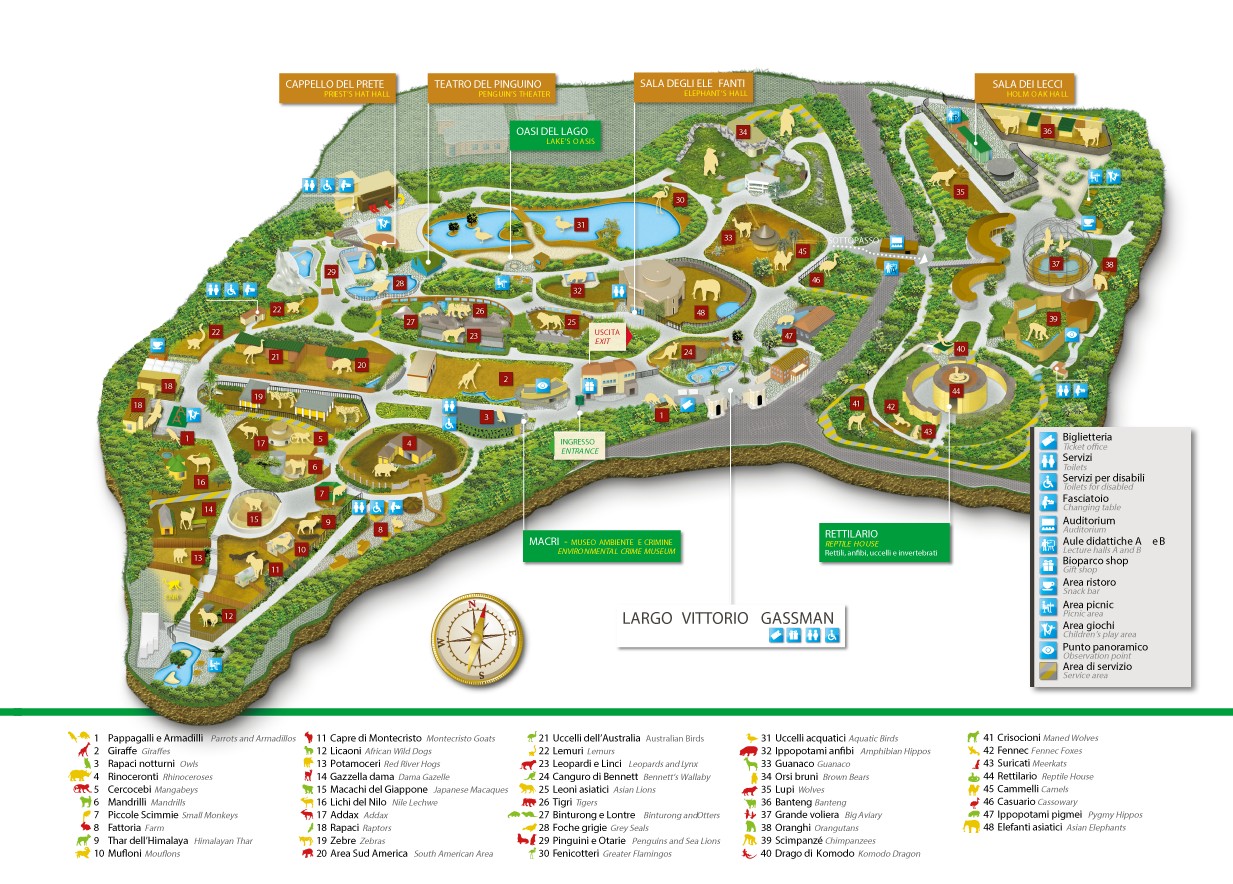
BioParco di Roma is divided into 16 themed areas, each housing a particular animal species. Each area also features an educational section, where you can learn more about the habitats in which the species live, as well as the animals themselves.
The park’s newest area is home to seals, or sea lions, which only opened in July 2021. Two sea lions live here, one male and one female: Boomer, born in 2016, and Samantha, born in 2017.
Located in the blue area, dedicated to marine life, the seal zone features a large, deep pool that allows for multiple viewing points, including underwater observation. There is also an educational section dedicated to marine biology and the species.
The white rhinoceros area opened in October 2019 and covers an impressive 2,600 square metres. It’s essentially a large circular enclosure where the African savanna has been recreated to better replicate the rhinoceroses’ natural habitat. There is also a large mud pool for their baths, which are essential for skin health and regulating the temperature of their large bodies.
Within the white rhinoceros area there is also an educational zone, where interactive installations highlight the most important characteristics of this curious species. The potential threats posed by humans and conservation projects are also highlighted.
The African penguin area spans 400 square metres and recreates the natural environment of this magnificent species from South Africa. Natural rocks and a mix of gravel and plants, all sourced from South Africa, have been installed.
Additionally, African penguins can dive and swim within the large pool, whilst visitors enjoy a spectacular underwater view through a glass panel.
From an educational perspective, the African penguin area features interactive installations and displays that highlight the species’ main characteristics.
Opened in June 2015, the Sumatran tiger area covers 1,000 square metres and is one of the original park zones, dating back to its opening in 1911. The total area has now more than doubled and recreates the natural habitat of these magnificent tigers, which face a high risk of extinction.
Within it are chestnut and bamboo trunks, and a spacious lawn with seeds scattered in a mosaic pattern. There’s also a pool where the large tigers can immerse themselves and cool off.
The area is completed with an educational zone featuring interactive displays and activities to learn more about this beautiful feline, which can only be seen in Italy at BioParco di Roma.
These curious nocturnal birds are housed in a dedicated zone at BioParco di Roma, called the owl area and divided into two sections, one for snowy owls and the other for eagle owls. Entry to the area is through an iconic gateway topped with a striking photo mural of a flying eagle owl, measuring approximately 19 metres long and 3 metres high.
Neither the snowy owl nor the eagle owl are species at risk of extinction, though they can potentially be endangered by humans, through accidental impacts with power lines, aircraft, habitat destruction and persecution.
In 2014, the orangutan area was opened at BioParco di Roma, featuring a large outdoor space of 320 square metres with a height of 6 metres, allowing the large primates to swing from tree to tree. The outdoor space is connected to a second indoor area via an aerial walkway standing 14 metres high; visitors can admire these fascinating mammals up close through an enormous glass panel measuring 15 metres.
The orangutan area is equipped with trees, trunks, ropes, wooden platforms and is accompanied by an educational zone where you can learn about the tropical rainforest habitat and potential threats to the species.
Komodo is an island in Indonesia known as the native habitat of Komodo dragons, enormous lizards reaching up to 3 metres in length and weighing up to 90kg. Within BioParco di Roma, an area dedicated to them has been set up, outside the reptile house, spanning over 200 square metres.
It wasn’t until 2009 that the bite of Komodo dragons was discovered to be potentially fatal to humans, as these enormous reptiles are equipped with lethal venom glands.
BioParco di Roma is the only facility in Italy where you can observe the Komodo dragon, an endangered species whose population has been reduced to just 3,000 individuals in the wild, plus only a few dozen in zoos scattered around the world.
Over an area of 450 square metres, BioParco di Roma has created a zone housing Emperor tamarins, Oedipus tamarins and Pygmy marmosets, three of the world’s smallest monkey species.
The area was created with the support of the Ministry of Environment and Protection of Land and Sea, at the forefront of the fight against illegal wildlife trade, the main threat to these species.
Opened in 1935, the reptile house is one of BioParco di Roma’s oldest structures, though it has undergone several changes throughout its history, most recently in 2004, when it was transformed into a massive 4,000 square metre area spread across three levels.
Today, the reptile house is not just a living museum, but also a conservation centre for reptiles, amphibians and invertebrates, designed to raise public awareness about illegal wildlife trade: in fact, over 98% of the species on display come from seizures or confiscations.
The reptile house also features a section dedicated to education, created with the support of the Ministry of Environment and Protection of Land and Sea.
Another of BioParco di Roma’s oldest structures is the great aviary, created in 1935 by architect De Vico. It’s a large stainless steel structure with a geodetic design, which allows birds to fly without interruption.
Today, this important part of the park has been completely renovated, and within it a humid environment has been created to simulate a stopover place for European migratory birds. Among the area’s most characteristic birds are the purple swamphen, the white pelican and the sacred ibis.
Overall, the great aviary has a diameter of 30 metres and a circumference of almost 100. It’s over 20 metres high and has a total weight of 14,000 kg.
The area of BioParco di Roma that houses the bears is called the “bear valley“. It’s an area that has been richly furnished, incorporating all the main elements of this large and fearsome species’ natural habitat, such as a waterfall, a stream and a large pool surrounded by natural rocks.
The bears can be observed from 7 different viewing points, two of which are large glass panels, which also allow underwater viewing. Within the bear area is an educational trail that reproduces a bear’s den at full size, where you can see how a mother bear nurses and sleeps with her cub.
In 2001, the chimpanzee village was opened at BioParco di Roma, a large area of almost 2,500 square metres with a gentle slope, viewable from below like an amphitheatre.
The chimpanzees are free to roam and enjoy features such as a veil waterfall, a stream, as well as trees, trunks, vines and ropes, and can rest in their night shelter, which guarantees them maximum wellbeing.
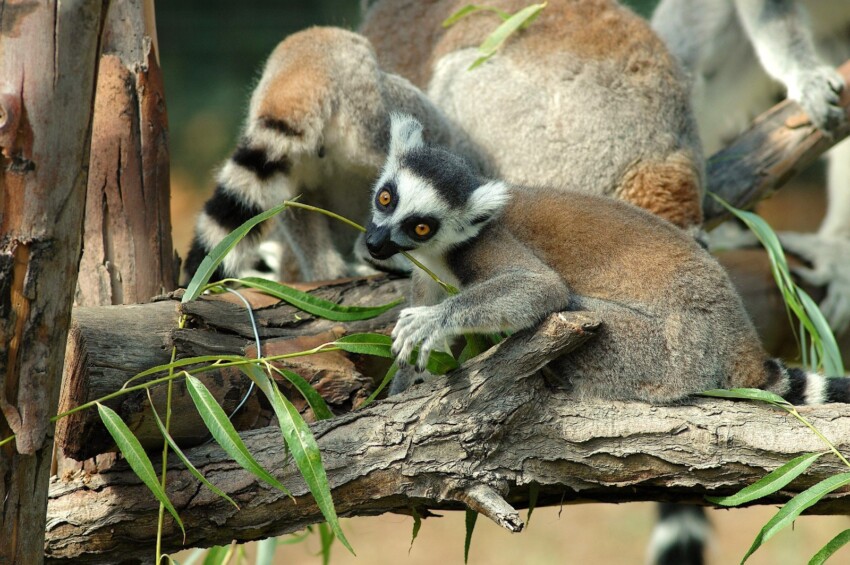
Native to Madagascar, ring-tailed lemurs are instantly recognisable thanks to their distinctive black and white striped tails. At BioParco di Roma, they reside in their dedicated area, which spans 600 square metres created by removing bars and introducing large glass panels.
Their natural habitat has been recreated within, namely the forests of Madagascar, carefully illustrated through numerous explanatory panels. The main threats facing this species are also explained, namely habitat degradation, illegal trade and poaching for meat.
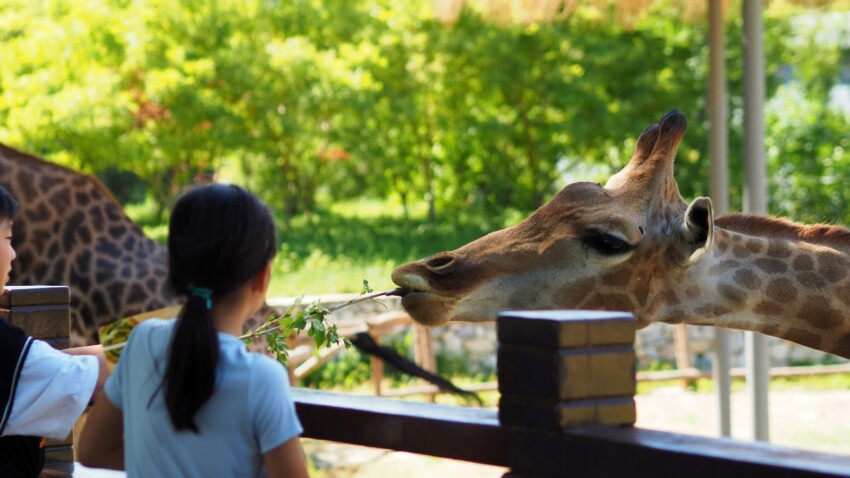
Among the animals most beloved by BioParco visitors are undoubtedly the giraffes! They live in an area of 1,700 square metres, created in 1926 in Moorish style and reworked in subsequent years, eventually taking its current form only in 2002.
Among the numerous interventions that have taken place over the years, the most significant is certainly the removal of moats, replaced with landscaped water features, which are far less intrusive. There are a total of 3 viewpoints from which to admire the giraffes, two inside and one along the main avenue.
In the lake oasis you’ll find the main relaxation area of BioParco di Roma. Overall, the zone covers 1,200 square metres and comprises an artificial lake, a picnic area, an outdoor play area and two multi-purpose structures.
These are the Priest’s hat, a semicircular structure built by architect Raffaele De Vico, and the Penguin theatre, created from the conversion of the old penguin enclosure, where theatrical performances, temporary exhibitions and entertainment-educational activities are now held.
Built at the beginning of Rome’s zoo history in 1911, the Asian lion area was completely restored in 2001, expanded fourfold and the moat was removed. Additionally, a palm garden was created and an area out of public view where the animals can relax in complete privacy.
The felines can be observed by the public in complete safety, thanks to two large glass panels measuring 45 millimetres thick, and there are also interactive educational panels designed to provide information about the Asian lion’s life and natural habitat.
There are various price bands for the entrance ticket: full price, concessions, groups and disabled visitors. It’s also possible to purchase a last-minute promotional ticket at a special price at the ticket office two hours before the park closes.
Entrance to the park is free for children under one metre in height and visitors with 100% disability rating.
Purchasing at the ticket office is more expensive than buying online, and if you purchase your ticket online in advance by 30, 45 or 60 days, you’re entitled to increasingly larger discounts.
Normally tickets are for a specific date, but an open ticket is also available, both full price and concession, valid for 6 months from the date of purchase and usable on any weekday or weekend.
Annual or six-monthly passes are also available, likewise in various price bands, which allow unlimited access during the relevant period, no queuing at the ticket office, 10% discount at the park’s official shop and a complimentary ticket for MagicLand, the amusement park in Valmontone.
BioParco di Roma is open year-round except on Christmas Day, with the following hours:
The ticket offices close and the last admission occurs one hour before the park’s closing time. For animal welfare reasons, the reptile house and feline area close 60 minutes before the park closes, the chimpanzee area 45 minutes before, and the giraffe, bear, elephant and rhinoceros areas 30 minutes before.
The BioParco di Roma is located at Viale del Giardino Zoologico 1, within Villa Borghese park, occupying the entire northern section.
You can reach it by public transport: take tram line 19 and get off at the BioParco stop, or use buses 3, 52, 53, 926, 217, 360 and 910 (the latter operates only on Saturdays, Sundays and public holidays).
The underground is not recommended: the nearest station is Flaminio on line A, but it’s at the southern edge of Villa Borghese, meaning you’d need to walk through the entire gardens to reach the BioParco, or use the paid shuttle train.
Whilst in the park, it’s essential to follow some simple rules for the animals’ wellbeing. Firstly, you’re not allowed to feed them, as they follow a carefully balanced diet. Additionally, you cannot cross the enclosures, disturb them with loud noises or shouting, or throw objects at them.
Dogs and other animals are not permitted inside the BioParco, with the exception of guide dogs. You’re also not allowed to bring in balloons, balls, skateboards, bicycles, scooters or roller skates.
For families with small children, please note that you cannot bring pushchairs onto the shuttle train, nor can you enter the reptile house with them. In both cases, you may leave them in the unsupervised car park.
Finally, the park has no left-luggage facilities or food storage lockers.
City Card allow you to save on public transport and / or on the entrances to the main tourist attractions.
 Hotel
Hotel  Budget accommodations
  Apartments
  Family Hotel
  Luxury Hotel
  Resorts