Bestseller
Rome: Altar of the Fatherland Elevator & Museum Entry Ticket
From 36,00 €
Buy the ticket
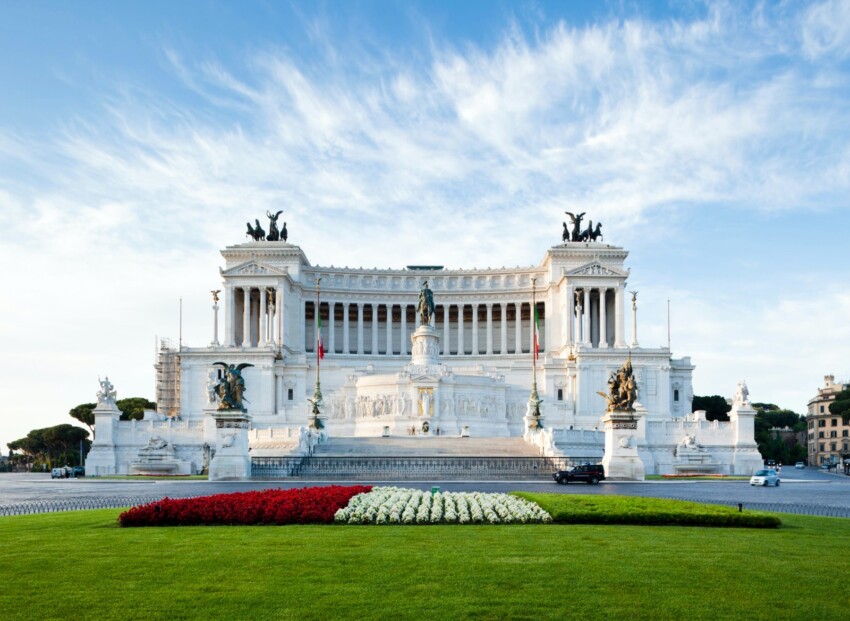
Piazza Venezia is a large square located south of central Rome, roughly halfway between the Colosseum and the Pantheon. While it sits just outside the pedestrianised historic centre, once you arrive you’ll be greeted by a truly stunning setting. The southern side of Piazza Venezia is dominated by the Vittoriano, the national monument to Victor Emmanuel II, also known as the Altar of the Fatherland.
But that’s not all: Piazza Venezia is also home to several elegant palaces, including Palazzo Venezia, which houses an important museum. The Vittoriano and Palazzo Venezia with its museum are managed by VIVE, an institute created by the Ministry of Culture that became operational on 2 November 2020 and enjoys scientific, financial, accounting and organisational autonomy. The entire complex of buildings, monuments and museums managed by VIVE also includes the Central Museum of the Risorgimento, the Imperial Forums Wing and the library of archaeology and art history.
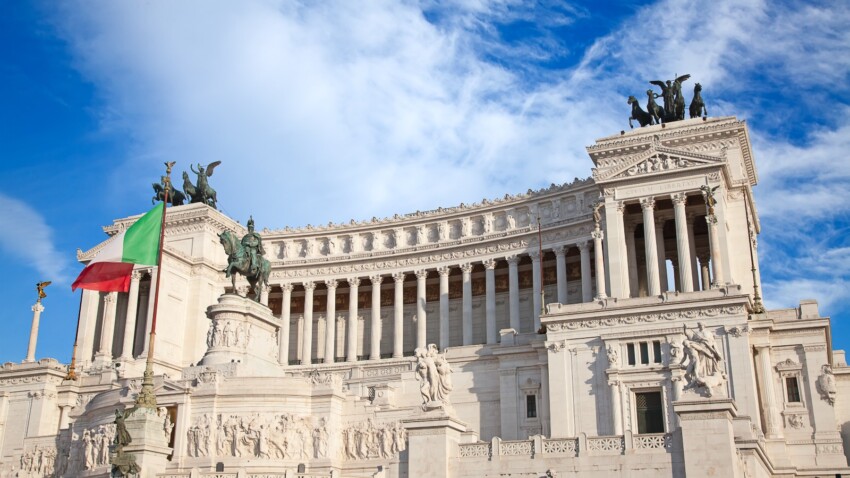
The Vittoriano is undoubtedly the most important building – from a tourist perspective – in Piazza Venezia. This enormous monument is often incorrectly referred to as the Altar of the Fatherland, but in fact the Altar is only part of the entire monument, albeit the most prominent part.
The Vittoriano stands on the southern side of the square and was constructed between the late 19th and early 20th centuries according to designs by architect Giuseppe Sacconi. Its dimensions are truly staggering: it stands 70 metres high, extends 130 metres back and spans 135 metres across, covering almost 18,000 square metres of ground space with a total walkable surface area exceeding 700,000 square metres.
To access the Vittoriano, you must climb an impressive entrance staircase measuring 40 metres wide, which leads to the monument’s main section, the Altar of the Fatherland. The principal entrance to the Altar is through a large colonnade featuring 15-metre-high columns arranged along a portico stretching over 70 metres in length. Since 2007, visitors have been able to ascend to the terrace using either a lift or by climbing the nearly 200 steps. Inside and out, the Vittoriano is rich in symbols and allegories reflecting Italy’s recent history, from the monarchy through fascism to the establishment of the Republic.
The inauguration took place in 1911, though the monument was not yet complete, coinciding with the fiftieth anniversary of Italian unification. The Vittoriano is one of six Italian national symbols (the others being the tricolour, the Mameli hymn, the national emblem, the presidential standard and the 2 June celebration), and it is here that Italy celebrates the liberation anniversary on 25 April, Republic Day on 2 June, and the Day of National Unity and the Armed Forces on 4 November each year. During these celebrations, the President and senior state officials pay tribute to the Unknown Soldier by laying a laurel wreath.
Throughout its history, the Vittoriano has thus embodied two diametrically opposed meanings: at the time of its construction, it was intended to represent the grandeur of the monarchy and as a tribute to Victor Emmanuel II, whereas today it stands as a symbol of the Republic.
Facing the Vittoriano stands a magnificent statue depicting King Victor Emmanuel II on horseback. Created by Enrico Chiaradia and Emilio Gallori between the late 19th and early 20th centuries, it was cast in bronze from metal melted down from cannons belonging to the Royal Army. On the marble base are 14 statues representing personifications of Italian cities.
On the external base of the Vittoriano are the so-called fountains of the two seas, one dedicated to the Adriatic Sea and the other to the Tyrrhenian Sea – the two seas that surround Italy – giving the impression that the monumental complex represents the whole nation. They were constructed using an ingenious hydraulic system that recycles the water. In the underground chambers, a cistern still exists today containing half a million litres of water, now inactive but once supplying the two fountains.
To the right of the Adriatic fountain are the remains of the tomb of Gaius Publius Bibulus, dating from ancient Rome.
The term Unknown Soldier in Italy refers to all soldiers who lost their lives during the First World War and could never be identified. Therefore, the tomb of the Unknown Soldier is a metaphorical burial place where relatives of all fallen soldiers can find solace.
At the Vittoriano, the tomb of the Unknown Soldier is located directly beneath the statue of the goddess Roma, housed within a shrine – a small religious building. It was inaugurated in 1921, when the remains of a soldier were brought here from Aquileia, and subsequently, with the advent of fascism, it became one of Mussolini’s propaganda symbols. Today, in the Republic, the Unknown Soldier represents an apolitical symbol of Italian national unity and our shared identity.
The tomb of the Unknown Soldier at the Altar of the Fatherland is always guarded by two military personnel, from different armed forces, who alternate hourly with a 4-hour rest period.
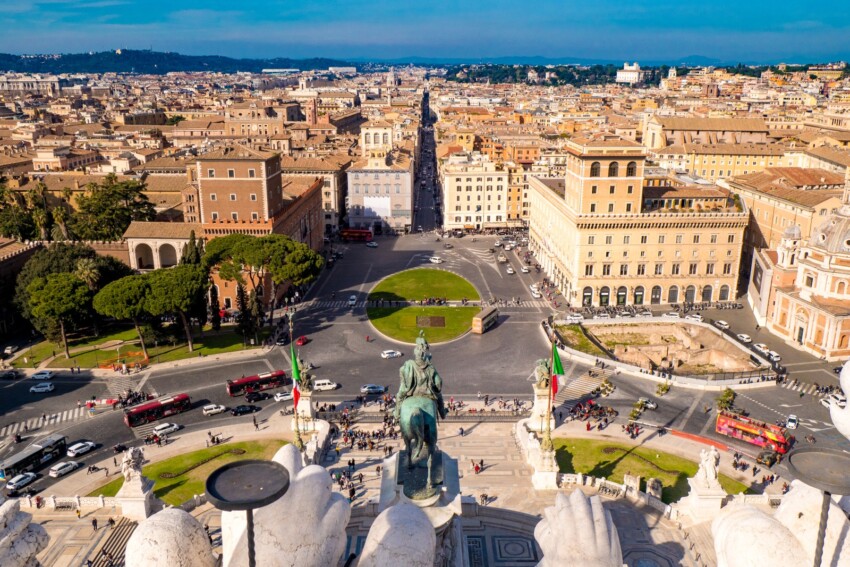
Piazza Venezia, largely thanks to the Vittoriano on its southern side, is an unmissable destination during any visit to Rome. Yet its significance extends beyond the Vittoriano: the other three sides are surrounded by three monumental palaces – Palazzo Venezia, dating from the fifteenth century, Palazzo Bonaparte and the Palazzo delle Assicurazioni Generali.
The square is also an important traffic junction, as five major roads radiate from here. Of these, the most ancient is Via del Corso, running northwards, whose route dates back to 220 BC when it formed part of the Via Flaminia.
The name Piazza Venezia derives from the fifteenth-century palace built on the square by Cardinal Pietro Barbo, which, a century later, was donated by Pope Pius IV to the Republic of Venice, which established its embassy here. The palace thus took the name Palazzo Venezia, and the square assumed its present name.
The Central Museum of the Risorgimento at the Vittoriano is located within a monumental space created beneath the portico of the Altar of the Fatherland. Entry is from the left side of the Vittoriano, climbing a staircase on Via San Pietro in Carcere.
The museum, opened only in 1970, showcases Italian history from the late 18th century through the First World War. You’ll find paintings, sculptures, artefacts, drawings and engravings, as well as numerous documents in the form of letters, diaries and manuscripts.
The museum also includes the sacrarium of flags, a museum of the Italian armed forces that preserves the battle flags of disbanded units, military institutions and units belonging to the state’s armed forces.
Among the numerous works on display are paintings by Beato Angelico, Giotto, Vasari and Gian Lorenzo Bernini. There are also approximately 3,000 works from the Wurts collection, donated to the Italian state by the married couple George Washington Wurts and Henrietta Tower upon their death.
Palazzo Venezia served for centuries as the residence of popes and cardinals, and later became the seat of the embassy of the Republic of Venice in Rome. Today visitors can explore both the interior, with the rooms of the National Museum of Palazzo Venezia, and the exterior, where you’ll find the Great Garden.
Entrance to the Great Garden is free, while the museum rooms are accessible with a paid ticket – a combined ticket that also includes the Vittoriano terrace and the Risorgimento museum.
Among the highlights at Palazzo Venezia are the Barbo Apartment, which housed the rooms of the building’s original owner, the Benedictions Loggia, offering an unmissable view of the Vittoriano, and the magnificent Sala del Mappamondo (Hall of the World Map), with lavish decorations on the floor, walls and ceiling. Other splendid rooms include the Sala Regia, the Cibo Apartment, the Hall of Battles, and numerous internal courtyards with magnificent views.
The Great Garden deserves special mention – the palace’s ancient courtyard, which in the 19th century was transformed into a garden embellished with numerous plant varieties, including 4 palms that rank among Rome’s tallest today. The portico leading from the garden into the palace is particularly fine, built in classical style, as is the 18th-century fountain at the garden’s centre, depicting Venice as the Bride of the Sea.
Entrance to the Vittoriano and the Great Garden of Palazzo Venezia is free, while entry to the panoramic terrace, the Central Museum of the Risorgimento and the National Museum of Palazzo Venezia requires payment. For these areas, you can purchase a combined ticket valid for 7 days, which permits a single visit to each of the three areas. On the first Sunday of the month, when admission is free, the ticket is valid only for the day of issue.
There are three types of ticket: the standard ticket, one with accessible activities included, and one with educational activities included for adults and families led by specialist museum educators, which take place on Saturdays, Sundays and public holidays. Reductions are available for those aged 18 to 25, whilst those under 18 and disabled visitors enjoy free entry.
Visitors should present themselves 15 minutes before each session at the ticket office at Palazzo Venezia, located at Via del Plebiscito 118. For any further information, you can contact the booking centre on (+39)-0632810960 or by email at vi-ve.prenotazioni@cultura.gov.it
The Vittoriano and Palazzo Venezia are open daily except 25 December, from 9.30 to 19.30, with last admission at 18.45. Access to Palazzo Venezia is from Via del Plebiscito 118 or Piazza San Marco 49, whilst access to the Vittoriano is from the entrance on Piazza Venezia.
Also in Piazza Venezia is the library of archaeology and art history, accessible to all students aged 19 and over, or anyone aged 18 or over who is attending university.
Below are some helpful hints for visiting the Vittoriano.
The monumental complex offers visitors a range of services:
At the Vittoriano and Palazzo Venezia, touching the displayed artworks, crossing barriers or consuming food and drinks outside the café-restaurant on the terrace is not permitted. Smoking is prohibited and sitting outside designated areas is not allowed.
Photography is permitted freely, unless a sign expressly forbids it.
Piazza Venezia is very centrally located, so you’re likely to reach it on foot during your Rome visit.
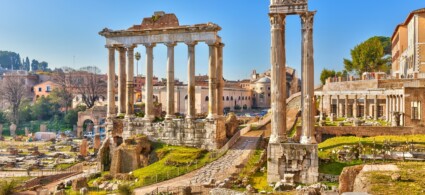
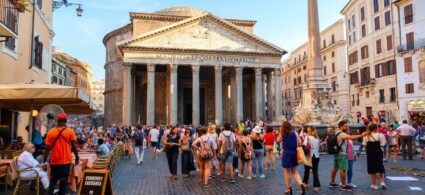
It’s just a 20-minute walk from Termini Station, heading along Via Cavour and Via Panisperna, while from the Colosseum you can comfortably walk there in 12 minutes along Via dei Fori Imperiali, where you’ll also enjoy a wonderful view of the entire Roman Forum. You can also easily reach Piazza Venezia from the Pantheon by walking less than a kilometre south along Via del Seminario and then turning left onto Via del Corso.
If you’re staying outside the city centre and want to reach Piazza Venezia, the nearest underground station is Colosseum on Line B, or if Line A is more convenient for you, we recommend getting off at Barberini station and walking for about 15 minutes heading south, crossing the entire Trevi district.
Several bus routes serve Piazza Venezia, including lines 80, 46, 51, 85, 87 and 118. The two stops are located on opposite sides of the Vittoriano, along Via dei Fori Imperiali and at Piazza San Marco.
City Card allow you to save on public transport and / or on the entrances to the main tourist attractions.
 Hotel
Hotel  Budget accommodations
  Apartments
  Family Hotel
  Luxury Hotel
  Resorts