Hidden Rome: a Guide to the Secret Spots and Curiosities of the City
Discover Rome's hidden curiosities, the secret and unusual places of the Capital: from the keyhole of the Priory to the underground chambers of San Clemente, passing through the Mouth of Truth.
Rome is far more than the Colosseum, the Imperial Fora and the Trevi Fountain. Beyond the famous monuments that draw millions of visitors each year, the Eternal City holds an extraordinary collection of secret places, hidden details and curiosities that escape the conventional tourist trail. These lesser-known corners tell fascinating stories and offer fresh perspectives on the city eternal.
From churches with surprising optical effects to secret gardens, from hidden passageways to forgotten archaeological treasures, Rome reveals its most authentic soul to those who know where to look. Many of these places are either free or charge only a nominal fee, yet they remain virtually empty even during peak season.
In this article, we take you on a journey to discover over ten Roman curiosities that will transform your visit into an unforgettable experience. Places where time seems to have stopped, corners that hold millennia-old secrets and unexpected perspectives that will change the way you see the city.
Prepare to explore an unusual Rome, far from the crowds and brimming with surprises. From keyholes framing perfect panoramas to perspective illusions that challenge perception, every curiosity we present has been chosen for its unique value and ability to astonish even the most seasoned visitors.
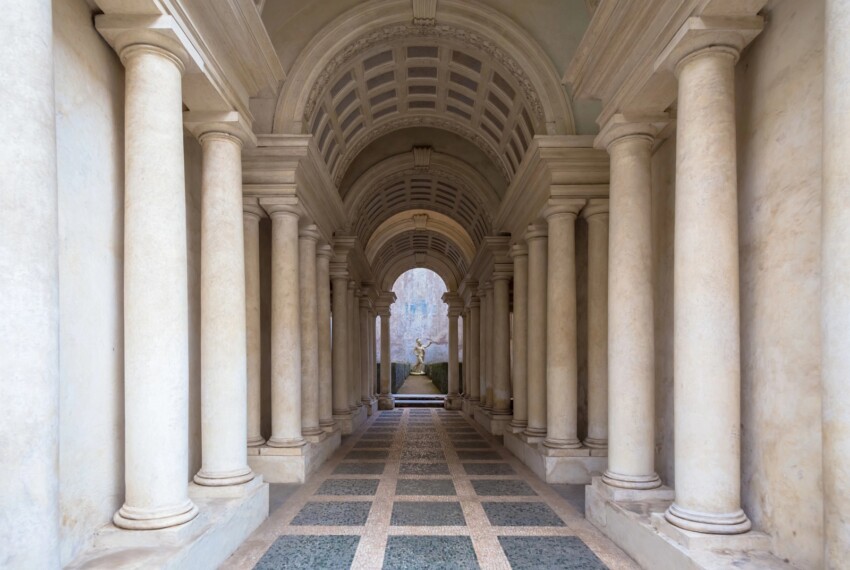
In the heart of the Regola district, Palazzo Spada houses one of the most ingenious masterpieces of Roman Baroque: the Perspective Gallery designed by Francesco Borromini in 1652. This architectural marvel exploits a perfect optical illusion to create a surprising spatial effect.
The corridor actually measures just 8.82 metres, yet the forced perspective created through the progressive narrowing of the floor, ceiling and columns makes it appear to stretch for almost 40 metres. The statue you see at the end, seemingly life-sized, is actually only 60 centimetres tall. The effect is so perfect that even after understanding it rationally, your eye continues to be deceived.
Borromini calculated with millimetre precision the floor’s inclination (rising 2.5 degrees), the reduction of the columns (from 1.40 to 0.80 metres) and the decreasing distance between the arcades. The result is an experience that challenges perception and demonstrates the mathematical and artistic mastery of the great Baroque architect.
The palace also houses the Spada Gallery, featuring works by Guido Reni, Guercino and Artemisia Gentileschi. The palazzo is located just a few steps from Campo de’ Fiori and is open Wednesday to Sunday from 8:30 to 19:30.
2Piazza dei Cavalieri di Malta, 4, 00153 Roma RM, Italy
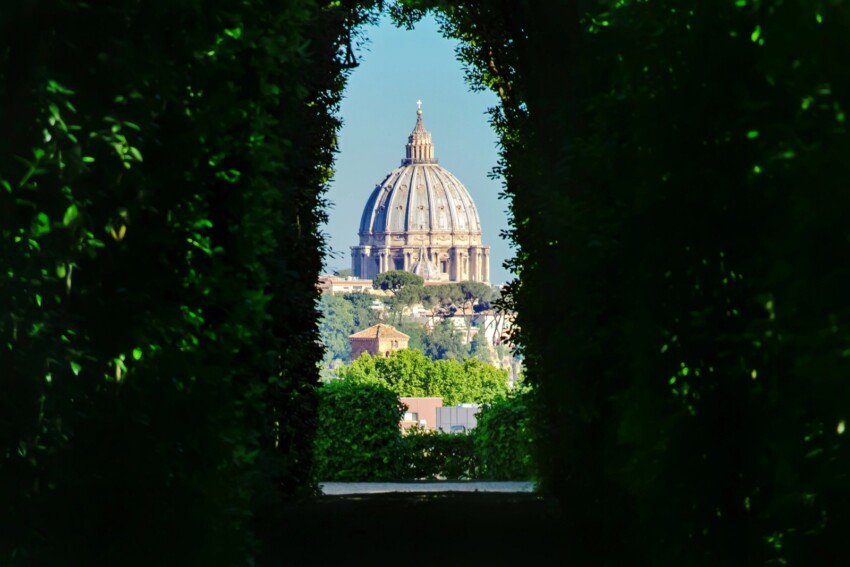
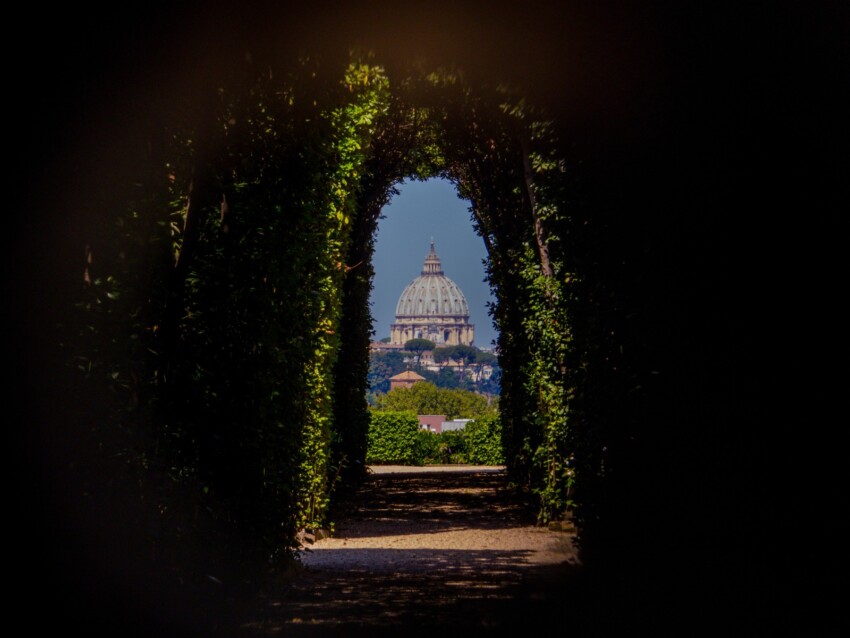
On the Aventine Hill, in Piazza dei Cavalieri di Malta, you’ll find one of Rome’s most original viewpoints. Through the keyhole of the green door of the Priory of Malta you can admire a perfect perspective framing the dome of St Peter’s Basilica, bordered by a tree-lined avenue.
This view is no accident but the result of intentional planning by architect Giovanni Battista Piranesi in 1765. The garden vegetation was arranged to create a green tunnel that guides your gaze directly towards the symbol of Christianity, more than three kilometres away.
The effect is particularly magical at sunset, when golden light illuminates the Michelangelesque dome. The curiosity has become so popular that you’ll often find a small queue, but the wait is absolutely worth it. Visiting this spot is completely free and accessible at any time.
The Priory belongs to the Sovereign Military Order of Malta, one of the world’s oldest religious orders, and enjoys extraterritoriality. The garden interiors are open to the public only on rare special occasions, making the keyhole the only way for most visitors to catch a glimpse of this exclusive place.
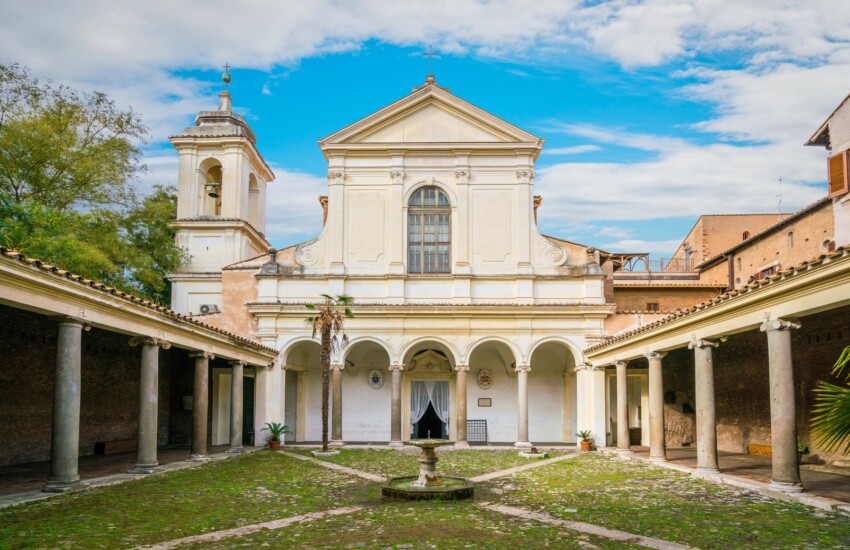
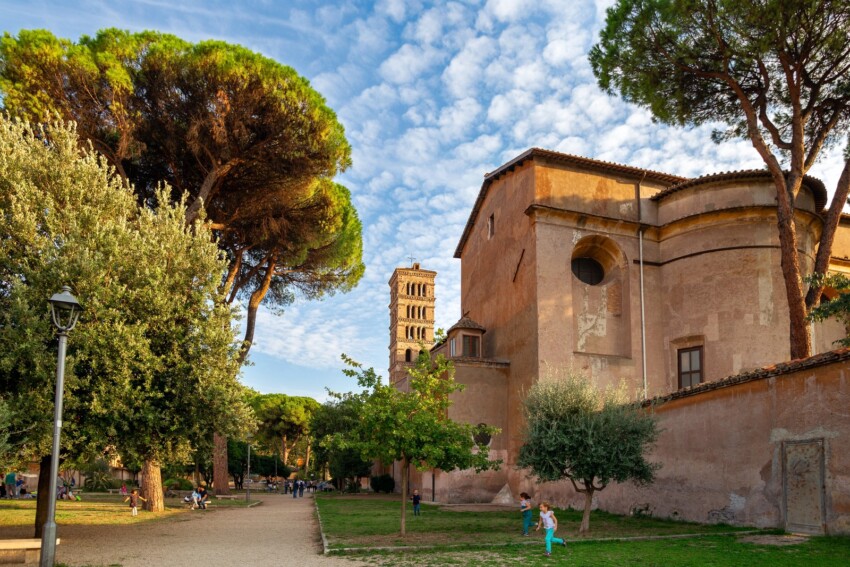
The Basilica of San Clemente, situated between the Colosseum and San Giovanni in Laterano, is an extraordinary example of Roman historical layering. What you see on the surface is merely the last of three levels that tell 2,000 years of history, from the 1st century AD to the 12th century.
The current 12th-century basilica features magnificent gilded mosaics in the apse depicting the Triumph of the Cross. Descending to the lower level, you’ll reach a 4th-century Early Christian basilica with frescoes narrating the life of San Clemente. But the real surprise awaits as you venture even deeper underground.
At the second underground level, 12 metres below street level, lie the remains of 1st-century Roman buildings: an insula (residential building) and a mithraeum, a temple dedicated to the Persian god Mitra. In the mithraeum you can still see the altar with the relief depicting Mitra slaying the bull, surrounded by zodiac symbols. The atmosphere is evocative, with the sound of water flowing through an ancient underground channel.
The visit lasts approximately 45 minutes. The excavations are open Monday to Saturday from 9:00 to 12:30 and 15:00 to 18:00, and on Sunday from 12:15 to 18:00. It’s advisable to visit the basilica during less crowded hours to fully enjoy the experience.
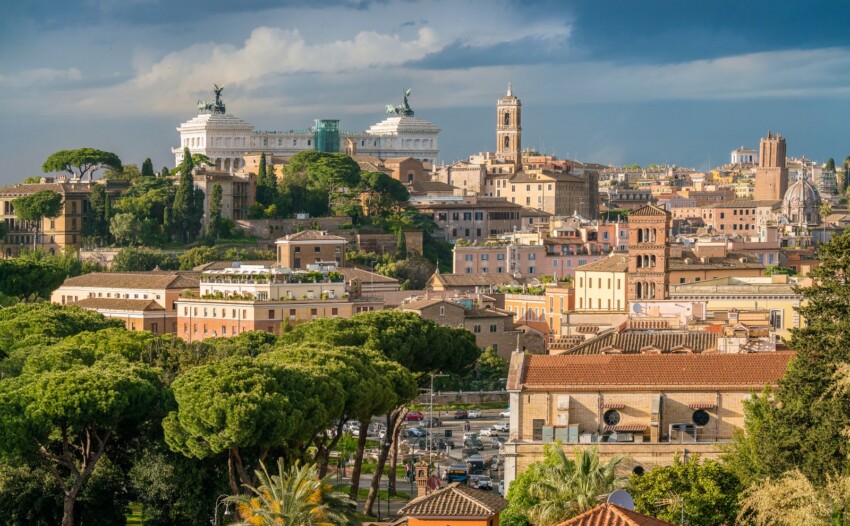
Savello Park, commonly known as the Orange Garden, is an oasis of peace on the Aventine that offers one of Rome’s most romantic views. This fortified garden, created from a medieval fortification by the Savelli family, is home to bitter orange trees that perfume the air in spring.
The terrace affords an unparalleled view of the city: in the foreground the Tiber with Tiber Island and the Trastevere quarter, then the domes of Roman churches dotting the skyline, culminating in the dome of St Peter’s dominating the horizon. The best time to visit is at sunset, when the light casts golden hues across rooftops and domes.
The garden is free and open from dawn to dusk (hours vary seasonally: 7:00 in summer, 7:30 in winter). It’s particularly beloved by couples for its romantic atmosphere, and equally popular with families with children seeking tranquillity away from tourist chaos.
Its strategic location makes it perfect for combining multiple visits: after peeking through the keyhole of the Priory of Malta (100 metres away), you can relax in the garden before heading down to the Circus Maximus or up to the Basilica of Santa Sabina, one of Rome’s finest examples of Early Christian architecture.
Casina delle Civette at Villa Torlonia
5Villa Torlonia, Via Nomentana, 70, 00161 Roma RM, Italy
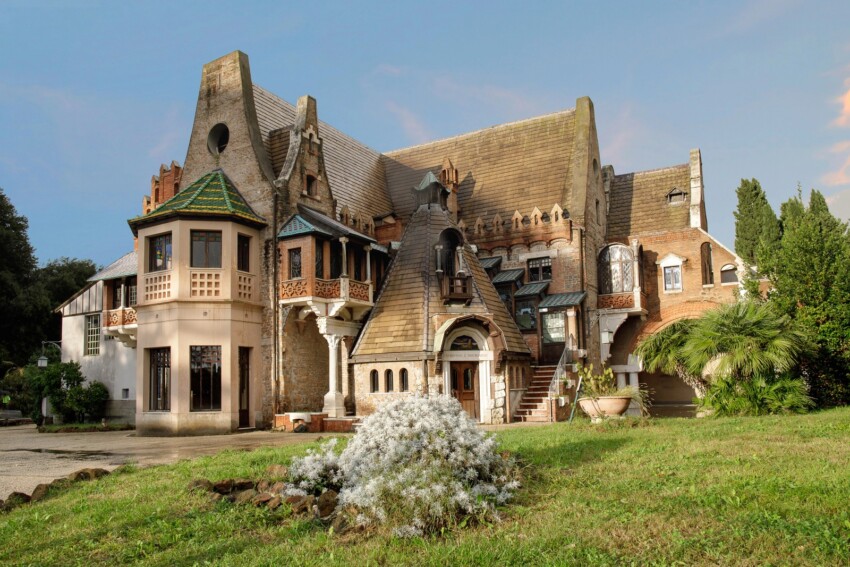
The Casina delle Civette, hidden within Villa Torlonia‘s grounds, is one of Rome’s most enchanting and lesser-known buildings. This Art Nouveau residence was transformed by Prince Giovanni Torlonia Jr. between 1916 and 1920 into a fairytale retreat decorated with over 300 square metres of stained glass.
The name derives from the recurring owl motif, an esoteric symbol dear to the prince, adorning the stained glass, majolica and wrought iron. The artistic stained-glass windows, created by masters Cambellotti, D’Achiardi and Gallinari, represent a masterpiece of Italian Art Nouveau. Each room has a different theme: from swallows to butterflies, from parrots to roses.
The building displays eclectic architecture blending medieval, Gothic and Art Nouveau elements: small towers, loggias, wooden colonnades and ceramic decorations create a fairytale cottage atmosphere. The interior preserves original furnishings, polychrome stuccos and majolica floors bearing witness to the refined taste of the era.
The museum is open Tuesday to Sunday from 9:00 to 19:00 (last entry 18:30). Admission also includes a visit to the Casino Nobile. Villa Torlonia is located on Via Nomentana and is easily reached by underground (Policlinico station, line B).
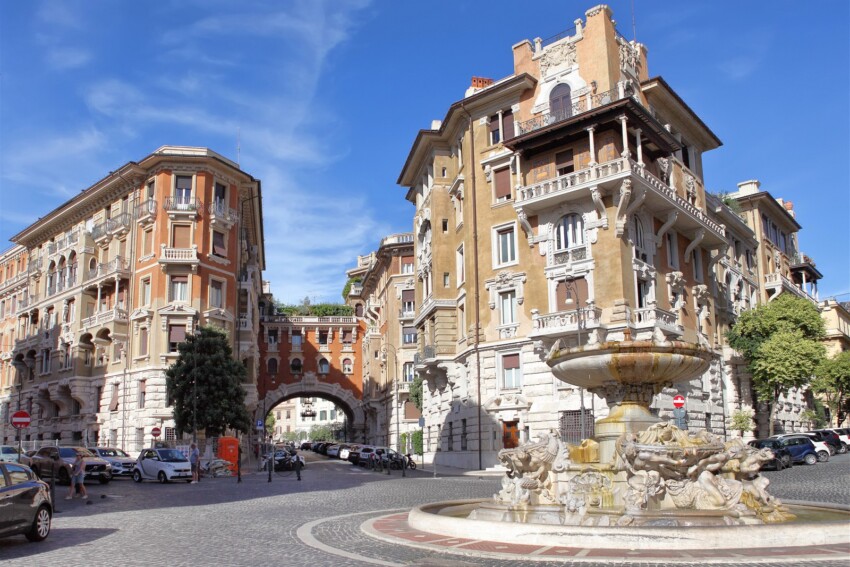
The Coppedè Quarter is a small corner of Rome that seems straight from a Gothic fairy tale. Located between Via Tagliamento and Piazza Buenos Aires, this complex of 27 apartment buildings and 17 villas was designed by Florentine architect Gino Coppedè between 1913 and 1927.
The style is an eclectically visionary mix fusing Art Nouveau, Baroque, medieval, Gothic and Art Déco elements. The Arch of Angels, suspended between two buildings at the quarter’s entrance, welcomes visitors with elaborate decorations and a wrought-iron chandelier hanging at its centre. The building façades are adorned with frescoes, mosaics, mascherons, gargoyles and esoteric symbols.
At the quarter’s heart stands the Fountain of Frogs, inspired by the Fountain of Turtles in Piazza Mattei. In 1965 the Beatles jumped fully clothed into this fountain after a concert, an episode that helped make it famous. Architectural details are endless: from the lions of the fairy-tale house to wrought-iron spiders, from turtles to zodiac symbols.
The quarter is freely accessible at any time and is perfect for photography enthusiasts. The best light is early morning, when streets are still quiet. It’s easily reached by tram 3 or 19 (Piazza Buenos Aires stop) or underground (Policlinico station, line B, then a 10-minute walk).
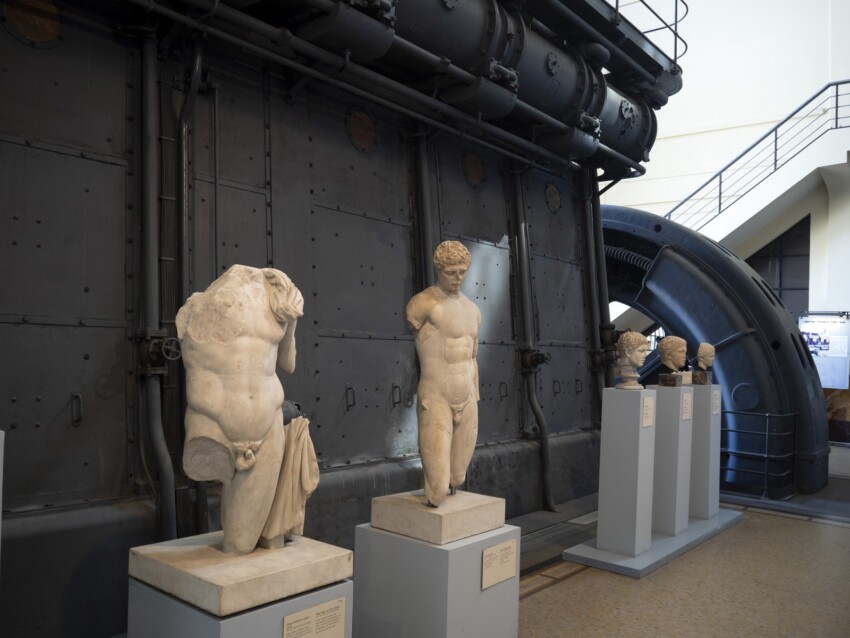
The Montemartini Central Power Plant represents one of the world’s most original museum settings: a former 1912 thermoelectric plant transformed into an exhibition venue for the Capitoline Museums. The contrast between the steel turbines and industrial machinery and classical marble sculptures creates a unique and disorienting atmosphere.
The plant’s halls display approximately 400 ancient sculptures, mosaics and archaeological finds narrating Rome’s history from the Republic through the Imperial age. The collection includes masterpieces such as the statue of Muse Polimnia, the Seated Girl and the sculptural group from the Gardens of Sallust. The display ingeniously exploits the industrial spaces: sculptures are positioned beside diesel generators and iron columns.
The machinery hall, with its gigantic 1933 diesel motors, is particularly impressive. These perfectly preserved machines supplied electrical power to Rome until 1963. Today they represent industrial archaeology that dialogues surprisingly with classical art.
The museum is located in the Ostiense quarter at Via Ostiense 106 and is open Tuesday to Sunday from 9:00 to 19:00 (last admission 18:30). It’s accessible by line B underground (Garbatella station) or numerous buses. The surrounding area also hosts other interesting sites such as the Gasometer and the Fluvial Port.
Passetto di Borgo
800193 Rome, Metropolitan City of Rome Capital, Italy
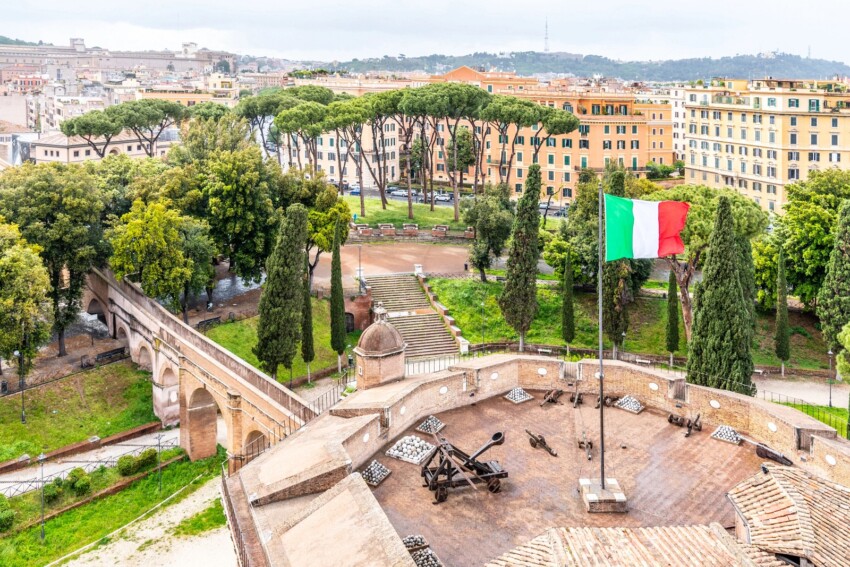
The Passetto di Borgo is an elevated corridor stretching 800 metres that connects Castel Sant’Angelo with the Vatican Apostolic Palace. Built in 1277 by Pope Nicholas III, this secret passage saved the lives of several pontiffs during sieges and times of danger.
The most famous episode dates to 1527, during the Sack of Rome. Pope Clement VII managed to escape from the Vatican by traversing the Passetto whilst the Landsknechts ransacked the city. The 147 Swiss Guards who protected him during the escape were massacred on the steps of St Peter’s, an episode still commemorated today by the Swiss Guard.
The corridor is normally closed to the public but opens on special occasions or through guided tours organised by cultural associations. When accessible, walking through it is a unique experience: the loopholes offer unusual glimpses of Borgo and Prati, whilst the medieval atmosphere is perfectly preserved. The exterior section of the Passetto is visible from Via dei Corridori and Borgo Santo Spirito.
Mouth of Truth
9Piazza della Bocca della Verità, 00186 Roma RM, Italy
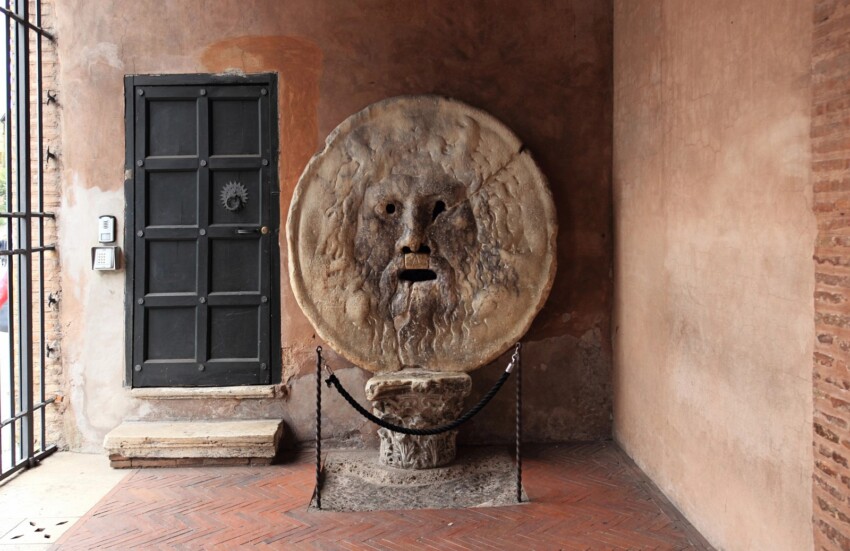
The Mouth of Truth, located in the portico of the Church of Santa Maria in Cosmedin, is one of Rome’s most iconic symbols. This ancient marble mask, dating to the 1st century AD, depicts a bearded male face with wide-open eyes, nose and mouth.
Originally it was probably a drain or fountain mouth, but since the Middle Ages it has been associated with a legend: anyone who places their hand in the mouth while lying will have it bitten off. This belief has made the Mouth of Truth one of Rome’s most photographed tourist attractions, made even more famous by the 1953 film “Roman Holiday” starring Audrey Hepburn and Gregory Peck.
The marble disc has a diameter of 1.75 metres and weighs approximately 1,300 kilograms. Historians believe it represents the face of a river deity, possibly the Tiber itself, or Oceanus. During the Middle Ages it was used in legal proceedings as a sort of truth machine: the accused had to insert their hand into the mouth and swear their innocence.
Entry is free (a donation is suggested for photographs), but be prepared to queue, especially during peak season. The church is open daily from 9:30 to 17:50 (closed Thursday afternoons). Beyond the Mouth itself, it’s worth visiting the church interior, a gem of medieval art with Cosmatesque floors and a 12th-century Romanesque bell tower.
Catacombs of Domitilla
10Via delle Sette Chiese, 282, 00147 Roma RM, Italy
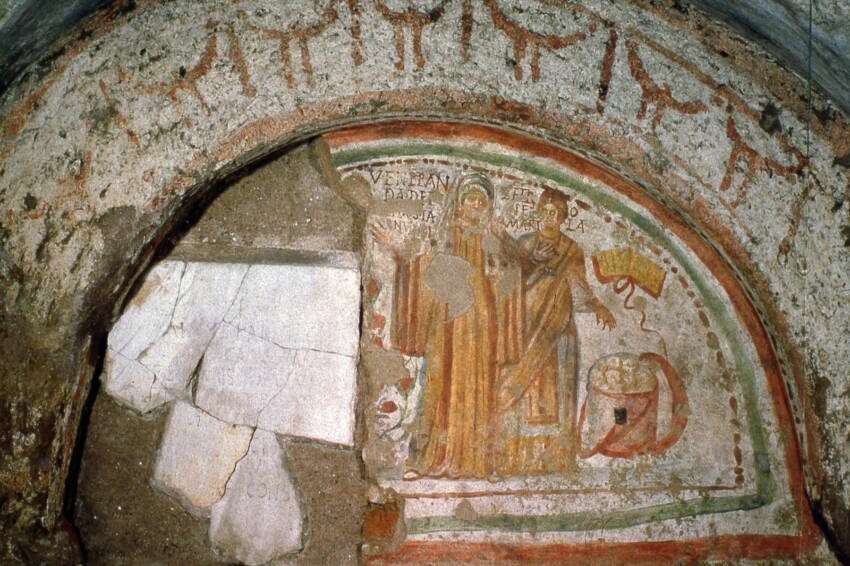
The Catacombs of Domitilla, on via Ardeatina, are Rome’s most extensive, with 17 kilometres of underground passages across four levels. Unlike the more famous Catacombs of San Callisto or San Sebastiano, these retain a more authentic and less crowded atmosphere.
The complex is named after Flavia Domitilla, niece of Emperor Vespasian, who donated the land to the Christian community in the 1st century. The catacombs contain over 150,000 tombs carved into tufa walls, spread across four levels reaching depths of 15 metres.
During the guided tour (mandatory), you’ll see the Basilica of Saints Nereus and Achilleus, a 4th-century underground church with original columns, frescoes and extraordinarily well-preserved early Christian iconography. Particularly interesting are the cubicles of Ampiatus and Cupid and Psyche, with decorative paintings blending pagan and Christian symbols.
The catacombs are open Wednesday to Monday from 9:00 to 12:00 and 14:00 to 17:00 (closed Tuesdays and 25 December). They’re accessible by bus 714 from Circo Massimo metro station (line B) or by line 765 from Piazza Venezia.
11Via del Teatro di Marcello, 00186 Roma RM, Italy
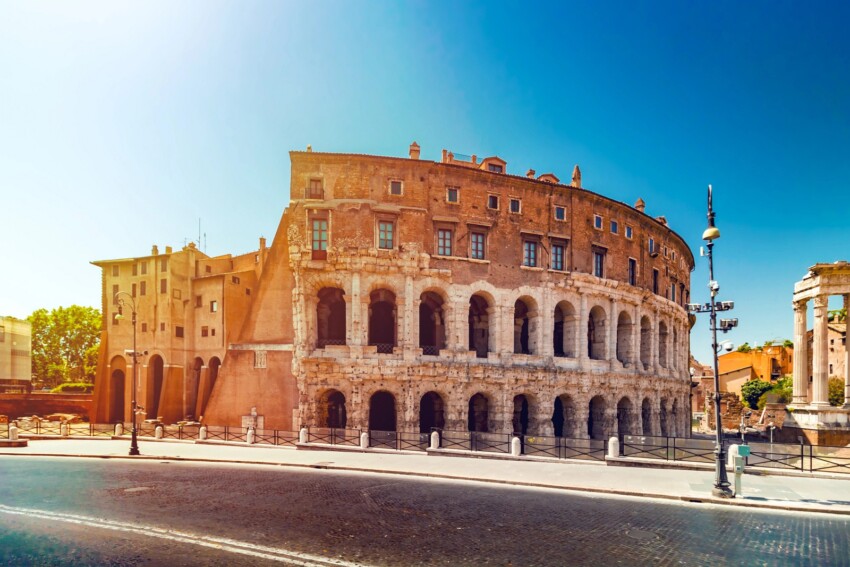
The Theatre of Marcellus, often overlooked by tourists drawn to the more famous Colosseum, is actually older and represents a fascinating example of architectural reuse. Begun by Julius Caesar and completed by Augustus in 13 BC, the theatre could hold up to 15,000 spectators.
In the 16th century the Savelli family converted the structure into a noble palace, building on top of the ancient Roman arcades. To this day the upper section remains inhabited: you can literally live inside a 2,000-year-old monument. The lower arcades, reminiscent of those of the Colosseum (which was actually inspired by this theatre), are freely viewable from outside.
Adjacent to the theatre lies the Jewish Ghetto, one of Rome’s most authentic and fascinating neighbourhoods. Established in 1555 by order of Pope Paul IV, the ghetto was for centuries an area of segregation, but today it’s a vibrant quarter that preserves the memory of Rome’s Jewish community, the oldest in Europe (present in Rome since the 2nd century BC).
Wander through the narrow alleys where a unique atmosphere prevails: stop by the Porticus of Octavia (22 BC), admire the Synagogue with its square dome in Assyro-Babylonian style (open daily except Saturdays), and sample the flavours of Judeo-Roman tradition such as carciofi alla giudia (Jewish-style artichokes) and Jewish pizza.
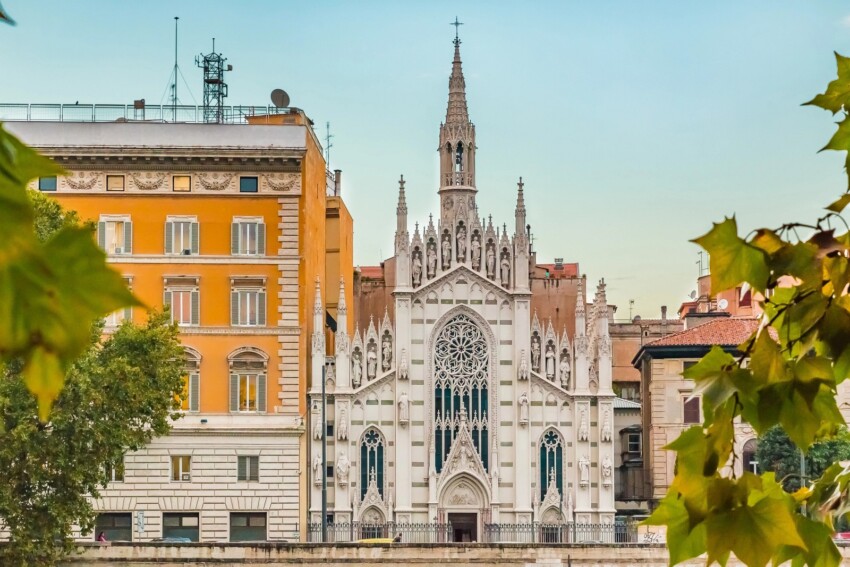
The Museum of the Souls in Purgatory, located in the Church of the Sacred Heart of Suffrage on Lungotevere Prati, is one of Rome’s most unsettling and least-known museums. It houses a collection of relics which, according to Catholic tradition, are impressions left by souls from Purgatory.
The collection was started in 1897 by Father Victor Jouët following a mysterious fire in the church that left an image resembling a suffering face on the wall. The priest decided to gather similar testimonies from across Europe: handprints on napkins, marks on prayer books, impressions on shirts and vestments, all attributed to the deceased requesting prayers to shorten their time in Purgatory.
The displayed objects are accompanied by ecclesiastical certificates and documents attesting to their authenticity according to the Church’s criteria of the era. Among the most striking items: the impression of a burnt hand on a book left by Sister Maria of San Luigi in 1894 and the mark of five fingers on a wooden board from 1815.
The museum, tiny in size, is located in a small side room of the church and is free. It’s open daily from 7:30 to 11:00 and 16:00 to 19:00. The church overlooks the Tiber, opposite Castel Sant’Angelo, and is easily reached on foot from the Vatican.
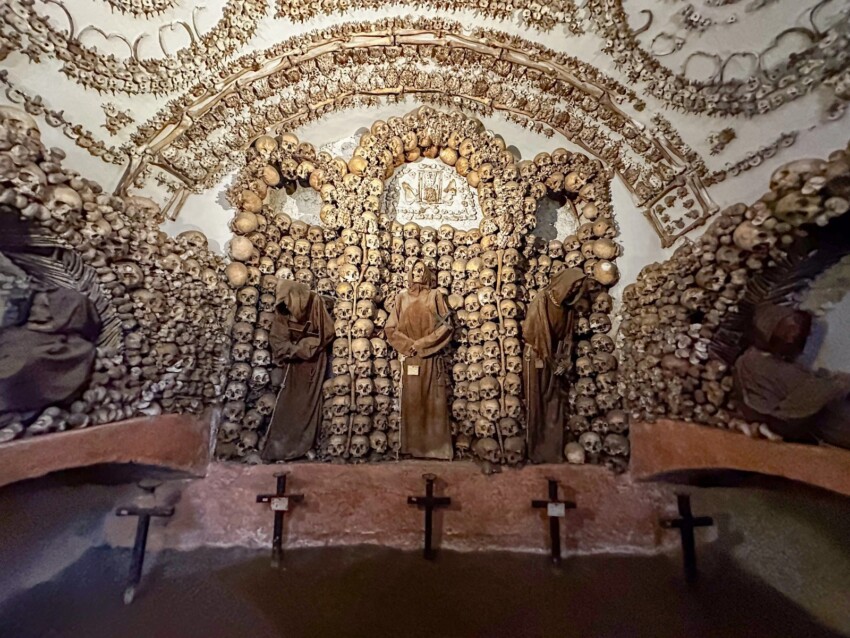
The Crypt of the Capuchin Friars, beneath the Church of Santa Maria della Concezione on via Veneto, is one of Rome’s most singular and macabre places. Six small chapels are decorated with the bones of approximately 4,000 Capuchin friars who died between 1528 and 1870.
The bones are arranged in complex decorative patterns that transform skulls, femurs, vertebrae and ribs into chandeliers, arches, rose windows and heraldic coats of arms. Each chapel has a different theme: the Crypt of Skulls, the Crypt of Shoulder Blades and Femurs, the Crypt of Pelves. The effect is both macabre and hypnotic, a memento mori that invites reflection on the transience of life.
The crypt was created in 1631 when the Capuchins moved to this convent. They brought with them the bones of deceased brothers and began the tradition of decorating the walls with the remains of friars who died. The inscription at the entrance reads in Latin: “What you are, we once were; what we are, you will be”.
The visit also includes the Museum of the Capuchins, which displays objects, paintings and relics of the order. Photography is not permitted inside the crypt out of respect for the deceased. The museum is located at via Veneto 27, easily accessible by metro line A (Barberini stop).
The Garden of Sant’Alessio, adjacent to the church of the same name on the Aventine, is a small terraced park offering one of Rome’s most spectacular and least-known views. This garden, created in 1932 to designs by architect Raffaele De Vico, is structured on multiple levels connected by staircases and shaded pathways.
From the upper terraces you enjoy a panoramic view encompassing the Circus Maximus, the Palatine Hill, the historic centre and, on clear days, you can make out the Castelli Romani on the horizon. The Mediterranean vegetation, with laurels, maritime pines and cypresses, creates a contemplative atmosphere.
The park is particularly evocative at sunset, when slanting light emphasises the profiles of Roman ruins and church domes. Unlike the nearby Orange Garden, this space is far less crowded and allows you to enjoy the view in relative solitude, even on weekends.
Entry is free and the garden is open from dawn to dusk with seasonal hours. It’s easily reached from the adjacent Orange Garden or by climbing up from Piazza Bocca della Verità. Its elevated position on the Aventine makes it an ideal spot for a relaxing break after visiting the Forums or the Colosseum.
Map
In the following map you can see the location of the main places of interest mentioned in this article.
Practical Information
Most of the curiosities presented in this article are free or require an inexpensive ticket, making them accessible to any budget. Many of these places are uncrowded even during peak season, allowing you to experience a more authentic and relaxed side of the city.
To make the most of your visit, group the curiosities by area: the Aventine (Orange Garden, keyhole view, Garden of Sant’Alessio) can be visited in an afternoon; the Coppedè Quarter and Casina delle Civette are both in the northern zone; Palazzo Spada and San Clemente are near the historic centre.
Be aware that some sites have limited opening hours or require booking for guided tours. The best times to visit these places are early morning or late afternoon, when the light is most beautiful and visitor numbers lower.
How to save on transport and entrance fees
City Card allow you to save on public transport and / or on the entrances to the main tourist attractions.
 Hotel
Hotel  Budget accommodations
  Apartments
  Family Hotel
  Luxury Hotel
  Resorts