Bestseller
Colosseum, Roman Forum & Palatine Hill Guided Tour
From 49,00 €
Buy the ticket
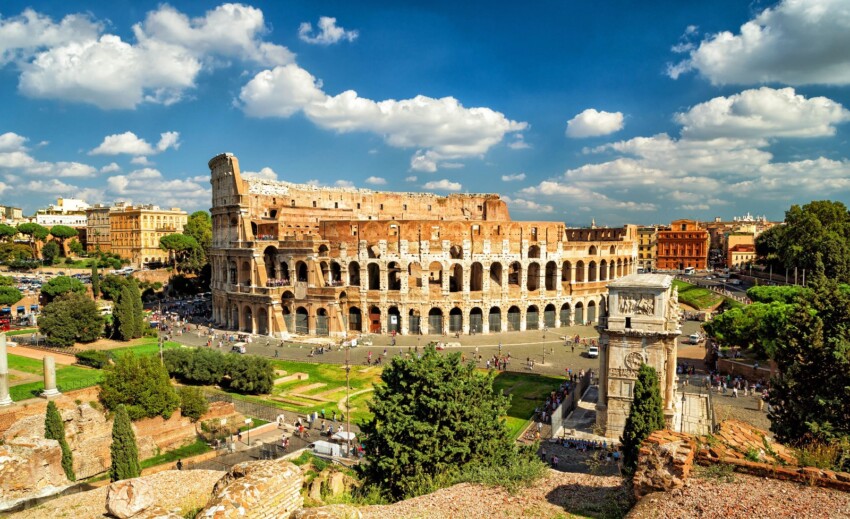
The world’s largest Roman amphitheatre, unsurprisingly, is located in Rome. It’s the Colosseum, originally known as the Flavian Amphitheatre, an enormous arena capable of holding between 50,000 and 87,000 spectators, according to estimates. Today, the Colosseum is one of Rome’s principal symbols, and its importance is such that it’s the only European monument listed among the New Seven Wonders of the World.
Its origins date back to 70 AD, and its construction took 10 years – a relatively short period of time given the scale of the undertaking. The dimensions are staggering: over 500 metres in perimeter, a height of 50 metres, and an internal arena almost the size of a football pitch. It’s precisely because of its colossal dimensions that during the Middle Ages the amphitheatre acquired the name it still bears today – though according to some sources, the name derives from a colossal statue of Nero.
Originally used for spectacles, gladiatorial combat and public events, today the Colosseum is a major archaeological monument in Rome and forms a single archaeological circuit together with the Roman Forum and the Palatine Hill, which each year consistently ranks at the top of Italy’s most-visited state museums.
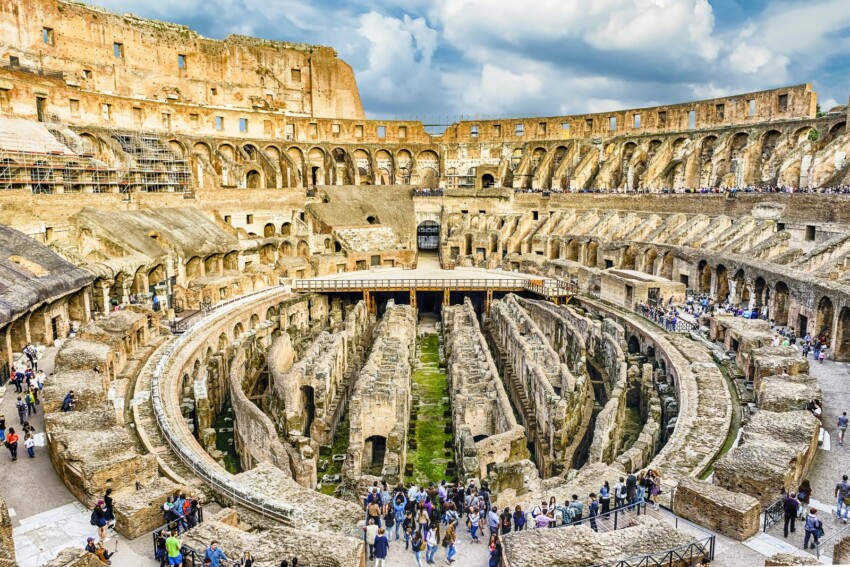
The Colosseum itself is a colossal Roman arena of elliptical form spread across five levels, though it’s now stripped of marble, facing and decorative elements, which were lost over its thousand-year history. A visit to the Colosseum consists of entry to the cavea (the seating tiers) and the various levels; it’s also possible to access two additional sections by paying a supplement to your base ticket: the arena and the underground passages.
Anyone could enter the Colosseum free of charge, passing through 76 numbered arches, of which 29 remain visible today. Seating was assigned on a hierarchical basis, beginning with the imperial box reserved for the emperor and his family, located at the south entrance.
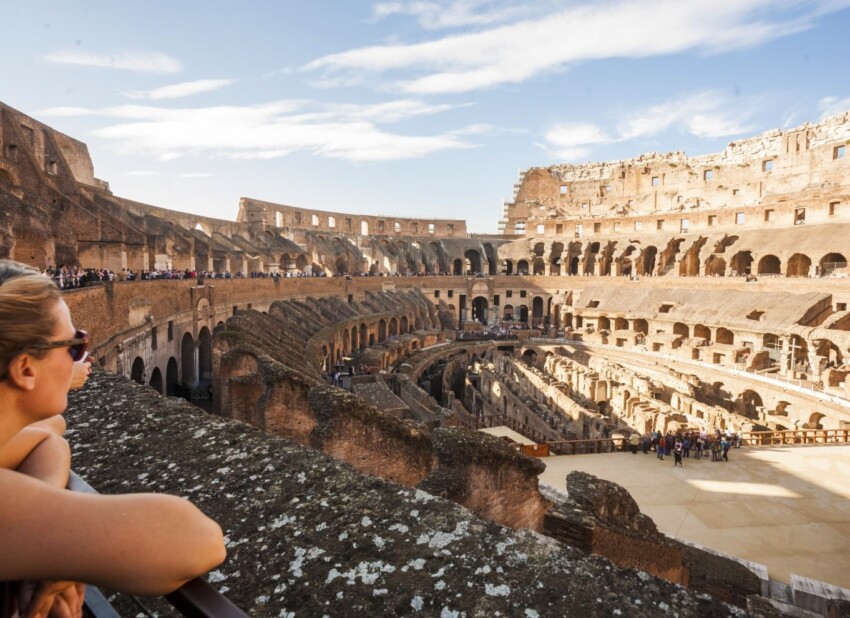
The cavea continued with seats near the arena, reserved for senators, behind whom sat the equestrian order, whilst as you moved away from the arena there were seats for lower social classes. At the top of the portico, in the worst spots for visibility and accessibility, sat the common people. This is where the so-called belvedere terrace is located, from which today you can view the cavea from various heights, reaching the terraces of the third, fourth and fifth levels.
The cavea visit is included with all Colosseum tickets, but the third ring is only accessible with an additional supplement.
It was in the Colosseum’s underground passages that performers and gladiators prepared for spectacles. This area, hidden from the public as it lay beneath the arena floor, features various trap doors to allow men and animals to appear unexpectedly, lifted by ingenious hydraulic systems. Initially built in wood, the Colosseum’s underground passages were later rebuilt entirely in stone masonry, but this wasn’t enough to protect them from the fire that broke out inside the amphitheatre in 217 AD, when it closed for a full five years.
Today, the Colosseum’s underground passages remain open and accessible; they cover a total area of half a hectare extending along 14 visible corridors, arranged symmetrically around a large central corridor. The Colosseum’s underground passages are accessible only by purchasing the special extension to your entry ticket.
On the arch of the Porta Triumphalis (Triumphal Gate) of the Colosseum, located on the west side, there’s a beautiful mural painted in the seventeenth century, depicting the city of Jerusalem from above, as a bird’s-eye view, as if it were a map. The rectangular walls, streets and city blocks are clearly visible, converging towards Solomon’s Temple.
Outside the walls of Jerusalem, the mural shows several religious scenes representing the Passion of Jesus, with his ascent to Calvary, the crucifixion, the deposition and the resurrection. In recent years, the Jerusalem mural has been restored, and the work, completed only in 2020, has brought to light a series of extraordinarily fine details and precious finds.
Temporary exhibitions lasting several months, or even entire years, are held at the Colosseum’s rings. This is the case, for example, of the exhibition The Colosseum tells its story, which allows you to retrace the monument’s 2,000 years of history in a journey discovering over 400 artefacts, from its construction to the twentieth century. The exhibition was inaugurated on 21 December 2018 and was created by the Colosseum archaeological park in collaboration with the German Archaeological Institute in Rome and Roma Tre University.
The exhibition The Colosseum tells its story is located on the second level and extends across 12 archways. It’s available in Italian, English and Chinese and is organised across seven themed sections.
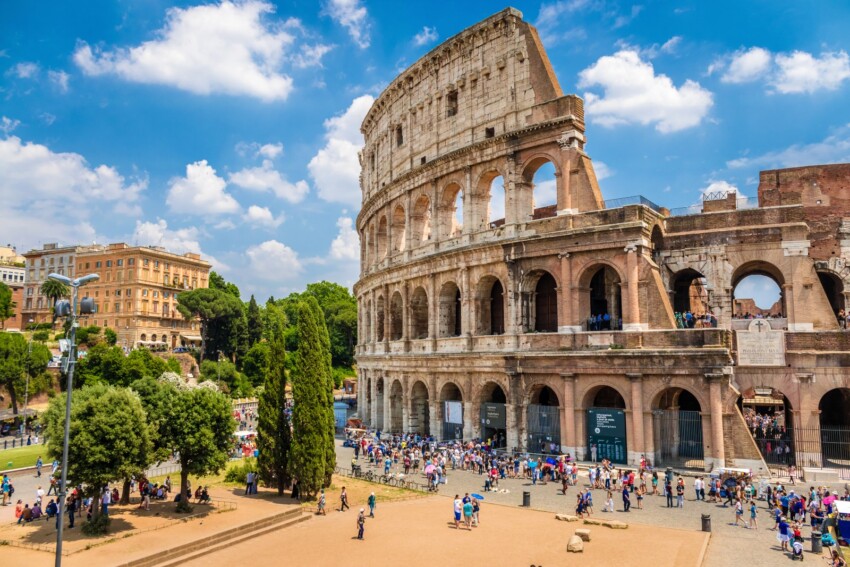
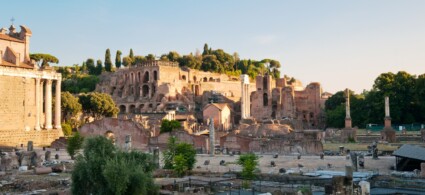
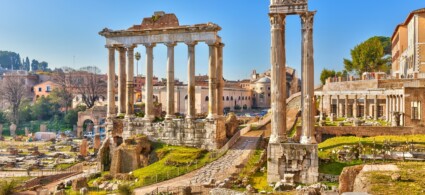
As mentioned, the Colosseum is part of a single archaeological park that also includes the Roman Forum and the Palatine Hill, so with one entry ticket you can visit all three of these major attractions. Note that tickets can only be purchased online. You must compulsorily book your time slot and sales are open weekly from Monday to Sunday. Citizens of European Union member states aged 18 to 25 are entitled to a reduced ticket upon presentation of an identity document.
You can purchase various types of tickets, including the standard ticket, valid for 24 hours, which allows a single entry to the Colosseum without arena access plus entry to the Roman Forum-Palatine Hill areas and the Imperial Fora, and the full experience ticket, valid for two consecutive days and including access to the first and second order, plus the arena (with the Full Experience arena extension) and the underground passages (with the Full Experience Underground and Arena extension).
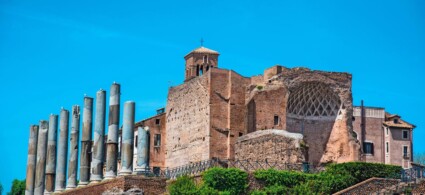
The first Sunday of each month the Colosseum is free to visit, subject to pre-booking. Tickets can be collected at the ticket office on Piazza del Colosseo, near the Temple of Venus and Roma.
All holders of the Colosseum Archaeological Park Membership Card finally have free access to the Colosseum and other sites within the archaeological park.
Private operators offer guided tours of the Colosseum, in both Italian and other languages. Being accompanied by a professional guide will allow you to better understand the history and architecture of the amphitheatre, and immerse yourself in the daily reality of ancient Romans. The guided tour lasts approximately an hour and a half.
Moreover, guided tours of the Colosseum typically include skip-the-line entry, as well as digital guides, maps and audio guides.
It’s possible to combine a guided tour of the Colosseum with a tour of the Imperial Fora, the Roman Forum and the Palatine Hill, or even with St Peter’s Basilica, in order to make the most of your time in Rome; you can also choose between private tours and group tours.
The Colosseum is open daily from Monday to Sunday. It opens at 9.00 am, while closing times vary depending on the time of year. Specifically:
Last entry must be at least one hour before closing. The only two days the Colosseum is closed are Christmas and New Year’s Day.
We recommend visiting the Colosseum outside peak season, as the crowds visiting this remarkable monument are truly enormous. As a general rule, it’s better to choose unusual times, such as around lunchtime, and if possible avoid planning your visit for Saturday or during public holidays.
Remember that during summer it can get extremely hot: the monument is almost entirely exposed to the sun, with the exception of course of the underground passages and some shaded areas created by the arches, so bring a hat and sunscreen for your visit. In summer, if you can, try to plan your visit for the morning, even if this inevitably means dealing with far more people.
The Colosseum is easily reached by Rome’s public transport network. On the B Line of the underground you’ll find the Colosseum stop, located right at the monument. Once work on the C Line is complete, the Colosseum will also be accessible via the Imperial Fora station.
The Colosseum is also reachable by tram: line number 3 stops right in front of it; the stop is called Colosseum. By bus, the lines stopping in the immediate vicinity of the Colosseum are 75, 81, 673, 175, 204 and 628. Hop-on hop-off tourist buses also stop in front of the Colosseum.
If you’re staying in the centre or near Termini Station, or in Trastevere, it’s also possible to walk to the Colosseum.
Remember that the main entrance to the Colosseum is located near the Arch of Constantine.
Here are some answers to frequently asked questions about visiting the Colosseum.
No. You cannot bring dogs into the Colosseum, even small ones. The only exception is for therapy dogs or guide dogs for disabled visitors.
There are no time limits for how long you can stay inside the Colosseum. A visit is estimated to take around 1-2 hours, more than enough time to also take some magnificent photos.
Yes, there are toilets at the Colosseum. They’re located on the ground floor, near the entrance and the boxes. However, bear in mind that queues for the toilets can be quite long, sometimes 10-15 minutes.
Yes, you must pass through security controls to enter the Colosseum. You’ll be asked to empty your pockets and jackets and to separate metallic objects. Your rucksacks, bags and objects will be placed inside an X-ray machine, while you’ll walk through a metal detector.
You can bring small rucksacks or small bags with you during your Colosseum visit, but you cannot bring large or bulky items. Obviously, weapons, knives and explosive objects are prohibited, including deodorant sprays.
As for water, you can bring your bottles inside but only if they’re empty. Don’t worry! Empty them at the entrance and refill them inside the Colosseum or once you’ve left at one of Rome’s many water fountains, the famous “nasoni”.
Disabled visitors wishing to visit the Colosseum are able to use special ramps for entry. Once inside, the first order is accessible to wheelchairs, whilst the second order is accessible via lifts. Two wheelchairs are also available for use, one for each floor, and appropriate toilet facilities are provided.
City Card allow you to save on public transport and / or on the entrances to the main tourist attractions.


 Hotel
Hotel  Budget accommodations
  Apartments
  Family Hotel
  Luxury Hotel
  Resorts