Bestseller
Rome: Capitoline Museums Experience with Multimedia Video
From 36,00 €
Buy the ticket
In 1471, Pope Sixtus IV gifted the people of Rome with a series of bronze statues. This collection became the first museum in history, which subsequently expanded to become what is today known as the Capitoline Museums, a collection of exhibitions focused on the city of Rome.
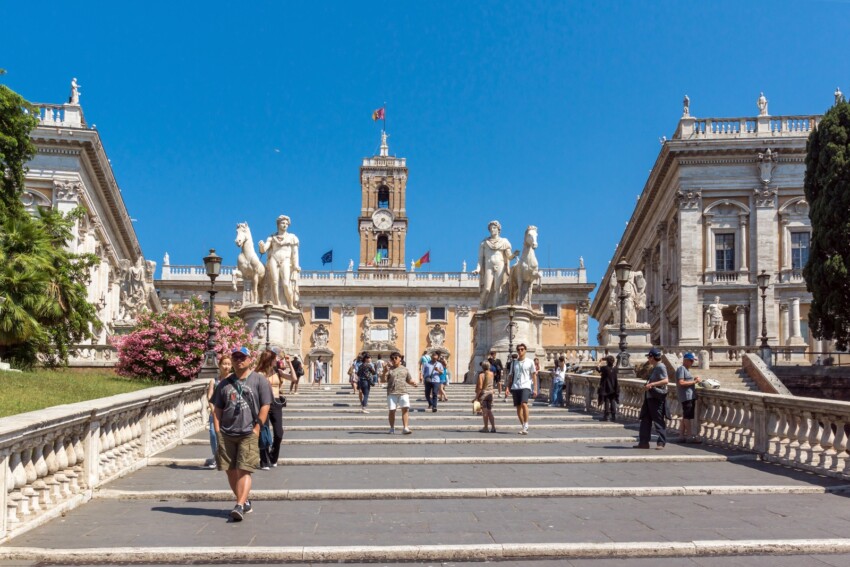
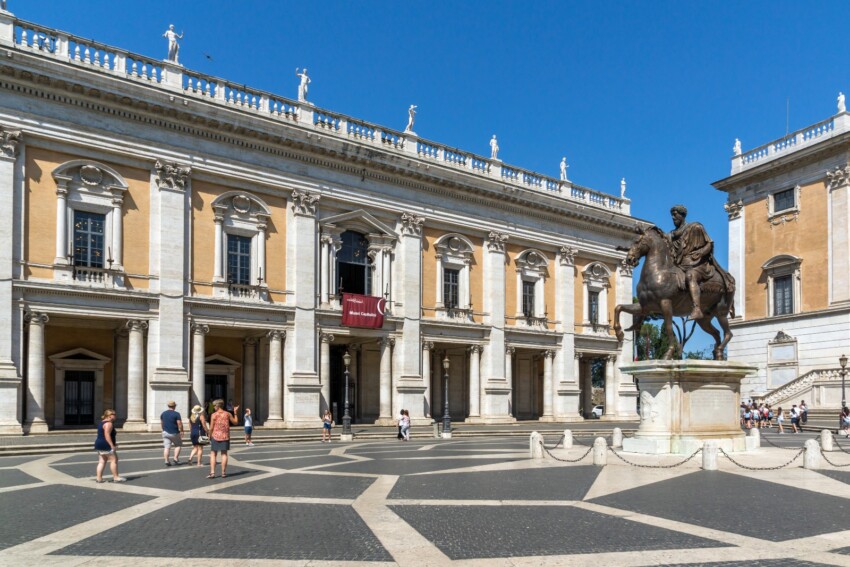
The Capitoline Museums are referred to in the plural because the collection spans 3 buildings overlooking Piazza del Campidoglio, which are the Palazzo dei Conservatori and the Palazzo Nuovo, connected by the Lapidary Gallery, an underground gallery running beneath the square, and the Palazzo Caffarelli, adjacent to them.
Visiting the Capitoline Museums during a trip to Rome allows you to get in touch with the city and learn more about its history, from its foundation through the splendours of the Renaissance. They are part of the museum system of Rome Capitale, under the supervision of the Capitoline Heritage Authority.
The Capitoline Museums represent Rome’s civic museum. Inside are displayed Roman paintings and sculptures that preserve the memory of ancient Rome, and alongside the permanent exhibition, divided into 8 distinct areas, numerous temporary exhibitions are also held, devoted not only to Roman art but to various forms of art.
The temporary exhibitions held at the Capitoline Museums last from a few months to a year or more: for an updated calendar, we recommend visiting the official website.
The Conservatori Apartment is located on the first floor of the Palazzo dei Conservatori. It is a series of rooms where meetings of the Public Council and Secret Council were held: the spaces are therefore reception halls, with beautiful frescoes and decorations such as stuccos, coffered ceilings and carved doors and tapestries, all with a single connecting thread – the history of Rome from its foundation through the Republican era.
The area represents the oldest nucleus of the Palazzo dei Conservatori: it was here, in 1471, that bronze statues donated by Pope Sixtus IV to the people of Rome were placed, giving rise to the oldest museum in the world.
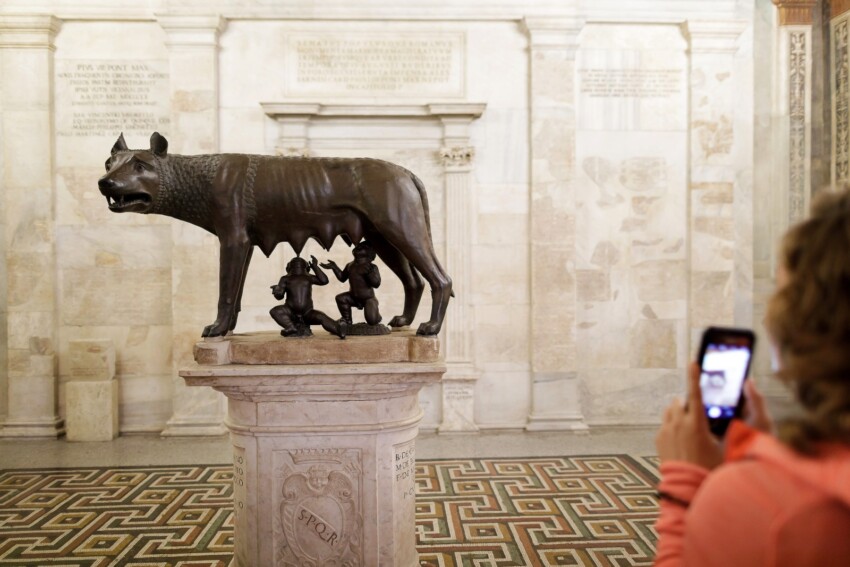
Among the many rooms you can visit, the Hall of the She-wolf deserves special mention, where the bronze sculpture of the Capitoline She-wolf, the symbol of Rome, is displayed. Also noteworthy are the Hall of the Captains, the Hall of Tapestries and the Hall of the Horatii and Curiatii, or Great Hall, used for the Public Council’s hearings.
The Museum of the Palazzo dei Conservatori extends across two floors of the building, with a route that passes through 27 rooms in total. First enlarged in 1876, the museum underwent complete restructuring in 2005, with the creation of a large glass hall and the reorganisation of a series of rooms.
Also visit the exteriors, with the beautiful courtyard where you will notice two opposed porticoes, which house interesting examples of Roman sculptures and fragments of ancient colossal sculptures. You then ascend to the upper floor by way of the so-called Scalone, a monumental internal staircase with three flights, where fine sculptures and reliefs are displayed.
The Capitoline Picture Gallery is located on the second floor of the Palazzo dei Conservatori, and is the oldest public collection of paintings. Created around the mid-18th century, it includes masterpieces by artists of the calibre of Titian and Caravaggio, from private collections donated to the museum. Over the years, the Capitoline Picture Gallery has grown with additional works, thanks to donations and bequests made over the centuries.
Among many, it is worth mentioning the bequest of Count Francesco Cini in 1881, who donated to the Picture Gallery a beautiful collection of porcelain.
The Capitoline Picture Gallery route unfolds across 9 rooms, focused on various themes and areas: they include Central Italy from the Middle Ages to the Renaissance, the sixteenth century in Ferrara, the sixteenth century in Venice, artistic trends in Rome in the seventeenth century, Emilia and Rome between the sixteenth and seventeenth centuries, painting in Bologna, seventeenth-century painting in Rome, Baroque painting by Pietro da Cortona, and finally the Cini Gallery with its splendid porcelain.
What is today the Palazzo Caffarelli is part of an older nucleus called the Palazzo Clementino, dating from the second half of the sixteenth century. This unique complex of buildings has been part of the Capitoline Museums since 2000.
Inside the Palazzo Clementino Caffarelli there are 4 rooms to visit, the most interesting of which is undoubtedly the Hall of Frescoes, the most important room in the building for its size and richness of decorations, which originally extended across all the walls, but today only a part can be seen as many have been lost. Among the surviving scenes, we mention the healing performed by Saint Peter in front of the temple of Jerusalem: it is thanks to this work that the hall is also known as the Hall of Saint Peter.
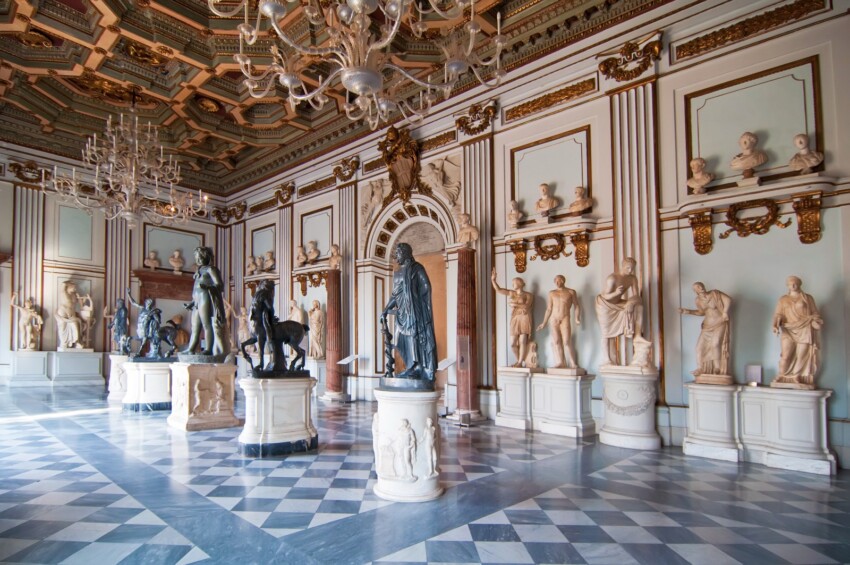
The Palazzo Nuovo is the last building to be erected on Piazza del Campidoglio, and for this reason it took this name already in the eighteenth century. Today, it contains a museum route spread over two floors, whose rooms richly decorated house numerous ancient sculptures, mainly from private collections of Roman noble families.
The Palazzo Nuovo museum, inaugurated in 1734 when Pope Clement XII was in office, also includes the courtyard, where in the central niche you can admire a fountain with a large statue of a river deity, the Marforio. Also interesting are the Egyptian Room, which houses sculptures from the Iseum in the Campus Martius, Rome’s most important sanctuary dedicated to Egyptian deities, and the Emperors’ Hall, full of busts of ancient Roman emperors.
The Tabularium is a large square-plan structure that borders Piazza del Roman Forum on the side of the Capitoline Hill. Originally this building was the seat of the Roman archive: this is where laws and official documents were kept, preserved on bronze tablets (“tabulae”, from which the name derives).
Today, the Tabularium is part of the Capitoline Museums collection, and is essentially a large gallery opening onto the Roman Forum. Trapezoidal in shape, it has an imposing recess in one corner, because here in antiquity stood the Temple of Velovis.
The Capitoline Medal Cabinet, established in 1872, is a single room comprising 4 large display cases housing collections of coins, medals, gems and jewels that are part of the municipal heritage. This area of the Capitoline Museums was created thanks to the bequest of Ludovico Stanzani, who at his death arranged for his collection of 9,251 coins and the numerous precious stones in his possession to go to the city of Rome.
In subsequent years, further donations brought the collection to truly enormous numbers. But the main contributions came from the so-called hoards, including one found in 1938 on Piazza del Campidoglio consisting of 77 silver coins.
The Lapidary Gallery is an underground gallery connecting the Palazzo Nuovo with the Palazzo dei Conservatori. Dating from 1930 and built beneath Piazza del Campidoglio, it houses the remains of some Roman dwellings from the second century AD, discovered during excavation for its construction, originally built along the ancient road that ascended the Capitoline from the Campus Martius.
On both sides of the gallery there are 130 inscriptions illustrating numerous aspects of life in ancient Rome, divided into thematic sections ranging from worship to law, from aristocracy to games.
Within the Capitoline Museums you can opt for a self-guided visit or follow one of the 4 thematic routes, each colour-coded and indicated on displays in each room.
If your visit to the Capitoline Museums coincides with one or more exhibitions held within the museum space, then the entry ticket also provides access to them, at a higher price than the “standard” ticket available when there are no exhibitions on.
Tickets can be purchased online, via the call centre or at the ticket office – with entry valid only for subsequent days and payable by credit card. At the ticket office you can also purchase tickets for same-day entry.
You can also purchase the Capitolini Card, which allows access for 7 days to the Capitoline Museums and the Montemartini Centre, plus entry to all exhibitions. The Card can only be purchased online.
In both cases, a small discount is available for residents of the Rome metropolitan area, while free entry is provided for numerous categories of people. These include MIC card holders, children and teenagers under 18, residents with an income below €15,000, lecturers and students of architecture faculties or related fields, citizens of Paris owing to the Rome-Paris twinning agreements and others.
It is possible to visit the Capitoline Museums through guided tour services, available in various languages. In particular you can choose the museum route, the exhibition route or both. Guided tours require booking and payment of a supplement on top of the normal entry ticket.
The time is chosen based on the group’s needs; guides are available in Italian, English, French, Spanish and German. Guided tours last 90 minutes.
Additionally, upon booking, guided tours for schools are available, with workshops and meetings for teachers. Educational guided tours for schools are free for institutes in the province of Rome. An instructor is required for every 30 students.
The Capitoline Museums are open every day of the year except for Christmas and 1 May, from 9.30 to 19.30. On 24 December and 31 December opening hours are from 9.30 to 14.00, whilst on 1 January opening hours are from 11.00 to 19.30.
For more information you can call the call centre on (+39)-060608 every day from 9.00 to 19.00 or email info.museicapitolini@comune.roma.it.
Inside the Museums there is a cloakroom where you can leave your personal belongings. It is free and self-service.
It is not permitted to enter the museum with large bags, rucksacks, umbrellas and potentially dangerous items. These must be left at the cloakroom. However, if you visit the Capitoline Museums with a small child, you will be able to bring a pushchair inside.
Inside the museum it is not permitted to take photos with flash or tripod, use video cameras, smoke or consume food or drinks. Entry with pets is prohibited, with the exception of small dogs in carriers.
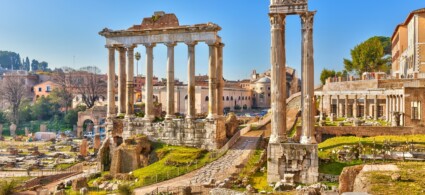
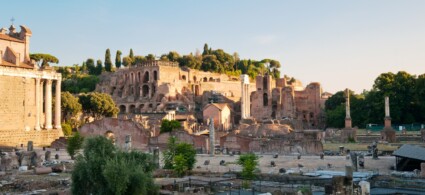
The Capitoline Museums are located at Piazza del Campidoglio 1, in a very central area of Rome. You’ll find yourself just a stone’s throw from major monuments such as the Roman Forum, the Altar of the Fatherland, the Colosseum and the Pantheon.
It’s therefore quite likely you’ll arrive on foot, but if you prefer to use public transport, you can take any number of buses stopping at Ara Coeli/Piazza Venezia, from where you can reach the Campidoglio by walking up Via delle Tre Pile. The most frequently used bus lines are the 30, 51, 81, 83, 85, 87, 118 and 160.
If you’re using the Metro, the stop to head for is Colosseum, on Line A. Once you’ve exited, the Capitoline Museums are within easy reach on a walk of around 15 minutes, covering a distance of one kilometre along almost the entire length of Via dei Fori Imperiali.
From Termini Station, the Capitoline Museums are roughly 2 kilometres away, a distance you can cover in approximately 25–30 minutes on foot, or by bus using one of the many lines departing from the station that stop at Ara Coeli/Piazza Venezia; in this case, the journey takes around 15 minutes.
City Card allow you to save on public transport and / or on the entrances to the main tourist attractions.



 Hotel
Hotel  Budget accommodations
  Apartments
  Family Hotel
  Luxury Hotel
  Resorts