Hotel Sirenetta
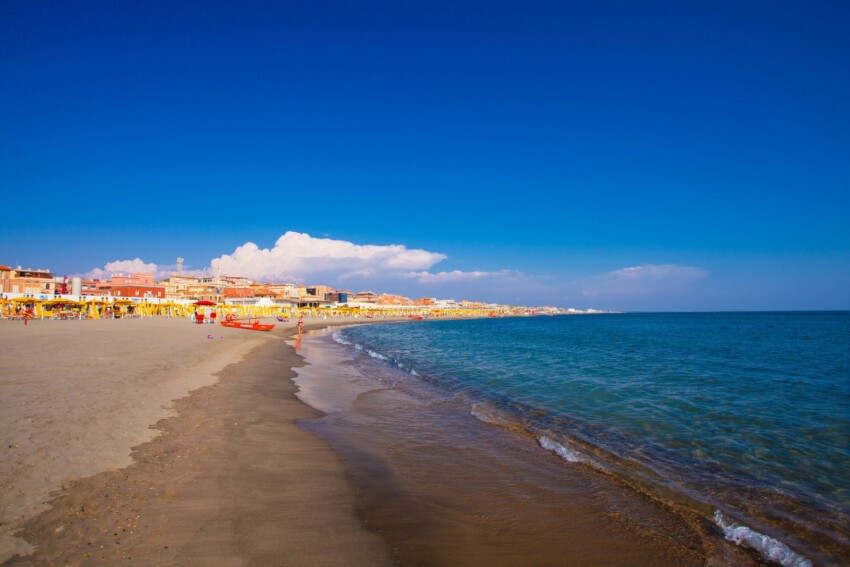
The Lazio coastline stretches for over 300 kilometres along the Tyrrhenian Sea, offering visitors to Rome the chance to combine exploring the Capital with a pleasant seaside escape. Less than 30 kilometres from the city centre, Rome’s coast is surprisingly diverse: ranging from the well-equipped and lively beaches of Ostia to the protected dunes of the Circeo National Park, from medieval villages on the Tyrrhenian coast like Santa Marinella to the crystal-clear waters of Sperlonga.
The coastline divides into two main stretches: the northern section, which extends from Rome towards Civitavecchia via Fregene, Ladispoli and Santa Marinella, and the southern section, which runs down towards Circeo through Torvaianica, Anzio, Nettuno and Sabaudia. Each has its own distinct character: the first is more fashionable and crowded, the second wilder and more natural.
The history of Rome’s coastline is as ancient as Rome itself. Ostia Antica was the principal port of the imperial city and still preserves exceptional remains today. During the Second World War, the beaches of Anzio and Nettuno were the scene of one of the most important Allied landings of the conflict. More recent but equally significant is the rationalist development of Sabaudia, built in just 253 days in 1933-34 to a design by Luigi Piccinato.
In this guide you’ll find the main beaches and resorts along the Roman coast, with everything you need to know to plan a day trip or weekend by the sea from the Capital.
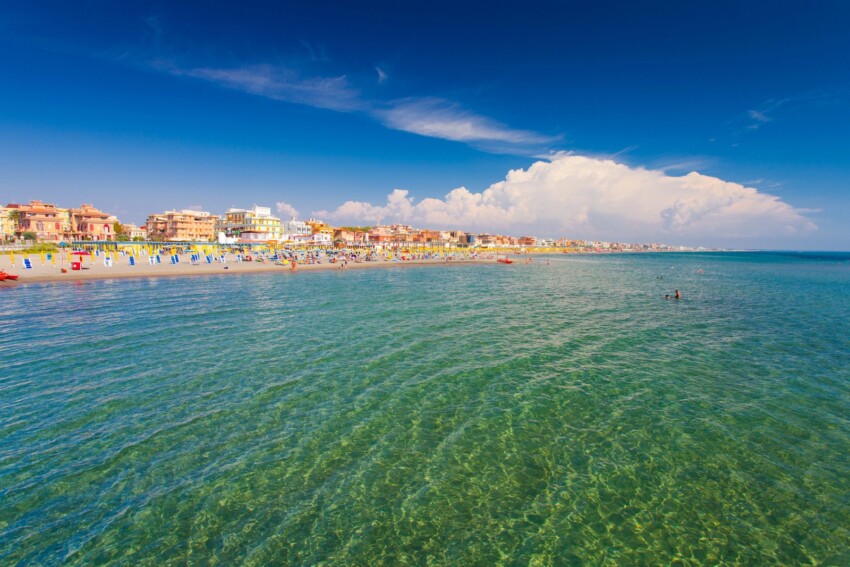
Ostia is Rome’s quintessential beach, easily reached by the Rome-Lido railway in around 30 minutes from Porta San Paolo station. The seafront stretches for almost 15 kilometres and alternates between well-equipped bathing establishments and stretches of free beach. The sand is golden and the shallow seabed makes it particularly suited to families with children. The Lungomare Toscanini and Lungomare Duca degli Abruzzi are the liveliest sections, with restaurants, clubs and bars open late into the evening.
Just a few minutes from the bathing establishments you’ll find the remains of Ostia Antica, one of the best-preserved Roman archaeological sites in the world: the imperial port with its apartment blocks, the bath mosaics and the 3,000-seat theatre is comparable in importance to Pompeii but far less crowded. Combining a morning at the excavations with an afternoon at the beach is one of the most rewarding day trips you can make from Rome.
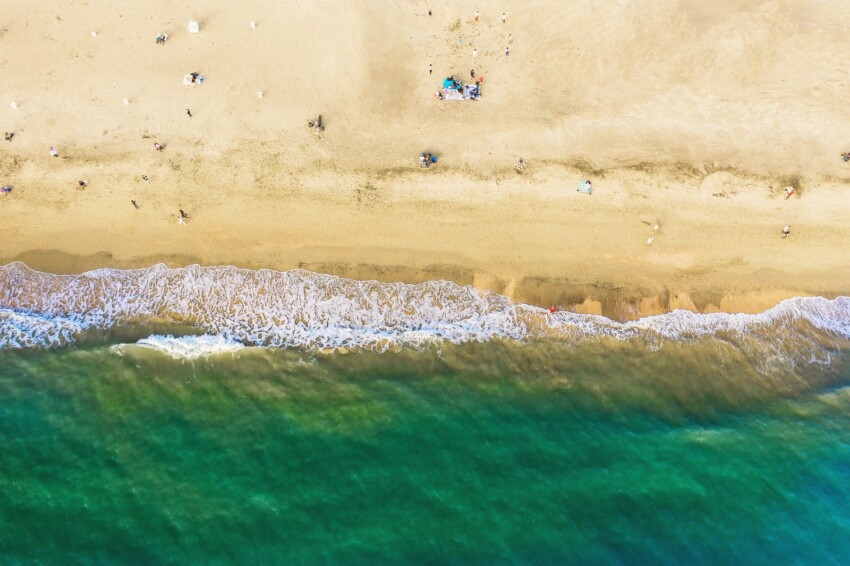
Fregene lies about 40 kilometres north-west of Rome and has been the preferred destination of Rome’s more discerning beachgoers for decades. The Fregene pine forest, which runs parallel to the beach for several kilometres, is one of the loveliest on the Lazio coast and gives the entire area a relaxed and refined atmosphere. The bathing establishments are well-maintained, often featuring quality restaurants, and the pale sand combined with generally calm seas make it perfect for a peaceful day out.
Fregene is easily reached by car from the A12 Rome-Civitavecchia motorway, Fregene exit, or by bus from Lepanto station or Ladispoli. It’s the ideal beach for those seeking a more exclusive atmosphere than the busier Ostia, and its seafront dotted with vintage villas tells the story of bourgeois holidays dating back to the 1950s.
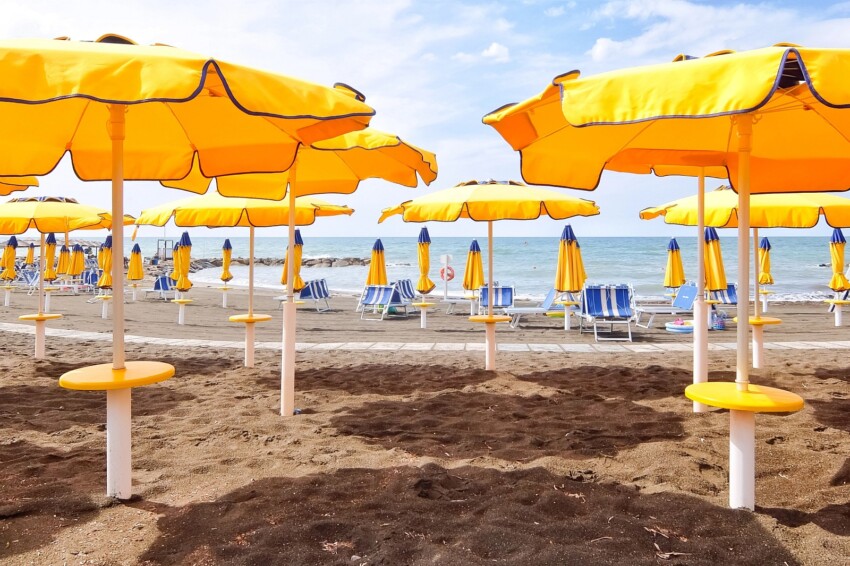
Ladispoli is a seaside resort about 35 kilometres from Rome, reachable by train from Rome Termini in around 30 minutes. The beaches extend for several kilometres and alternate between equipped establishments and well-maintained free beaches. The sea is generally clean and the sandy seabed slopes gently, making it suitable for children too. Torre Flavia, a remnant of a 16th-century watchtower rising directly from the sea, is the most photographed landmark on Ladispoli’s coast.
Nearby you’ll find the Macchiatonda Nature Reserve, a naturalistically important oasis for migratory birds, ideal for a green walk after a morning by the sea. Ladispoli hosts the famous Romanesco Artichoke Festival every September, a gastronomic event that attracts visitors from across the region and transforms the waterfront into a colourful market of typical Lazio produce.
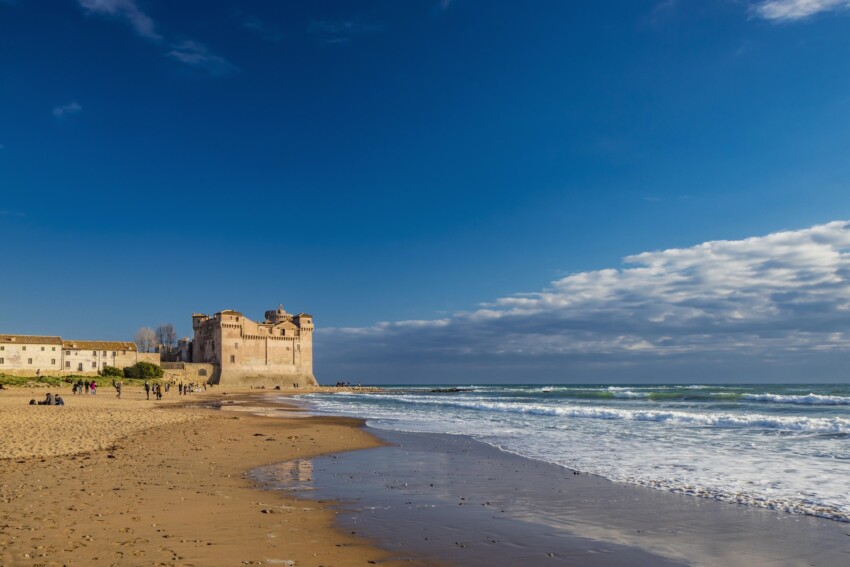
Santa Marinella lies about 65 kilometres from Rome along the northern Lazio coast, reachable by train from Rome Termini in less than an hour. The beaches are sandy, well-equipped and the sea is generally calm, making it particularly suitable for families. Odescalchi Castle, which rises directly from the sea on a lava promontory, is one of the most evocative views along the entire Lazio coast and its medieval silhouette dominates the main bay.
The small historic centre has a lively atmosphere with bars, ice-cream parlours and fish restaurants. Just to the north lie the remains of the ancient Castrum Novum, a 3rd-century BC Roman colony, whilst towards Civitavecchia the coastal landscape becomes rockier and wilder, with several coves accessible only by sea. Santa Marinella offers excellent value for money compared to beaches closer to the Capital and is less chaotic even at the height of summer.
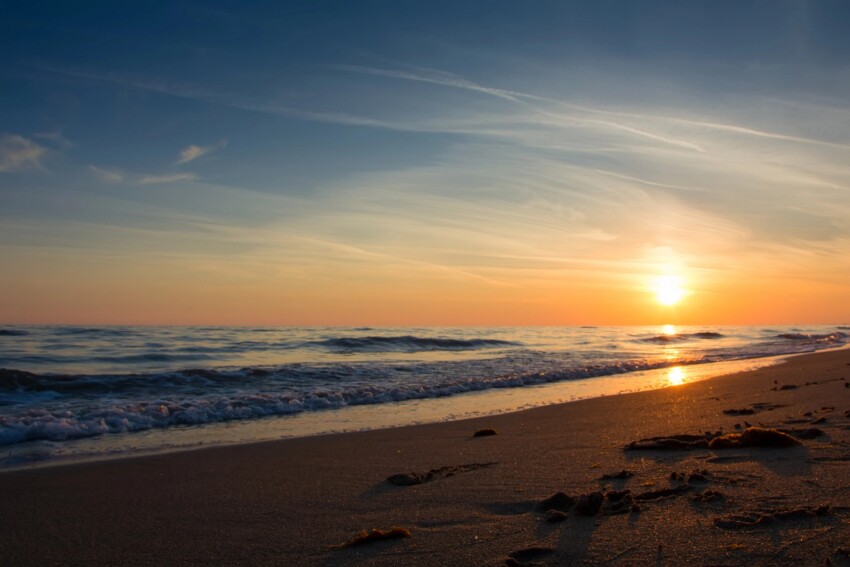
Torvaianica lies about 40 kilometres south of Rome along Via Litoranea and is appreciated for the quality of its water and the presence of long stretches of free beach interspersed with establishments. The beach is wide, the sand pale and fine, and the sea clean with a shallow seabed that slopes gradually. The area is particularly frequented by the LGBTQ+ community, especially in the northern section of the centre known as Campo di Mare, but it’s a welcoming destination for all types of visitors.
It’s reached by CO.TRA.L. bus from Rome EUR or by car along Via Pontina to Pomezia, then heading towards the coast. In the immediate vicinity you’ll find Capocotta beach, a protected area within the Appian Way Regional Park, with coastal dunes of great natural value and stretches of shoreline where the sand hasn’t been altered by decades of beach development.
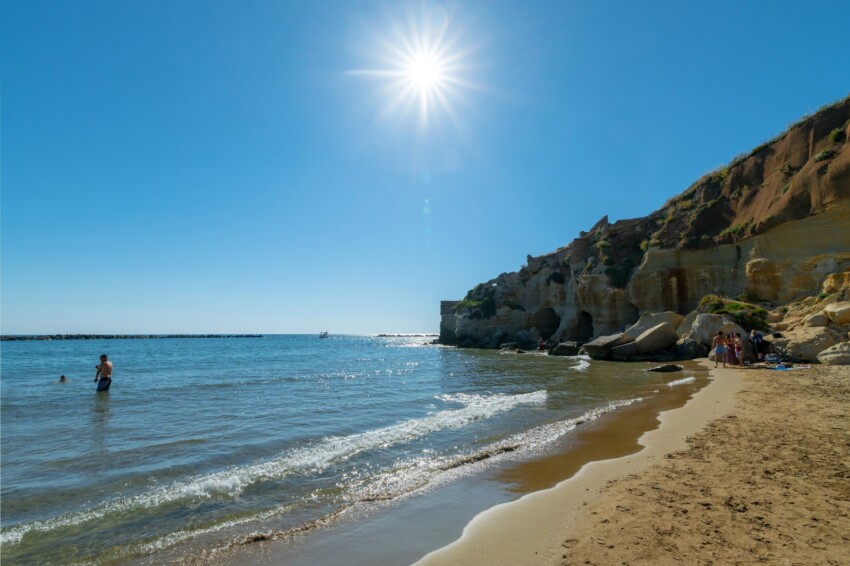
Anzio is about 60 kilometres from Rome and combines a past of extraordinary historical significance with a vibrant seaside present. The beaches are fringed by lava cliffs that create small coves with particularly clear waters compared to other coastal locations. The port is one of the most picturesque on the Lazio coast and the fish restaurants along the dock serve the day’s catch with recipes unchanged for generations: spaghetti alle vongole, marinated anchovies, mixed fried catch.
History weighs tangibly on Anzio: the Allies landed here on 22 January 1944 in Operation Shingle, and the American Military Cemetery at Nettuno, with its 7,861 white crosses arranged in perfect geometric order, is a visit that leaves a profound mark. You can reach it by train from Rome Termini in around an hour on the Nettuno line, with frequent services throughout the day.
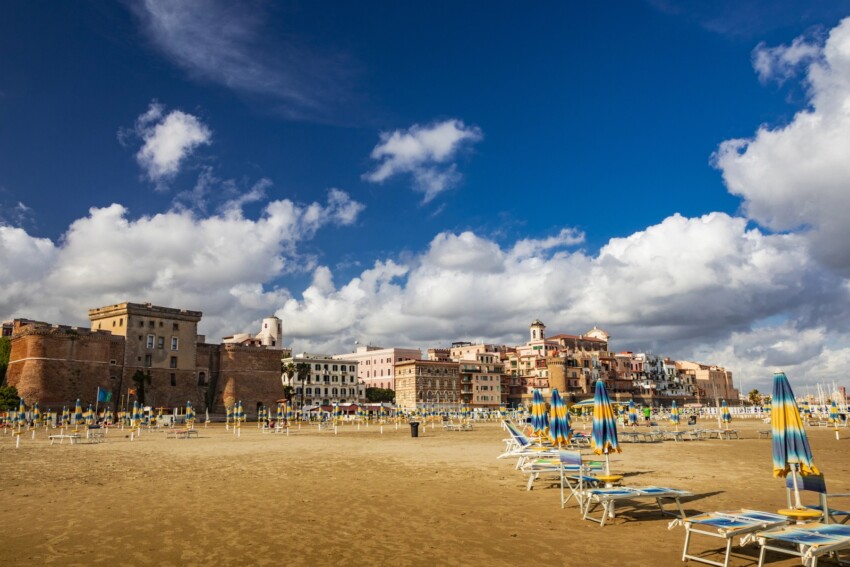
Nettuno lies just south of Anzio and preserves a medieval historic centre enclosed within perfectly maintained Aragonese walls, with narrow lanes, ancient churches and a main square that surprises with its beauty. The beaches divide into equipped establishments to the north and long free stretches to the south towards the nature reserve. The sea is crystal-clear and the sand fine, with characteristics that rival the quality of beaches in southern Lazio.
The Sangallo Castle, built in the 15th century to a design by Antonio da Sangallo the Elder, is open to visitors and offers a suggestive view of the sea and surrounding coast from its summit. Nettuno is reached by train from Rome Termini in around 65-70 minutes, on the same line as Anzio, with a subsequent stop. The Thursday weekly market in the historic centre is an opportunity to immerse yourself in local life.
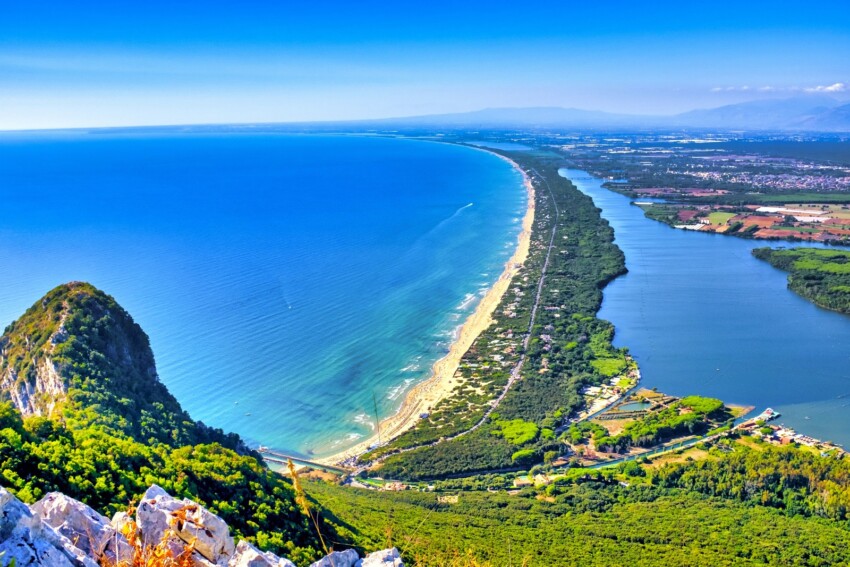
Sabaudia is one of the most beautiful and unspoilt beaches on the Lazio coast, set within the Circeo National Park about 100 kilometres from Rome. The beach is exceptionally long — over 20 kilometres of golden sand — and stretches between the sea and the coastal lakes of Paola, Caprolace and Monaci, creating a lagoon landscape of rare beauty. The waters are clear and the steady wind makes Sabaudia a favourite destination for kitesurfing and windsurfing enthusiasts.
The town itself, built in rationalist style between 1933 and 1934 to a design by Luigi Piccinato, is an interesting chapter in 20th-century Italian architecture, with its clock tower, municipal building and terraced houses arranged according to a rigorous urban plan. Monte Circeo, the promontory that closes the plain to the south, is reached on foot via a trek of about two hours and offers an exceptional panorama of the Tyrrhenian Sea. It’s reachable by car or CO.TRA.L. bus from Rome EUR.
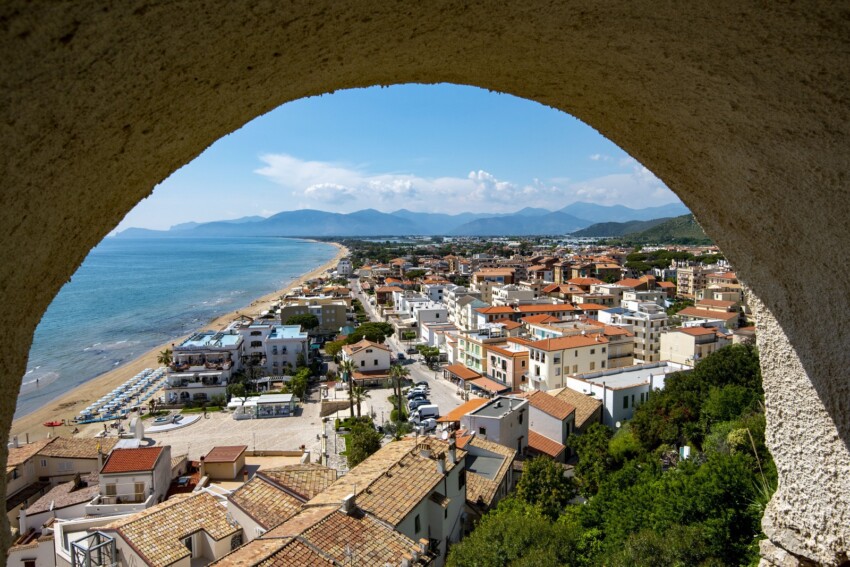
Sperlonga lies about 120 kilometres from Rome, on the border between Lazio and Campania, and is probably the finest jewel of the entire Lazio coastline. The brilliantly white medieval village clinging to the promontory is one of Italy’s most beautiful, with its wisteria and bougainvillea-covered lanes, sea-view terraces and a main square that becomes an open-air living room in summer. The waters of the bay have a transparency and colour reminiscent of the southern Mediterranean.
The beaches, divided by the promontory into two areas, are awarded the Blue Flag and rank among Lazio’s finest. In the immediate vicinity you’ll find Tiberius’s Grotto — the coastal cave where the Roman emperor loved to feast — and the accompanying archaeological museum housing fragments of the great Hellenistic sculpture depicting Scylla. A few kilometres away is Gaeta, with its historic centre on the promontory and the spectacular beaches of the gulf.
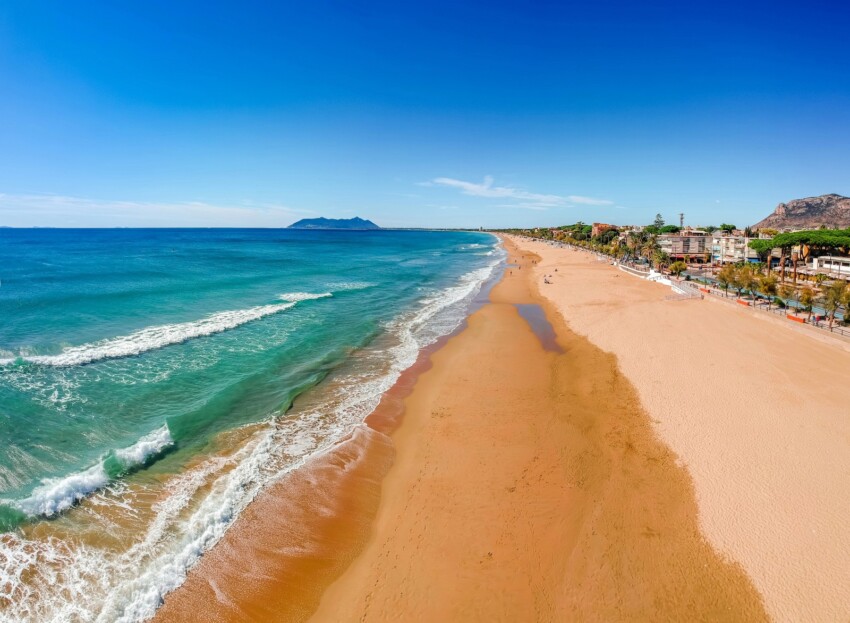
Terracina lies about 100 kilometres from Rome and is one of the most complete seaside destinations on the Lazio coast, with wide, well-equipped beaches, a medieval historic centre of great charm and one of the finest views along the coast. The lower town is modern and geared towards beach tourism, with a lively waterfront dotted with establishments, restaurants and clubs. The medieval historic centre, perched on the Pesco Montano promontory, preserves the Roman route of the Appian Way and the beautiful cathedral of San Cesareo.
At the top of the hill stand the remains of the Temple of Jupiter Anxur, a majestic 2nd-century BC Roman sanctuary overlooking the gulf with an extraordinary view: it’s one of the most spectacular viewpoints along the entire Lazio coast. Terracina is reached by car along Via Pontina, or by CO.TRA.L. bus from Rome EUR. Its proximity to Circeo National Park and Sabaudia’s beaches makes it an excellent base for exploring the entire Pontine coast.
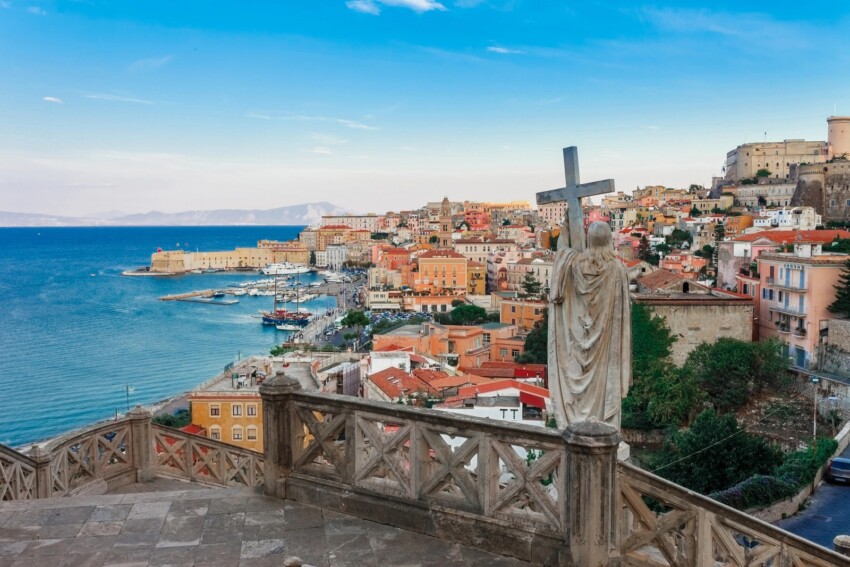
Gaeta is one of the most captivating coastal towns in southern Lazio, roughly 140 kilometres from Rome. Its medieval historic centre stretches across a promontory that divides the Gulf of Gaeta from the Gulf of Naples, featuring period palaces, ancient churches, the Castello Aragonese and a cathedral dedicated to Sant’Erasmo. The beaches that open out at the foot of the promontory, particularly Spiaggia di Serapo, are among the finest along the central Tyrrhenian coast, with emerald waters and pristine sand.
Gaeta boasts a thousand-year history: it served as a papal seat in the ninth century and was subsequently contested by Normans, Swabians, Angevins and Aragonese. The Montagna Spaccata, an exceptional geological formation with a fissure 60 metres deep cut into the rock, stands as one of the most evocative spots on the Lazio coast and, according to tradition, opened at the moment of Christ’s death. Not far away, the Eremo di San Michele is accessible via a path carved into the living rock.
In the following map you can see the location of the main places of interest mentioned in this article.
City Card allow you to save on public transport and / or on the entrances to the main tourist attractions.
 Hotel
Hotel  Budget accommodations
  Apartments
  Family Hotel
  Luxury Hotel
  Resorts