La Locanda Del Pontefice
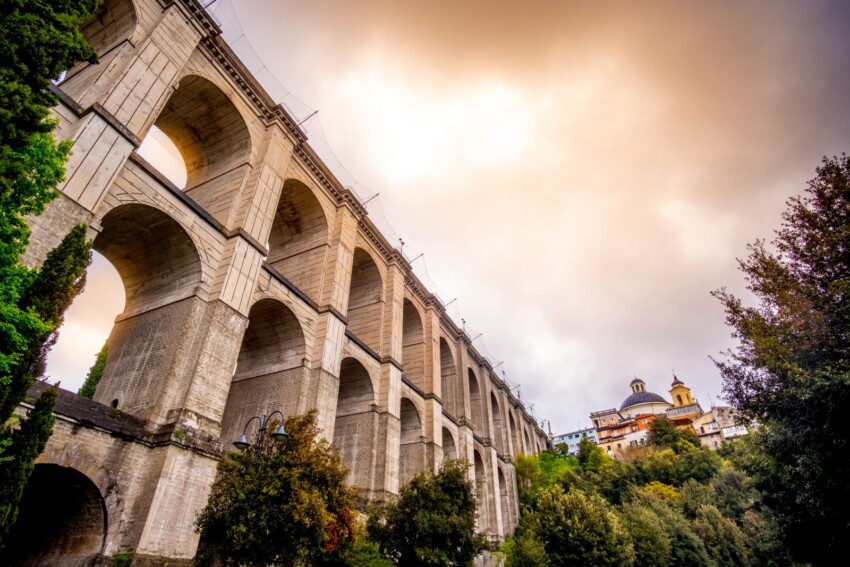
The Castelli Romani are one of Lazio’s most fascinating and historically rich territories, just a short distance from Rome. This district of sixteen municipalities sits on the Colli Albani, an area of volcanic origin stretching south-east of the capital between 400 and 900 metres in altitude. The landscape variety is extraordinary: chestnut forests, vineyards, strikingly beautiful volcanic lakes and historic villages that have preserved their distinctive character and identity intact.
The history of this area is deeply intertwined with Rome’s own. Even in Roman times, patricians and emperors chose the Castelli as a retreat, building monumental villas along the shores of Lake Albano and Lake Nemi. During the Middle Ages, the castles and fortresses that give the entire area its name emerged, and in subsequent centuries Roman nobility continued to populate these hills with sumptuous residences, country estates and palaces.
Today the Castelli Romani represent one of Romans’ favourite day-trip destinations and an increasingly appreciated destination for international tourists. Wine, porchetta, lakeside landscapes and outstanding artistic heritage make this area capable of surprising even the most discerning travellers. Visiting means discovering an alternative Rome, far from the crowds of the historic centre, immersed in bountiful nature.
Exploring the Castelli Romani means moving between medieval villages, Renaissance villas, volcanic lakes and historic wine cellars. Each town has its own identity and offers different experiences, but it’s the sum of all this that makes the territory unique in the Lazio landscape. Here are the attractions and stops you shouldn’t miss during your visit.
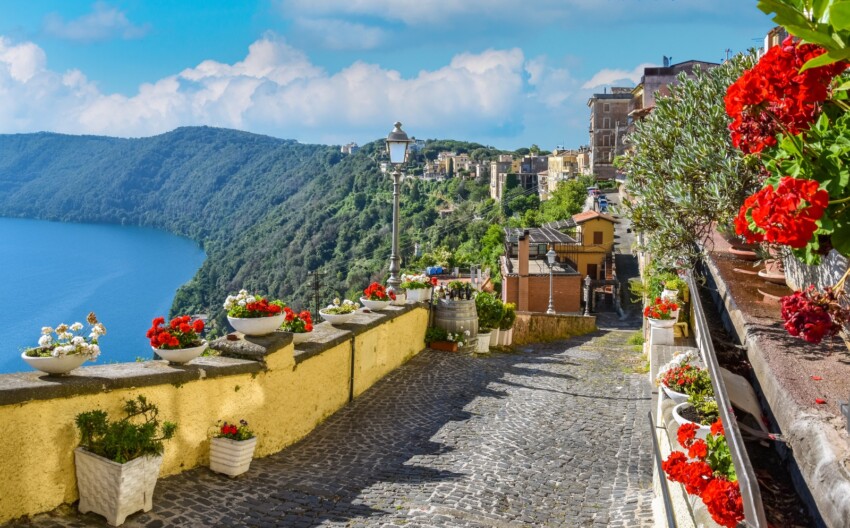
Castel Gandolfo is without doubt the most celebrated village in the Castelli Romani, known worldwide as the seat of the papal summer residence. The village sits on a spur of volcanic rock overlooking Lake Albano, a lake of volcanic origin with intensely blue waters, formed within an ancient crater. The position is spectacular: from the vantage point in the main piazza, your gaze sweeps across the lake and, on clear days, all the way to the sea.
The Apostolic Palace, the papal residence for centuries, is now open to the public thanks to an agreement made during the papacy of Francis, who chose not to live there. The Vatican Museums of Castel Gandolfo allow you to visit the gardens, historic rooms and collections of objects donated to the papacy over the centuries. Inside you’ll also find the remains of Villa of Domitian, one of the most impressive imperial Roman residences of antiquity, with mosaics and structures still visible.
Lake Albano, at 170 metres deep, is the deepest in Lazio. Along its shores runs a cycling path of about 10 kilometres, ideal for walks and sports activities. The area is popular with Romans for swimming and canoeing, and becomes quite lively on summer weekends. From Castel Gandolfo you can walk down to the lake in about twenty minutes, or drive via a winding road surrounded by greenery.
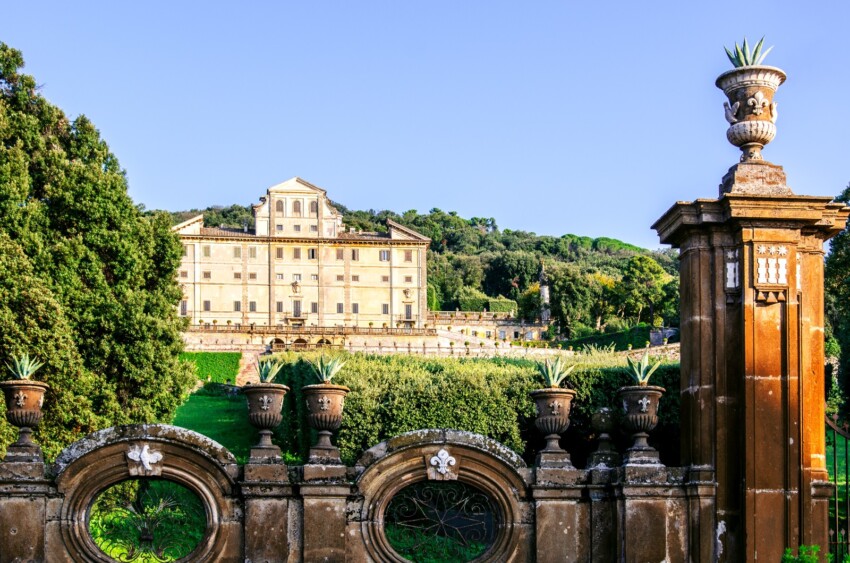
Frascati is the largest and most famous town in the Castelli Romani, known worldwide for its white DOC wine, produced from grape varieties such as Malvasia, Trebbiano and Bellone on the slopes of the Colli Albani. But Frascati is also an important art town, dominated by a series of aristocratic villas built between the 16th and 17th centuries by powerful Roman families.
Villa Aldobrandini is the most important and impressive: built at the end of the 16th century at the behest of Cardinal Pietro Aldobrandini, nephew of Pope Clement VIII, it stands like a scenic backdrop above the town, visible from many points in the historic centre. Its park is one of the finest examples of mannerist gardens in Lazio, with monumental fountains, artificial grottos, water features and box-hedged avenues. The villa is privately owned but the park can be visited by appointment.
In the centre of Frascati, the Cathedral of St Peter the Apostle, rebuilt after the Second World War bombing, and the Tusculan Museum, which houses finds from excavations of the ancient city of Tusculum, are both worth a visit. Tusculum was Cicero’s favourite city, where he set the famous dialogues of the “Tusculanae Disputationes”. The ruins of the Tusculan amphitheatre and forum can be visited a few kilometres from the centre.
Tasting Frascati DOC wine in the town’s historic cellars is an experience not to be missed. The wine bars in the centre offer pairings with local specialities, particularly porchetta (roast pork) and local cheeses. The Saturday weekly market is a great way to get in touch with the everyday life of the town.
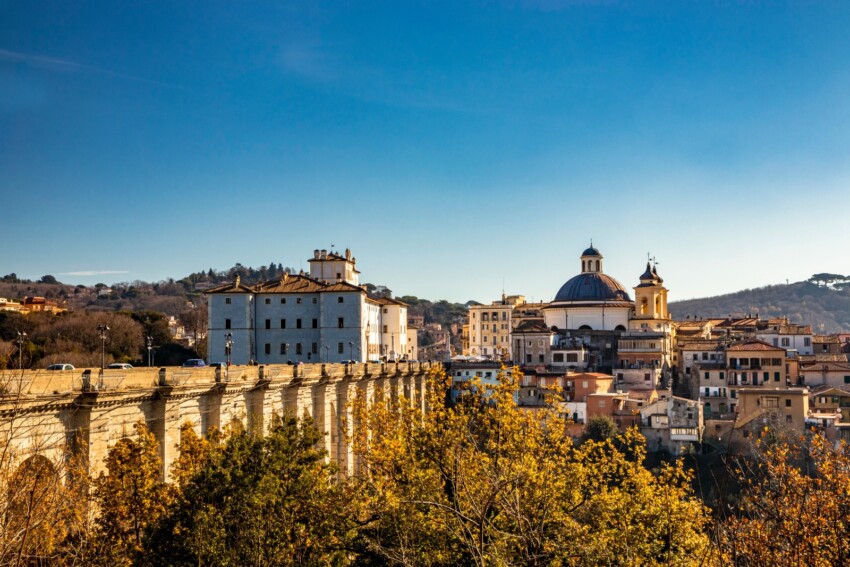
Ariccia is a village that impresses with the quality of its artistic heritage and a gastronomic tradition that has become famous well beyond the borders of Lazio. The heart of the town is Piazza di Corte, a baroque theatrical setting designed by Gian Lorenzo Bernini in the 17th century at the request of the Chigi family: the piazza is flanked by the monumental Palazzo Chigi, by the church of Santa Maria Assunta with its drum dome inspired by the Roman Pantheon, and overlooks a landscape of extraordinary natural beauty.
The Palazzo Chigi of Ariccia is now a museum open to the public, which houses original 17th and 18th-century furnishings, art collections and a section dedicated to the Grand Tour, the journey through Italy that European artists and intellectuals undertook between the 18th and 19th centuries. Artists such as Corot, Turner and many painters of the German “Nazarenes” stayed in Ariccia, drawn by the light and landscape of the Castelli Romani.
But Ariccia is known above all for its IGP porchetta, recognised by the European Union as a product with Protected Geographical Indication. The tradition of roasting whole pigs on a spit, seasoned with garlic, rosemary and pepper, dates back at least to the Middle Ages. Today the fraschette — the traditional taverns of Ariccia — are historic meeting places, where you drink Castelli wine and eat porchetta sandwiches in a convivial and popular atmosphere. The Porchetta Festival, held every September, attracts tens of thousands of visitors.
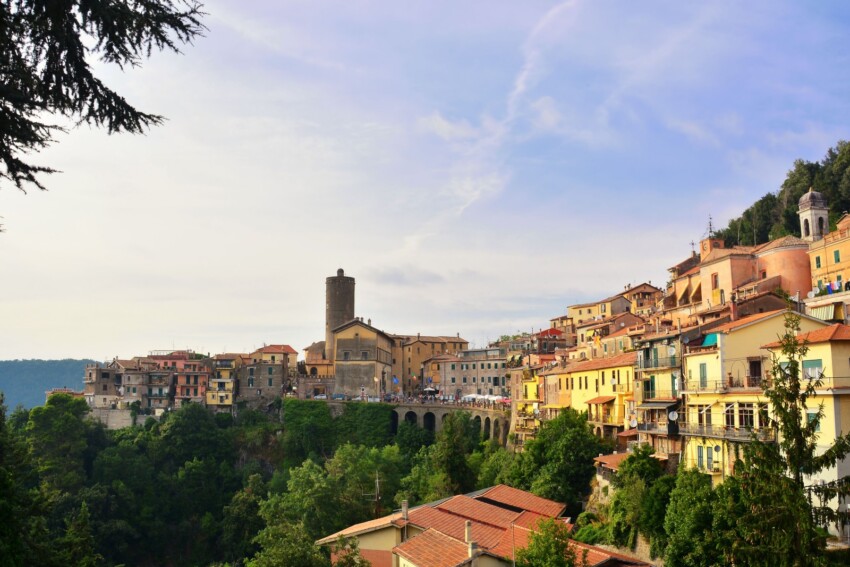
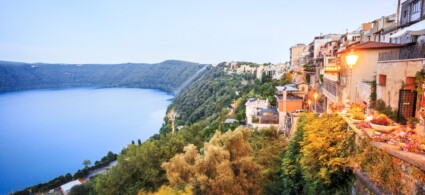
Nemi is perhaps the most romantic village in the Castelli Romani. Clinging to a cliff that drops dramatically to its crater lake, with ochre and terracotta coloured houses reflected in the dark green water, this small town of just over two thousand inhabitants has inspired poets, painters and travellers for centuries. Lake Nemi, called by the ancient Romans speculum Dianae — the mirror of Diana — was sacred to the goddess and to her temple situated on the north shore.
In the centre of the town is the Museum of Roman Ships, which preserves the story of one of the most extraordinary archaeological recoveries of the 20th century. In the 1930s, by order of Mussolini, the lake waters were partially drained to recover two enormous ceremonial ships built by the Emperor Caligula in the 1st century AD. The ships, measuring 71 and 73 metres respectively, were veritable floating villas, decorated with marble, bronze and heating systems. Unfortunately they were destroyed by fire in 1944 during the German retreat. The museum displays scale models of the ships and surviving artefacts, including lead pipes, bronze nails and decorative elements of great refinement.
The village of Nemi is also the capital of strawberries: the local variety, small and extremely fragrant, is grown on the shores of the lake and celebrated every year with the Strawberry Festival in June. Along the main street of the town, stalls display fresh strawberries, jams, liqueurs and derived products. The walking path that descends from the village to the lake through the woods is one of the most pleasant in the entire Castelli Romani area.
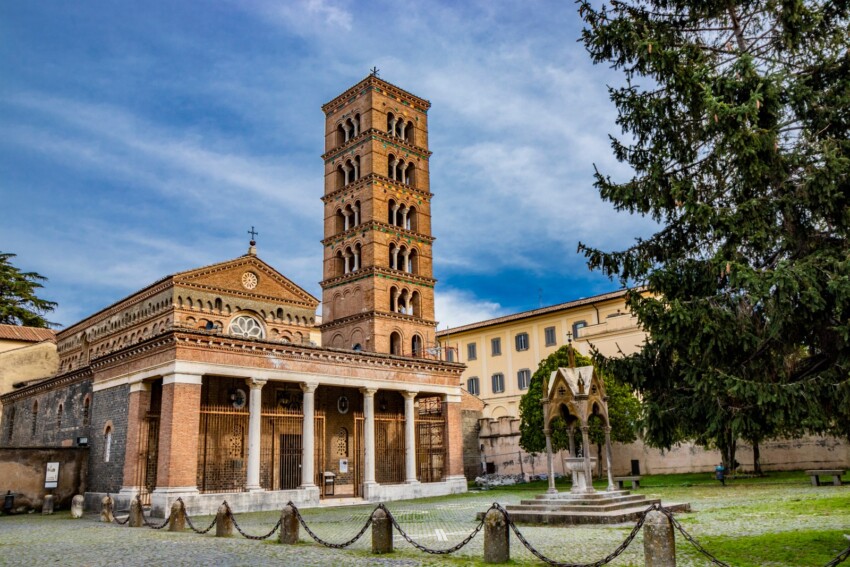
Grottaferrata preserves one of the most unusual and fascinating monuments in the entire Castelli area: the Abbey of San Nilo, a Basilian monastery — that is, of Greek-Eastern rite — founded in 1004 by the Calabrian monk San Nilo da Rossano. The abbey is still inhabited today by monks of the Greek-Catholic rite, who keep Byzantine liturgical traditions alive in the midst of the Lazio countryside. It is a unique case throughout central Italy.
The monumental complex is surrounded by an imposing 15th-century fortified structure built by Cardinal Giuliano della Rovere, the future Pope Julius II, one of the most powerful patrons of the Renaissance. The interior preserves frescoes of the Domenichino school in the narthex of the church, an elegantly medieval cloister and the Domenichino Hall, frescoed by the Bolognese painter between 1608 and 1610 with scenes from the life of San Nilo. The abbey also houses a picture gallery, a library with medieval manuscripts and a manuscript restoration workshop.
The historic centre of Grottaferrata is worth a stroll: the main street is animated by shops and cafés, and on Sunday mornings the neighbourhood market brings life and colour. Nearby are some of the best wine cellars in the area, where you can buy Castelli white wine directly from the producers.
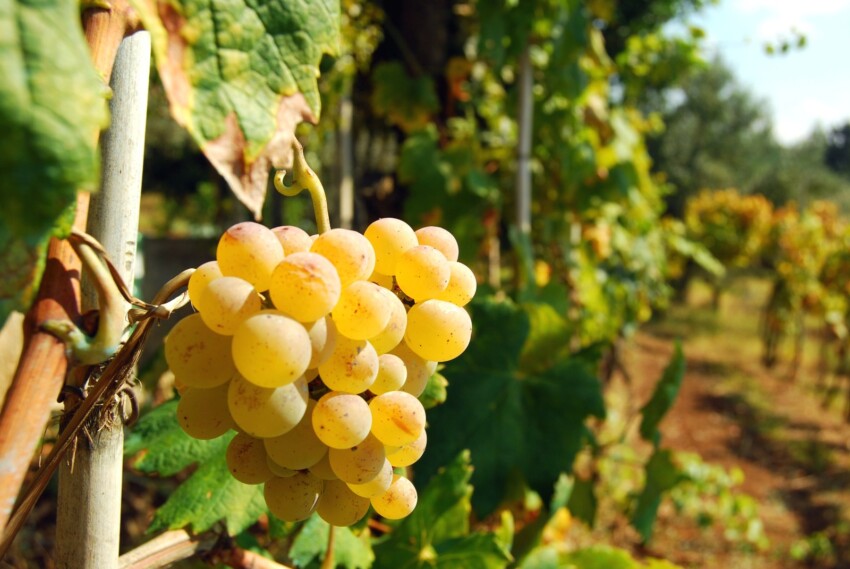
Marino is one of the largest and most populous towns in the Castelli Romani, with a history that stretches back to antiquity. The historic centre preserves several aristocratic palaces and churches of interest, including the Collegiate Church of San Barnaba with its baroque façade. But Marino has entered legend above all thanks to an event that repeats every year on the first Sunday of October: the Grape Festival.
During the festival, the fountain in Piazza Matteotti — built in 1931 — flows with white wine instead of water for the entire day. The tradition dates back to 1571, the year when the people of Marino celebrated the victory of the Christian fleet at the Battle of Lepanto, to which many citizens participated. Allegorical floats adorned with grape bunches parade through the town centre, accompanied by musicians and actors in historic costume. The festival attracts tens of thousands of visitors from all over Italy every year.
Marino is also an ideal starting point for exploring the Southern Castelli, namely Albano Laziale, Ariccia and Velletri. The Ancient Appian Way passes through Marino territory, and along its route you’ll find Roman columbaria, sepulchres and villa remains that testify to the density of ancient settlement in this area.
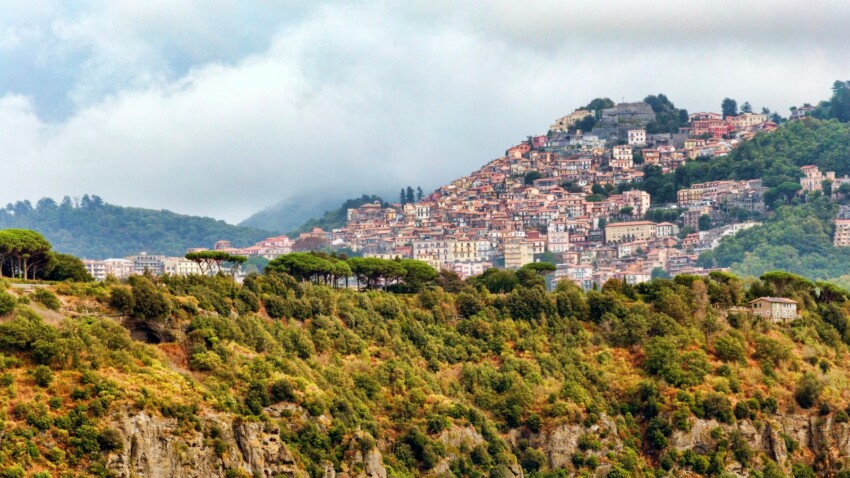
Rocca di Papa is the highest municipality in the Castelli Romani, perched at 680 metres above sea level on the slope of Monte Cavo, the highest peak of the Colli Albani at 949 metres. The town has a well-preserved medieval character, with steep alleyways, tufa arches and houses built directly onto the rocky cliffs. The main piazza offers an exceptional panorama of Lake Albano and the Roman countryside stretching to the sea.
Monte Cavo was considered sacred by the ancient Latins, who celebrated the Feriae Latinae, festivals in honour of Jupiter Lazialis, there. On its summit stood a temple dedicated to Jupiter, now replaced by a modern structure, but the path climbing the Sacred Way of the Latins — paved with large Roman basalt blocks still well preserved — is one of the most evocative in the entire Castelli area. On foot from the top of the village you can reach the summit in about an hour’s walk through beech and chestnut woods.
Rocca di Papa is visited year-round: in summer for the cool woods and walks, in winter for the occasional snowfalls that make the landscape even more spectacular. In the town centre restaurants you’ll find the most traditional recipes of Castelli cuisine: porcini mushrooms, chestnuts, homemade pasta and game stew.
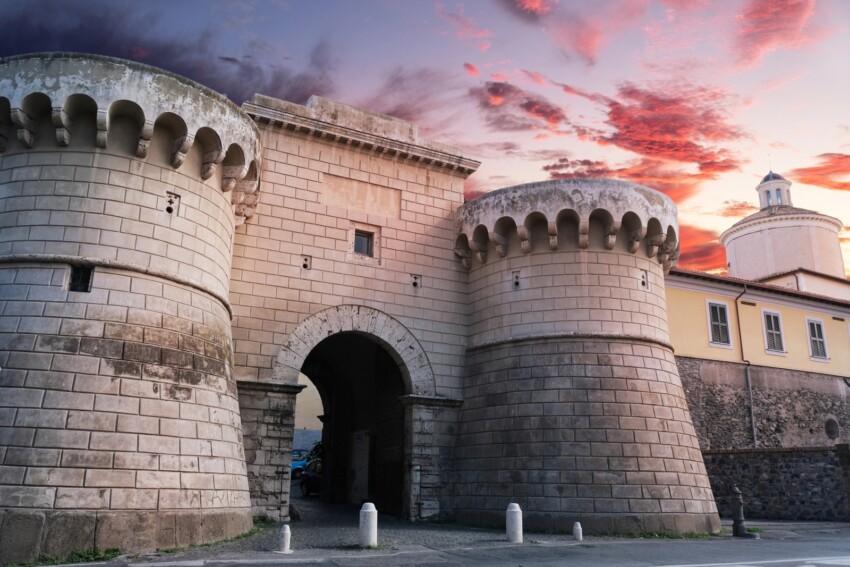
Velletri is the southernmost and largest town in the Castelli Romani, with a history spanning over three thousand years. Capital of the Volscians in the archaic period, then a Roman municipality and episcopal seat since the 4th century, Velletri preserves a stratified historic centre that tells centuries of continuous history. The town is also the birthplace of the maternal grandfather of Augustus, the first Roman emperor.
The most important monument is the Cathedral of San Clemente, built in the 6th century and reworked in later periods. Inside are works of great artistic value, including a 4th-century Early Christian sarcophagus decorated with scenes from the Old and New Testaments, considered one of the most important in the region. The Diocesan Museum next to the cathedral houses liturgical objects, paintings and sculptures that document the religious history of the territory.
Velletri is also famous for the production of Velletri DOC wine, both white and red, grown in a territory particularly suited due to the volcanic composition of the soils. The Velletri Producers’ Cellar, one of the largest wine cooperatives in Lazio, is open to visitors with tastings and represents a key reference point for those wanting to explore the wine culture of the territory.
In the following map you can see the location of the main places of interest mentioned in this article.
The Castelli Romani are among Lazio’s gastronomic capitals. The culinary tradition of this area is humble in its origins but extraordinarily rich in flavour, built around a few ingredients of exceptional quality: white wine, extra virgin olive oil, local meat, mushrooms and fresh produce.
The undisputed star of the Castelli table is Castelli Romani white wine, produced in the areas of Frascati, Marino, Montecompatri and Velletri. Frascati Superiore DOCG is the most renowned and internationally appreciated wine, a dry white with striking mineral notes, floral and fruity undertones. Marino DOC and Velletri DOC complete an extensive wine selection. A visit to the historic cellars, many of which are housed in ancient tufa caves, is an experience that merges history with sensory pleasure.
Porchetta di Ariccia IGP is the other great gastronomic symbol of the area, though the roasted meat tradition extends to numerous other dishes: abbacchio alla cacciatora, braised wild boar, rabbit Castelli-style. The fraschette — historic popular trattorias — are the perfect places to eat well without spending much, in a convivial and authentic atmosphere. The food festivals that enliven the Castelli from May to October offer further opportunities to experience local culinary traditions.
Those choosing to stay in the Castelli Romani can opt for very different accommodations depending on the type of stay desired. Frascati is the most convenient choice for those wanting a lively town centre, with restaurants, shops and good connections to Rome: bed and breakfasts in the historic centre let you stroll in the evenings among wine bars and local establishments, with the convenience of regional trains reaching the capital in under thirty minutes.
Castel Gandolfo is ideal for those seeking a romantic stay with lake views: accommodation overlooking Lake Albano offers a wonderful atmosphere, particularly enchanting in the early morning when mist rises from the water. Prices are generally more reasonable than Rome, and tranquillity is assured.
For a more rural experience immersed in nature, farm stays on the hills between Ariccia and Nemi are your best option. Many properties have swimming pools, serve their own produce and organise local wine tastings. They’re perfect for families with children or those wanting to escape the urban hustle completely. Rocca di Papa and the higher hilltop villages are recommended in summer, when temperatures are noticeably cooler than in the Roman plains.
The Castelli Romani are located between 20 and 45 kilometres from central Rome, easily reached by car, train and regional public transport services. This geographical position makes the area particularly accessible for those arriving in Rome by plane or train and wishing to organise day trips or longer excursions.
The most useful rail connection is the Rome Termini – Frascati regional line, operated by Trenitalia, which covers the approximately 20-kilometre distance in just over 30 minutes with trains departing roughly hourly. Frascati station is located at the foot of the historic centre, from which you walk up or take local buses. To reach Castel Gandolfo and Albano Laziale, the Rome Termini – Albano Laziale line is available with a stop at Castel Gandolfo, a journey of around 40 minutes. For other areas of the region — Ariccia, Nemi, Rocca di Papa, Grottaferrata — trains are not available and buses or a car are necessary.
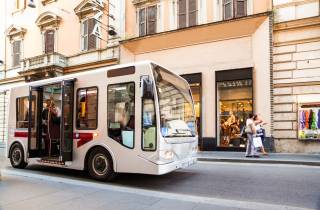
COTRAL, the Lazio public transport company, connects Rome with all municipalities in the Castelli Romani through an extensive network of regional buses. Departures mainly leave from Anagnina (Metro Line A terminus) and Laurentina (Metro Line B terminus). Journey times vary between 30 and 60 minutes depending on your destination.
The car remains the most comfortable and flexible way to explore the Castelli Romani, allowing you to move freely between the different villages and reach wineries, farm stays and woodland trails. From Rome, exit via the Grande Raccordo Anulare (GRA) ring road taking the Via Tuscolana (SS215) towards Frascati and Grottaferrata, the Via Appia Nuova (SS7) towards Castel Gandolfo and Albano Laziale, or the Via dei Laghi for a scenic route passing through Nemi and Rocca di Papa. Parking in the historic centres is generally available in paid areas just outside the centre.
City Card allow you to save on public transport and / or on the entrances to the main tourist attractions.
 Hotel
Hotel 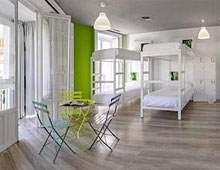 Budget accommodations
 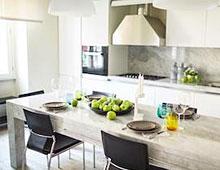 Apartments
  Family Hotel
 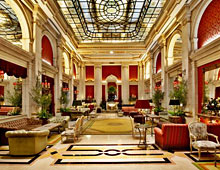 Luxury Hotel
 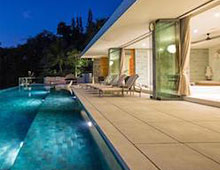 Resorts