La Locanda Del Pontefice
Don’t assume that once you’ve finished visiting Rome, your time in the capital is over. There are actually plenty of beautiful attractions in the surrounding areas, all well worth a visit. It’s unlikely you’ll manage to see them all at once, given how many there are and how far apart they’re spread. Instead, try to pick one or two based on your interests, or plan a mini itinerary to round off your Rome holiday with a taste of the surrounding region.
Near Rome, you can embark on a range of day trips with different themes: from lake outings to visits to historic towns, taking in Renaissance villas and theme parks for the whole family. Some are located within Rome province, such as the celebrated Castelli Romani area with its charming villages and elegant palaces, or Tivoli, which boasts three unmissable attractions: Villa d’Este, Villa Adriana and Villa Gregoriana. For other things to see near Rome, you’ll need to venture beyond the province, heading into Viterbo province or even into Umbria, in Terni province where you’ll find the beautiful Orvieto.
As you’ve probably gathered by now, there’s an awful lot to see near Rome. Here are the best options: pick your favourite and get ready for an unforgettable day trip.
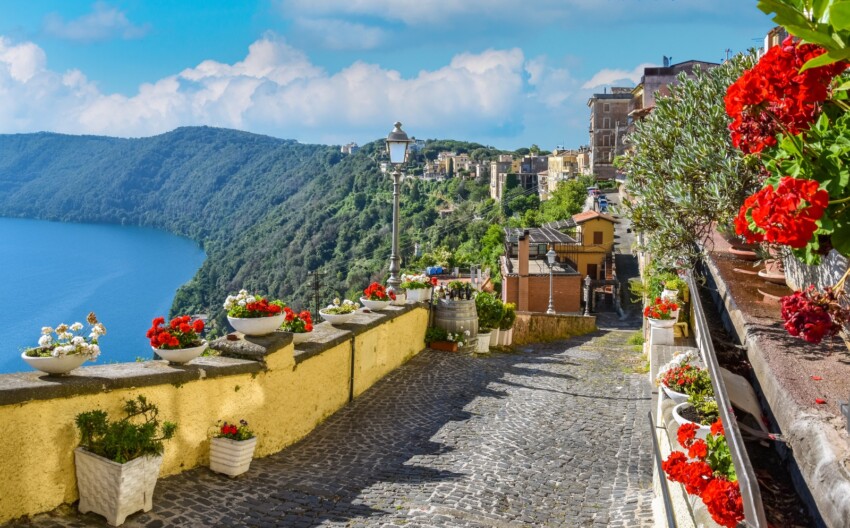
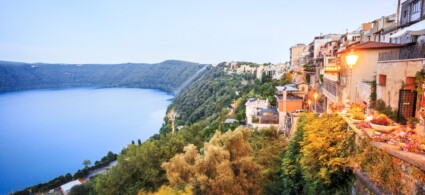
Castel Gandolfo sits in magnificent natural surroundings, on the banks of Lake Albano. Its historic centre is part of the association of Italy’s most beautiful villages, but the name is well known even among those not particularly interested in travel, because it’s home to the magnificent Pontifical Palace, or Apostolic Palace, which from 1600 until a few years ago served as the Pope’s summer residence: it represents Castel Gandolfo’s main attraction, a beautiful museum housing wonderful works of art, including paintings, tapestries and period furnishings.
Alongside the Pontifical Palace, two other villas in Castel Gandolfo form a historic and museum complex known as the Pontifical Villas of Castel Gandolfo: these are Villa Cybo and Villa Barberini, both beautiful and impressive, with gardens that form part of a second complex, called the gardens complex of the Pontifical Villas.
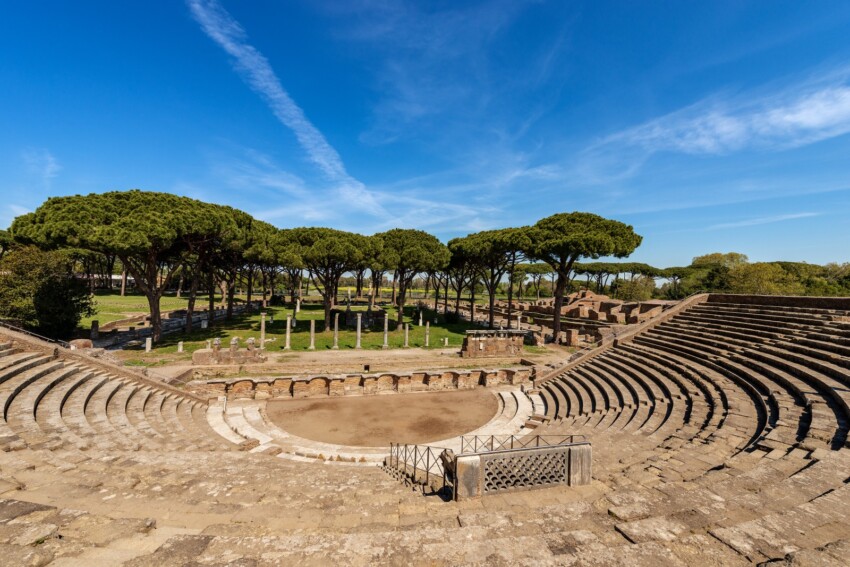
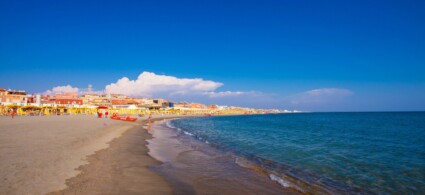
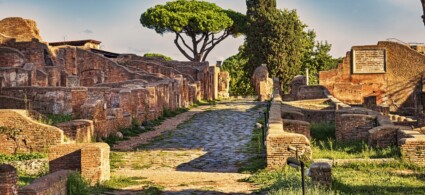
Let’s move to the Roman coast, just a few kilometres from Fiumicino airport. Everyone knows Ostia, long a favourite destination for a seaside weekend for both Romans and tourists, but not many realise that nearby lies the Ostia Antica archaeological park, a satellite city of ancient Rome which in its heyday was home to over 75,000 inhabitants.
Excavations at Ostia Antica have unearthed the ancient city, founded according to legend by King Ancus Marcius in 620 BC. Among the park’s highlights are certainly the Roman theatre, the Laurentian necropolis and beautiful coastal villas. Adding to the picture are the imperial ports of Claudius and Trajan, two emperors who ruled around the time of Christ’s birth, who provided Ostia with a commercial port that made it economically independent from Rome.
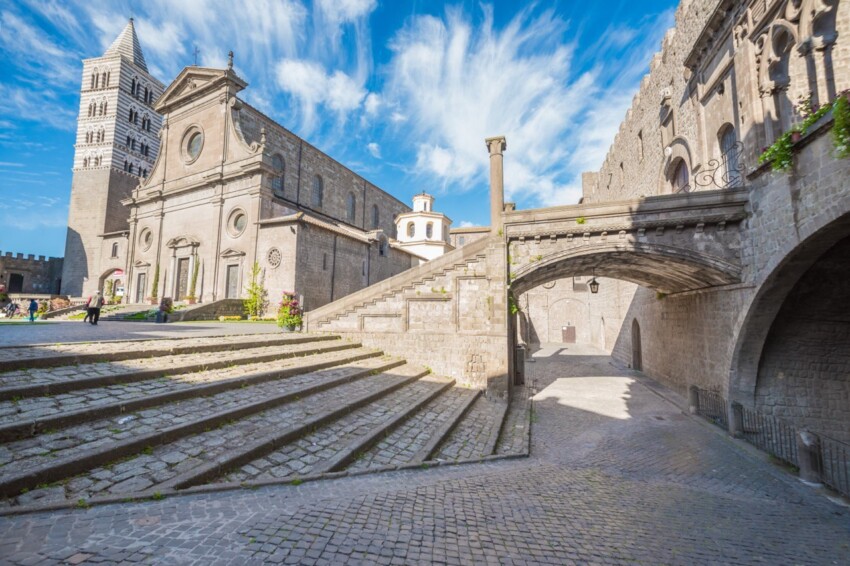
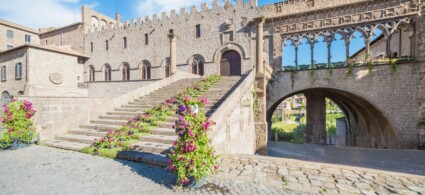
When listing the provincial capitals of Lazio, everyone naturally mentions Rome first, but the small town of Viterbo also deserves a visit. It’s an interesting tourist destination thanks to the beauty of its historic centre, which coincides with the San Pellegrino neighbourhood, where you’ll find elegant palaces and medieval squares, as well as thanks to its immediate surroundings: near Viterbo you can visit Lake Bolsena and the splendid Civita di Bagnoregio.
Walking through the streets of Viterbo’s historic centre, the beating heart of the historic region of Tuscia, you’ll discover enchanting views, narrow alleyways and spacious squares. On one of these, Piazza San Lorenzo, you’ll find the wonderful Palace of the Popes, which served as the papal seat for a brief period when Pope Alexander IV in the thirteenth century decided to move it to Viterbo from Rome. Don’t miss the cathedral and the Church of Santa Maria Nuova, both in Romanesque style, whilst the medieval past of the city is testified to by the city walls, which encircle Viterbo for a perimeter of approximately 4 kilometres.
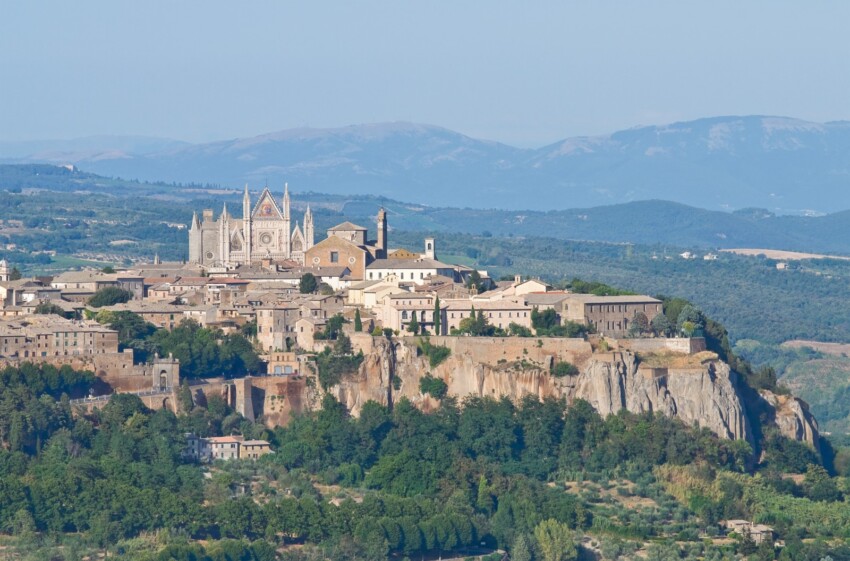
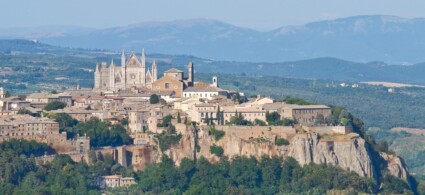
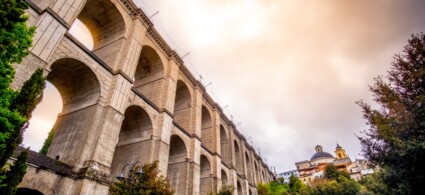
From Rome, in just over an hour and a half’s drive you’ll reach Umbria. Among the region’s most beautiful locations is certainly Orvieto, built on a tuff ridge visible even from the motorway. We’re in Terni province, and it’s truly a destination not to be missed, thanks to the abundance of things to see concentrated in a relatively small town that’s easily explored on foot.
Among Orvieto’s treasures, pride of place goes to its majestic cathedral, dedicated to Santa Maria Assunta, whose façade is the symbol of the town, thanks to its Renaissance spires and mosaics. Even inside, Orvieto cathedral manages to impress, with richly frescoed chapels, most notably the one dedicated to San Brizio.
Next to Orvieto cathedral you’ll find the Papal palaces, also worth visiting, and the national archaeological museum, which houses Etruscan artefacts from the surrounding area. Finally, don’t leave Orvieto without visiting the Well of Saint Patrick, a fascinating engineering feat dating from the sixteenth century, made famous by its distinctive double helix staircase.
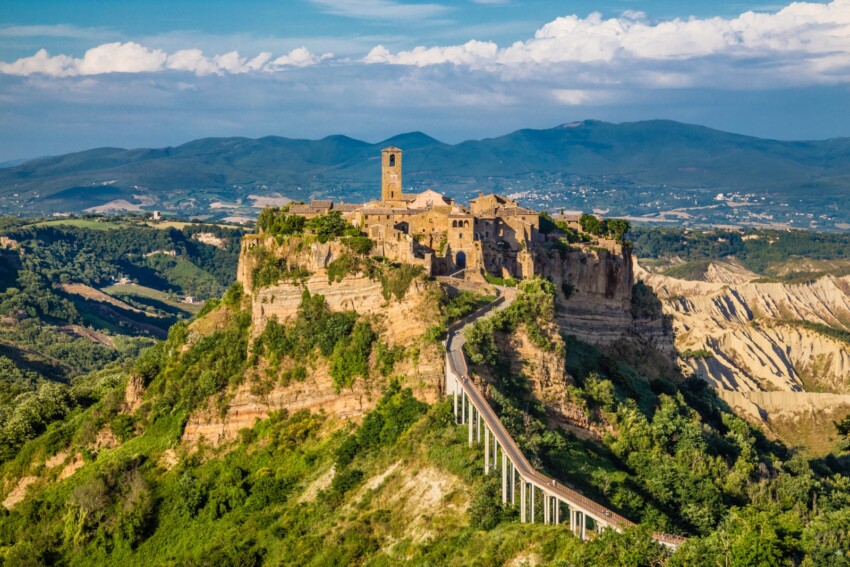
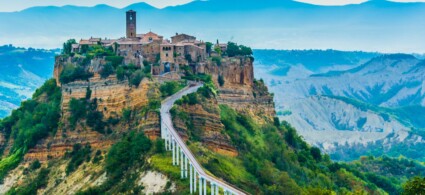
In recent times, a completely depopulated village in Viterbo province has made tourism headlines, built on a tuff hilltop and connected to the mainland by a bridge, rather like a small Italian Mont Saint Michel. It’s Civita di Bagnoregio, described as “the dying city” by writer Bonaventura Tecchi because of the constant erosion it suffers due to its location on tuff.
Today, Civita di Bagnoregio is a beautiful day trip from Rome, to visit a village where time has quite literally stood still. Fortunately, tourism has brought it back to life, so you won’t be alone. You can still enjoy fantastic views and majestic panoramas of the underlying Calanchi valley, and visit the interesting geological and landslide museum, which provides a scientific explanation for the erosion that still affects the village.
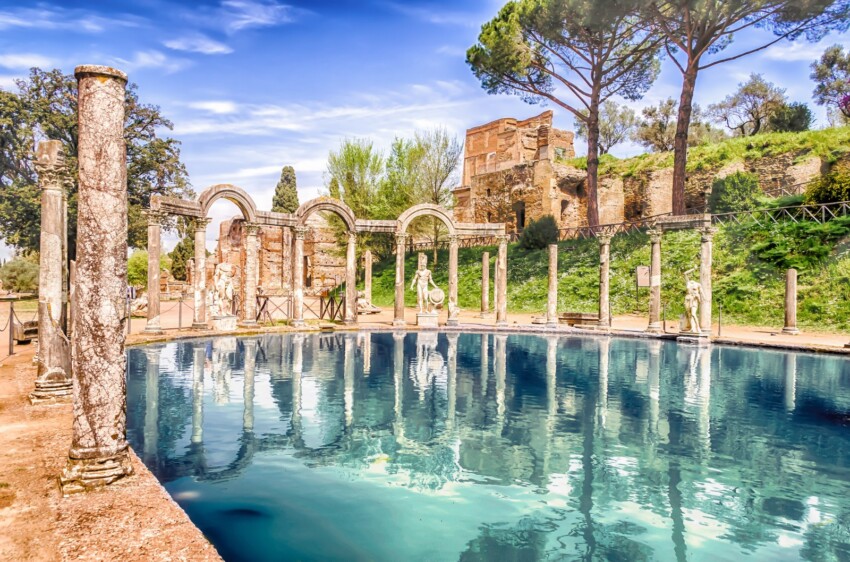
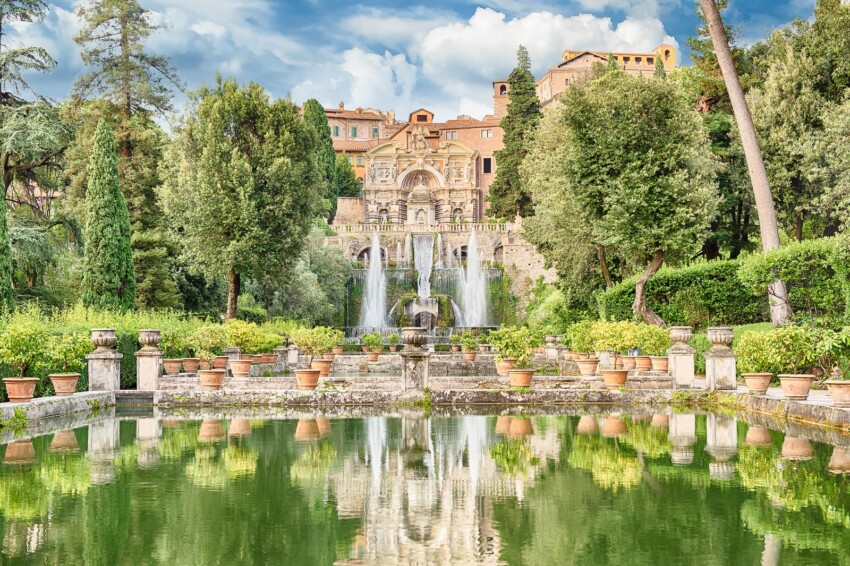
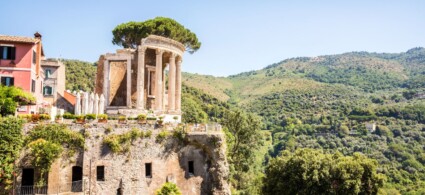
If you’re looking for a destination you can reach quickly from Rome with plenty to see, you’ve found it. It’s Tivoli, located a few dozen kilometres south-east of the capital. Here you’ll find three top-class attractions that are not only highlights of Rome province, but of all Italy. These are Villa d’Este, Villa Gregoriana and Villa Adriana, each one beautiful but profoundly different from the others.
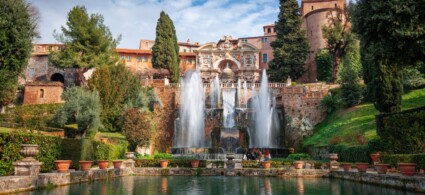
Let’s start with Villa d’Este, a Renaissance villa with a dreamlike garden adorned with sculptures and fountains, so much so that UNESCO has included it in its World Heritage list. Not far away is Villa Gregoriana, which despite its name is not a villa but a garden, set on a hillside sloping dramatically down to the valley below where the River Aniene flows. Here the main attraction is the Aniene waterfall, which plunges down in a cascade second in Italy only to that of the Marmore Falls.
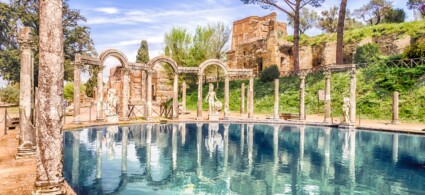
Finally, Villa Adriana: it was Emperor Hadrian’s country retreat, who wanted for himself and his family a residence of unreasonable proportions, estimated to extend across a massive 120 hectares. The ruins of Villa Adriana represent a truly unmissable stop for all fans of ancient Rome, and an absolute must on any Tivoli visit.
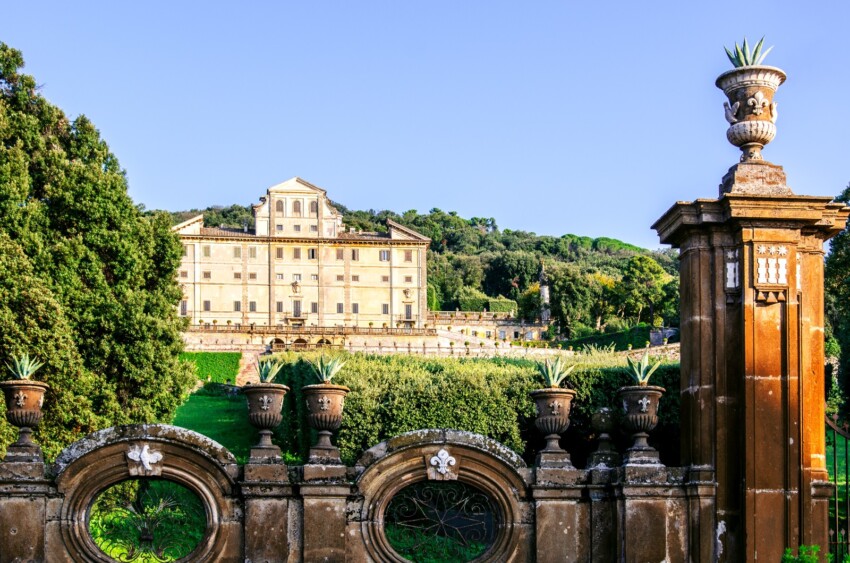
Among the day trips most appreciated by tourists visiting Rome is certainly one to the Castelli Romani. The name denotes a group of 17 towns located south-east of the capital, renowned for their history as well as for the natural landscape surrounding them, and for their food and wine scene. Among the villages that make up the Castelli Romani, we’d certainly recommend Albano Laziale, Ariccia, the aforementioned Castel Gandolfo, but also Frascati, Rocca di Papa and Grottaferrata. Well-known names that hide authentic, hidden treasures within them.
Don’t miss during your visit to the Castelli Romani a stop at Lanuvio, a medieval village near Velletri with a pleasant historic centre, as well as Genzano di Roma, situated on the outer slopes of the crater of Lake Nemi, Ariccia, with its monumental complex of Piazza di Corte designed by Gian Lorenzo Bernini, Frascati with its beautiful villas and stately palaces, and also the numerous events held in the various villages throughout much of the year.
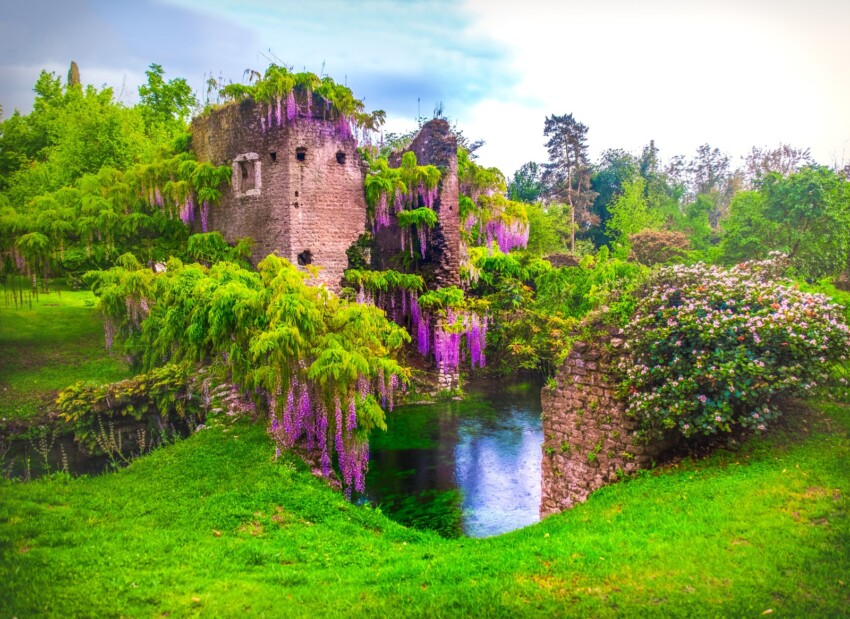
In the municipality of Cisterna di Latina, about an hour’s drive south of Rome, you’ll find the Garden of Ninfa, a true oasis of peace and tranquillity. It’s a typical English garden, built on the site where centuries ago the ancient medieval town of Ninfa stood, now vanished with only a few ruins remaining, many of which were restored during the work to create the garden.
The particular feature of the Garden of Ninfa is that it incorporates the ruins of the old medieval town, now integrated within a vast garden extending across 8 hectares, home to around 1,000 plants of every species. The colour variations created by the flowing river, which passes under some of the bridges belonging to ancient Ninfa, are particularly beautiful.
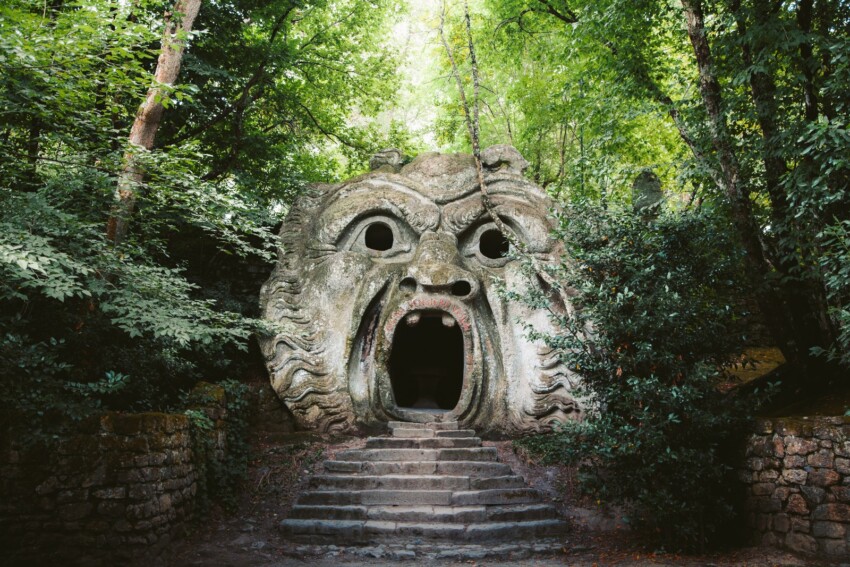
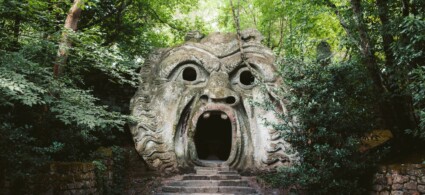
The Bomarzo Wood, also known as the Sacred Wood, Monster Park or Villa of Wonders, is a monumental park located in Bomarzo, in the province of Viterbo, roughly an hour’s drive north of Rome. In recent years, it has become increasingly popular with tourists, who flock here to pose for photographs beside basalt sculptures depicting mythological creatures, deities and monsters.
The park sprawls across approximately 3 hectares within a forest of conifers and broadleaf trees, and is open daily from 8am until sunset. The park was created around the middle of the 16th century, with the sculptures executed by local artists. Among the most important and iconic are the sphinxes positioned at the entrance, the Colossus representing Hercules battling Cacus and the park’s largest statue, the tortoise and whale grouping, and the famous Proteus, an anthropomorphic mask with gaping jaws.
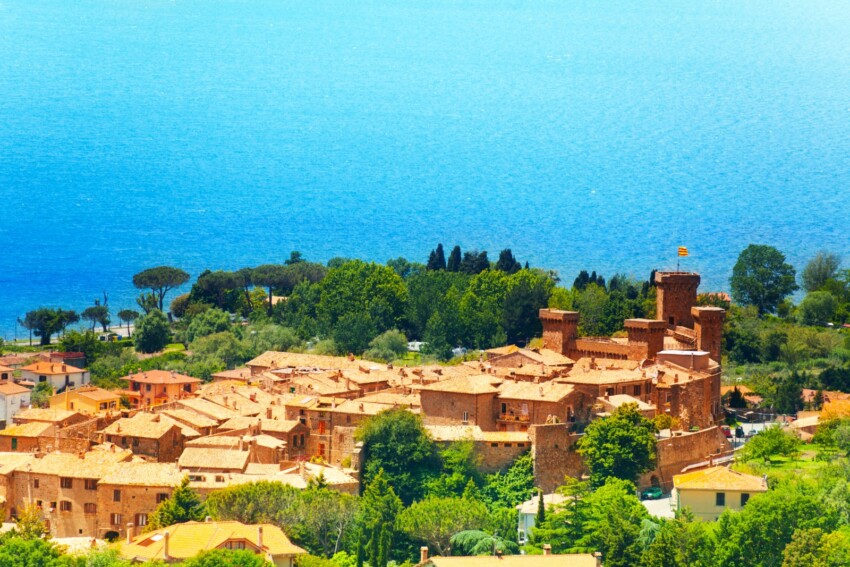
We remain in Viterbo province, a short distance from Bomarzo Wood. This is where you’ll find Lake Bolsena, Europe’s largest volcanic lake, formed over 300,000 years ago. It has an approximately circular shape, and dotted along its shores are numerous towns, villages and hamlets, all worth visiting, starting with Bolsena itself, which gives the lake its name, with its waterfront promenade and charming historic centre.
Once you’ve visited Lake Bolsena, you’ll likely realise that a single day trip from Rome isn’t quite enough to discover all the area has to offer. You can visit the villages of Montefiascone, Marta and Capodimonte, situated directly on the lake’s shores, whilst enjoying a variety of activities, such as boat trips to Bisentina Island, Martana Island or a visit to the territorial museum, housed within the Monaldeschi della Cervara fortress in Bolsena’s town centre.
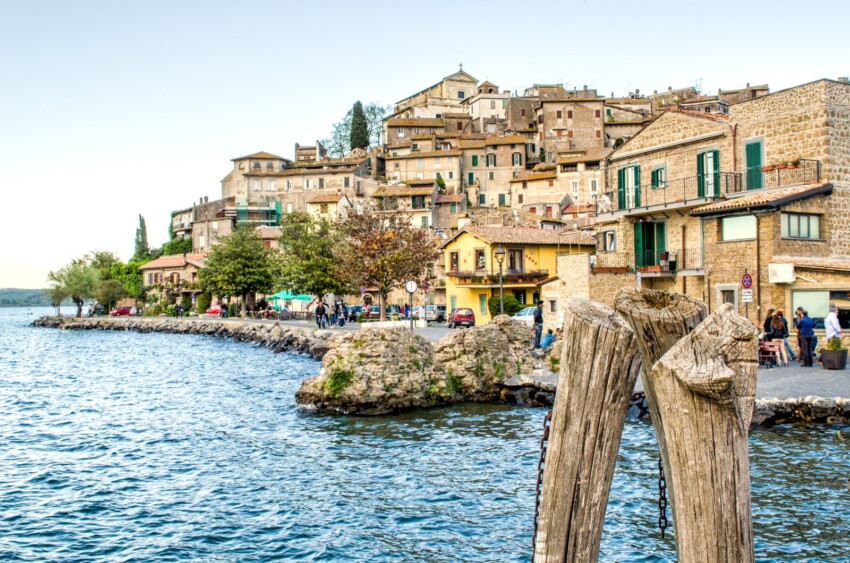
Lake Bracciano, also known as Lake Sabatino, lies to the north of Rome, surrounded by the Sabatini Mountains. After Lake Bolsena, it is Lazio’s second largest lake, with its shores shared between the municipalities of Bracciano, Anguillara Sabazia and Trevignano Romano. The lake, together with the smaller Lake Martignano situated approximately 2 kilometres away, forms part of the Bracciano-Martignano Regional Natural Park.
Visiting Lake Bracciano from Rome is an excellent idea for a day trip, as you can explore the villages that dot its shores, enjoy relaxing walks along the waterfront and even swim in one of the many designated bathing areas. The lake’s waters are teeming with fish and motorboats are prohibited, with the exception of fishing vessels and the Sabazia II ferry, which connects the three settlements by water.
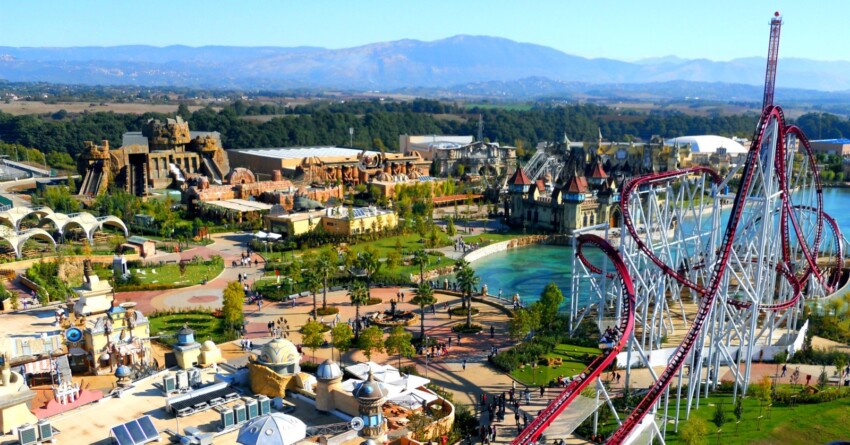
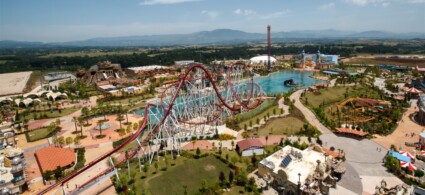
If your idea of a day trip from Rome is to keep the children entertained, head straight to MagicLand, one of Italy’s largest amusement parks. Located within the municipality of Valmontone, approximately 45 minutes’ drive from the city centre, it boasts over 40 attractions to keep the whole family amused.
You can board thrilling roller coasters or gentle fairground rides, all set within an environment made even more exciting by numerous entertainment shows held throughout the park’s opening days. So take a break from Rome and its monuments and dedicate a day of your holiday to family fun.

If MagicLand isn’t for you or you’ve already visited, why not take your children to Zoomarine? Located in Torvaianica, it’s a unique blend of a traditional amusement park, zoo and water park. This is precisely how the park’s various areas are classified: there are 8 zones dedicated to animals, where you can admire tortoises, parrots, lemurs and dolphins, and 15 attractions to suit all tastes, including a roller coaster, a train ride, 4D cinema and a selfie museum.
Completing Zoomarine’s offering is the so-called water zone, open only during summer, which features spacious pools, relaxation areas and water games to entertain the whole family, allowing you to enjoy a refreshing day away from Rome’s city heat.
City Card allow you to save on public transport and / or on the entrances to the main tourist attractions.


 Hotel
Hotel  Budget accommodations
  Apartments
  Family Hotel
  Luxury Hotel
  Resorts