Rome
Your Complete Rome Travel Guide
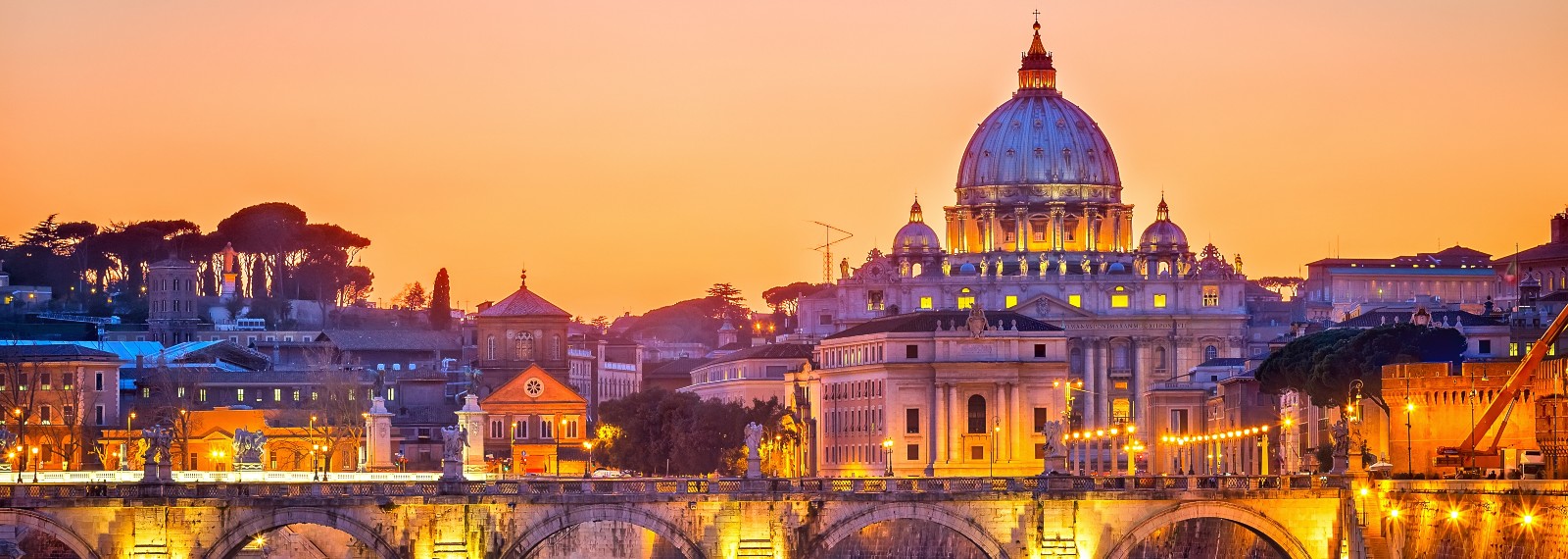
If many consider Italy to be the most beautiful country in the world, then imagine its capital! Rome is a name that merely speaking it evokes history and charm, conjuring images of gladiators, chariots and battles. Yet at the same time Rome is a city of the Church, because although the papal seat is in Vatican City – officially an independent state – the Catholic influence on the city is immensely powerful.
Since the foundation of the Roman Empire, which historians date to 27 BC, the city enjoyed absolute splendour, to the point that it is widely believed Rome was the first metropolis in human history, and simultaneously the most powerful, beautiful and wealthy city in the world for at least 1,000 years: consider that the population Rome had at the birth of Christ wasn’t matched by London until 1800. Absolute symbols of this period are the Colosseum, the Roman Forum, the Circus Maximus, the Catacombs and Caracalla’s Baths, to name just a few.
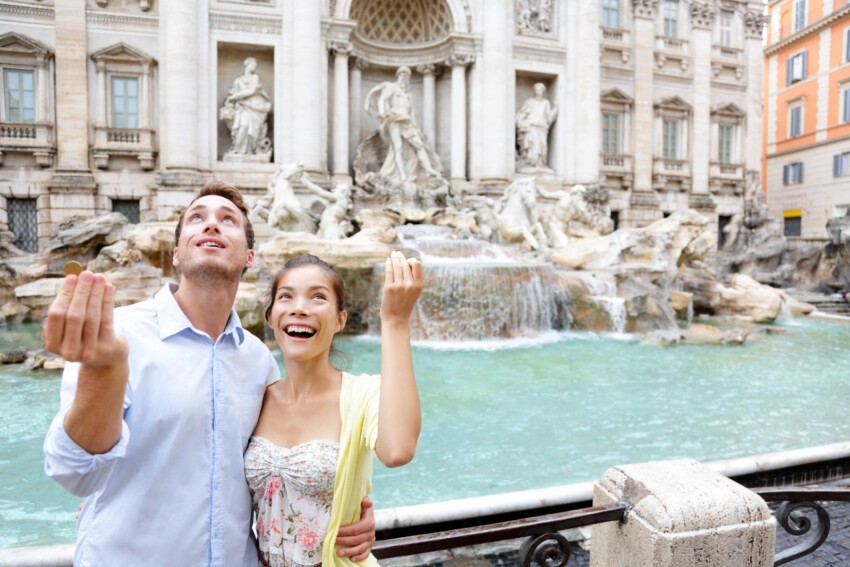
Roman civilisation influenced the culture, language, art, architecture and law of subsequent centuries, so much so that the immense historical heritage that has survived to the present day shaped the history, customs and traditions of all Italy. During the Middle Ages Rome suffered a sad decline, ransacked by invaders and abandoned by the popes, but in the Baroque era the city, especially thanks to Pope Sixtus V, literally came back to life. A symbol of this Roman renaissance was the construction of St Peter’s Basilica in Vatican City, completed in 1626, which together with the Trevi Fountain and Piazza Navona represent the highest expression of Baroque Rome.
In the last century, Rome was the emblem of Italian la dolce vita, recounted by Fellini in his eponymous film, one of the most important international capitals and frequented by the jet set from around the world. This was the period of Rome’s unbridled expansion, which today with nearly 3 million inhabitants is the most populous city in Italy and the third in the EU after Berlin and Madrid, and at the same time is the largest municipality in both Italy and the EU.
There’s no use beating about the bush: if you can, avoid visiting Rome in summer! Put this way it might sound like heresy, but bear in mind you’ll encounter sky-high prices, unpleasant temperatures and massive crowds. Unfortunately, being one of Europe’s most visited cities and the main stop on any Italian itinerary, Rome is literally besieged during the warm months. This translates into mile-long queues at the entrance to major monuments, the feeling of never being alone in churches and museums, and obviously greater difficulty finding space in hotels and restaurants. Not to mention the perpetually crowded public transport.
If possible, visit Rome in late spring or early autumn, namely in April-May and September-October, when the weather is mild, days are still long, prices considerably lower and crowds significantly smaller. Of course, as Rome is one of the country’s most visited cities, you’ll never be completely alone and there will always be someone at your side in the museums or at the monuments, but at least everything will be far more manageable.
Rome’s low season, which roughly coincides with the months of November, January from Epiphany onwards, February and March, sees hotel prices drop and crowds disappear. Unfortunately, however, Rome’s climate during this period isn’t ideal – the weather is dreary, days are short, trees are bare – and generally it’s not the best time to visit the city as certain areas are hardly accessible, such as squares with outdoor seating or city parks.
The Christmas period is in a category of its own, roughly coinciding with December, starting from the Immaculate Conception bridge. During this time of year Rome dresses for celebration, and you could say the anticipation of Christmas in the city makes the air truly magical, with lights, decorated Christmas trees and Christmas markets, set up both in Piazza Navona and in other areas of the city. In December the cold, rain and short days are more than compensated by the beauty of the festive lights, the unique atmosphere that the capital’s historic monuments display and the general festive spirit you breathe throughout the city.
The things to see in Rome are countless, ranging from the imperial era to the Baroque period, passing through, of course, Vatican’s enormous artistic heritage. The city is very vast and plotting a single walking itinerary is impractical: it’s much better to divide it into zones, to visit on different days, based of course on your interests and priorities.
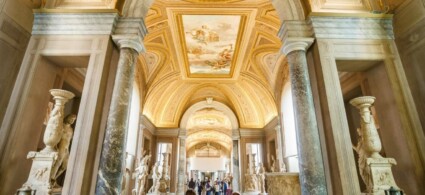
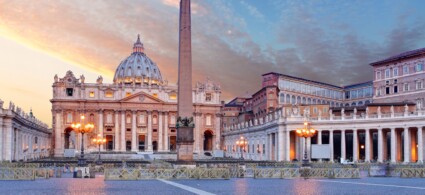
For example, you might want to start your Rome visit from Vatican City, the world’s smallest state, entirely contained within the heart of the city. Begin your visit with the enormous and beautiful St Peter’s Basilica, which overlooks the piazza of the same name, and continue with a thorough visit to the Vatican Museums, called in the plural precisely because they are many museums in one. Of these, the most famous and visited attraction is the Sistine Chapel, with Michelangelo’s frescoes representing the highest expression of the artist. After an overdose of art, enjoy a stroll through the Vatican Gardens, also part of the Museums. They alone occupy half the territory of Vatican City, and will allow you to enjoy a taste of nature surrounded by statues, fountains, lawns and orchards.
Vatican City is located east of central Rome, on the left bank of the Tiber, which notably is the side less rich in tourist attractions. But before crossing it and reaching the centre, enjoy the wonderful Castel Sant’Angelo, where inside you can admire collections of furniture and paintings in Renaissance apartments. Then head south, where the Tiber curves. It’s here, in its shelter, that you’ll find the historic Trastevere neighbourhood, characteristic and original, where Roman tradition is still preserved. A former working-class district now revitalised, whose heart is represented by Piazza Santa Maria in Trastevere overlooked by the church of the same name, rich with golden mosaics.
It’s time to return towards the centre, crossing the Tiber at one of its many bridges, among which the most famous are the Ponte Sant’Angelo situated in front of Castel Sant’Angelo, Ponte Milvio made even more famous by the film 3 metres above the sky and its padlocks, and the bridges that cross Tiber Island, of which Ponte Fabricio is Rome’s oldest, dating back as far as 62 BC.
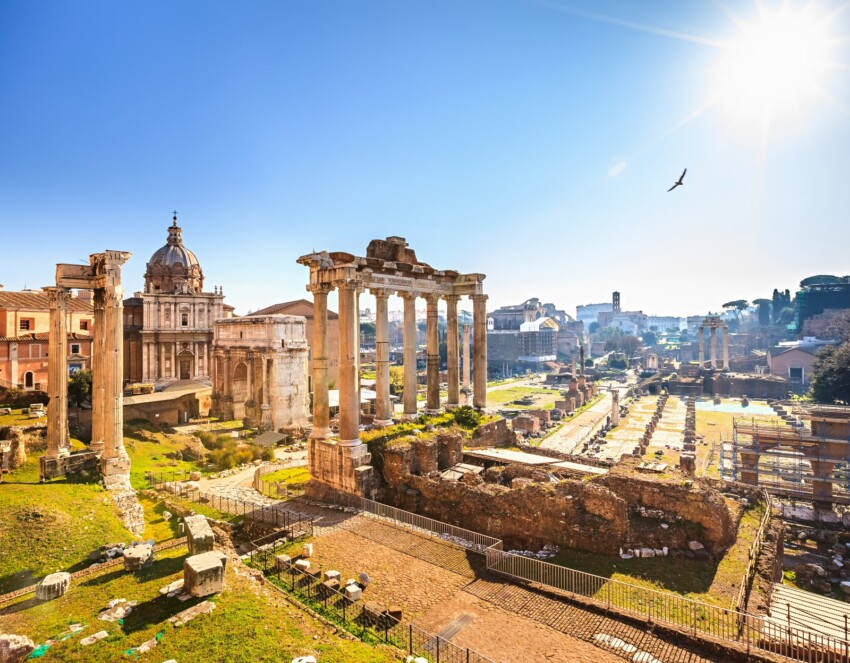
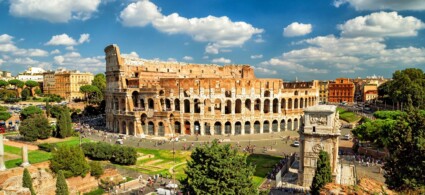
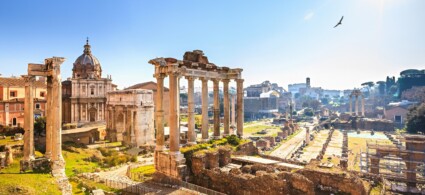
In the centre, you can plan an itinerary covering all the most important monuments of ancient Rome, starting with the Colosseum, or Flavian Amphitheatre, originally used for gladiatorial games and which immediately became the absolute symbol of the city. Then head to the Roman Forum, a vast archaeological area where you can admire Roman temples, squares and ancient buildings dating back over 2,000 years. We’re in the heart of the so-called Colosseum Archaeological Park, which also includes Palatine Hill, where the ruins of ancient imperial palaces can be found. A must-see is a visit to the Domus Aurea, ancient palace of the Emperor Nero, who wanted it grand, sumptuous and immense, so much so that its magnificence has survived to the present day.
If the echo of ancient Rome isn’t for you, you can create a tailor-made itinerary covering the main beauties of Renaissance or Baroque Rome. For example, from the Colosseum you can head north towards the Trevi district, which gives its name to one of Italy’s most beautiful fountains, namely the Trevi Fountain. From here depart the streets of central Rome, which in just a few minutes’ walk allow you to visit beauties of the calibre of the Pantheon, Piazza Navona and Piazza di Spagna. Central Rome is entirely traversed by Via del Corso, just under two kilometres long, one of the city’s most important streets, connecting Piazza del Popolo, at the northern end, with Piazza Venezia to the south, overlooked by the majestic Altar of the Fatherland, built in honour of Italy’s first king and the soldiers of the First World War.
After so much wandering through Rome’s streets, it’s time to relax. What could be better than dinner at a restaurant? Look for a traditional trattoria that offers you the best Roman cuisine and traditional dishes. Without going too far, we recommend the Trastevere area and the area around Campo de’ Fiori, full of typical trattorias and unpretentious little places where you can enjoy the best local specialities at reasonable prices. If you opt for Campo de’ Fiori, know also that it’s one of Rome’s nightlife zones, and you can therefore have fun until morning in one of the many venues overlooking it, from pubs to beer halls, through to nightclubs and clubs.
Discover Rome through the eyes of expert guides who will take you on a tour of the city's hidden treasures. Participating in a guided visit or a free tour will allow you to capture the true essence of Rome.
The free tours are a viable alternative to traditional guided tours. They work like this: participation is free and at the end of the visit you can leave a tip at your discretion. Below you will find our favourite free tour, otherwise you can see the full list by visiting this page.
Rome is located in the heart of Italy, and sits at the centre of the country’s road and rail network. It is therefore easily accessible from practically any city. Furthermore, it has two airports, making it connected to every part of the world.
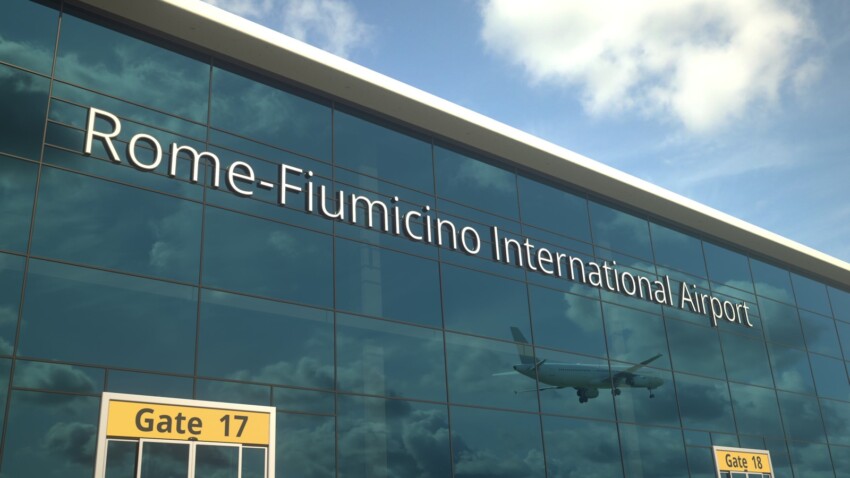
Rome’s main airport is Fiumicino, a municipality of Rome on the Tyrrhenian coast. It’s located about 30 kilometres from the city centre and is Italy’s first airport by passenger numbers. Dating from the early 1960s, it has two terminals and three runways, and connects Rome with many Italian airports, especially in southern Italy. At the same time, it’s served by almost all European flag carriers and many non-European ones. From Fiumicino you can reach central Rome by buses to Termini Station or by the dedicated Leonardo Express train.
Rome’s second airport is Ciampino, named after Giovan Battista Pastine. It’s the capital’s city airport, located just beyond the Great Ring Road and falling within both the municipal territory of Rome and that of Ciampino. Until the 2000s the airport was used mainly for military and institutional purposes, but from 2002, especially thanks to the arrival of low-cost carriers, it experienced incredible growth, registering up to 6 million passengers a year. It’s connected to Rome via regional trains departing from Ciampino station (reachable by taxi or bus), or by bus from the airport to Anagnina station, the terminus of the Line B metro.
Many will find it convenient to reach Rome by train, as its main railway station, Termini, is Italy’s hub for high-speed trains. From Milan it takes just over 3 hours, from Bologna just over 2 hours, from Florence and Naples around an hour and a half. Rome is also served by Intercity trains running on the Tyrrhenian Railway which passes through all of Tuscany and Liguria, and trains to the Adriatic coast which cross Italy horizontally passing through Orte, Terni, Foligno and Fabriano.
Finally, Rome can be reached by car as it’s crossed by numerous motorways: the A1 Milan-Naples, the A12 Genoa-Rome (under construction), and the A24 Rome-Teramo. Journey times are longer than by train, but nonetheless competitive, especially for those living far from major stations or near motorway exits.
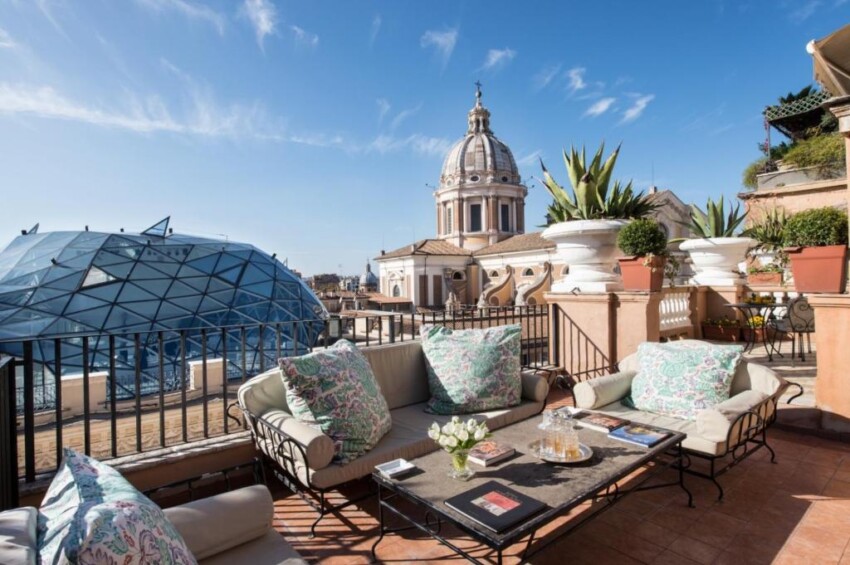
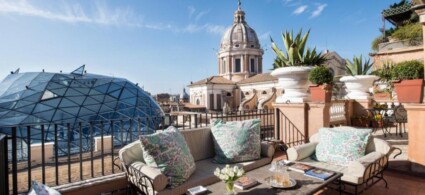
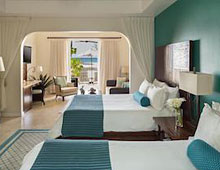
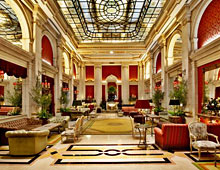
Rome boasts a vast array of hotels, ranging from ultra-luxury establishments to hostels: choosing the right accommodation for your stay in the city is simply a matter of personal style and budget. Beyond traditional hotels, you’ll find numerous alternative options, such as bed and breakfasts and apartments, often located within historic buildings in the city centre.
The best area to stay in Rome is entirely subjective. Many would suggest the city centre area, bounded by the Trevi Fountain, Piazza di Spagna and Piazza Navona, where you’ll have Rome’s principal monuments within easy reach and can explore comfortably on foot. True, but it’s equally true that prices here are considerably higher and the area attracts a heavy flow of tourists—perhaps too many.
You might prefer to venture slightly further out and immerse yourself in the charm of ancient Rome by staying near the Colosseum, the Roman Forum or the Circus Maximus, where ruins and archaeological parks are readily accessible, though you’ll need to use public transport to reach other attractions.
Staying in the Termini district is particularly convenient, especially if you arrive by train, as you can drop your luggage at your hotel immediately without having to drag your suitcase around the city. The choice of accommodation here is wide and varied, though do check the quality carefully, as standards can be inconsistent.
Alternatively, if you’d like to experience Rome as locals do, consider staying outside the centre, perhaps in the Trastevere neighbourhood, which still boasts plenty of tourist attractions alongside numerous bars and restaurants for dinner and evening entertainment.
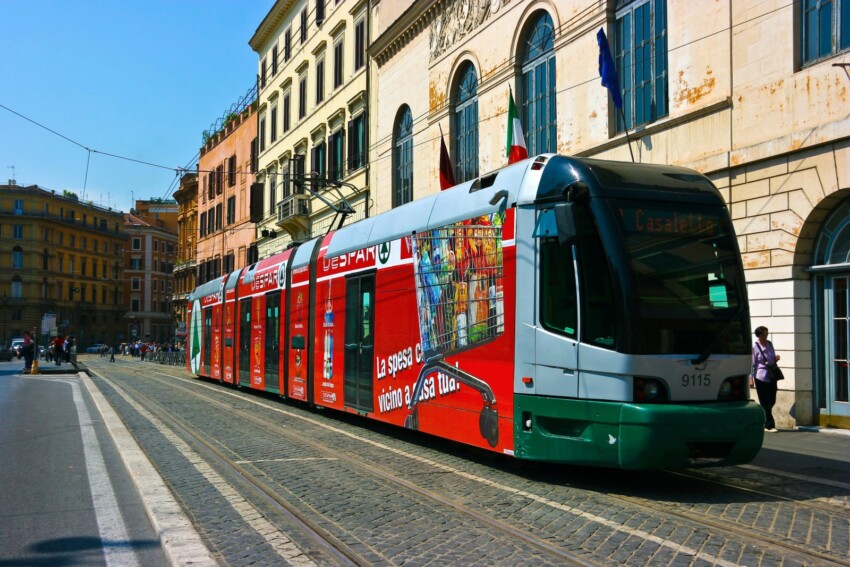
Rome is a sprawling city where monuments are often spread far apart. During your stay, you’ll almost certainly need to rely on public transport.
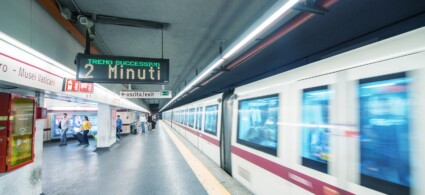
Start with the underground railway: it consists of just two lines, designated A and B and identified by red and blue respectively. This is limited compared to cities of Rome’s size and insufficient to cover such a vast area. Still, the Rome Metro remains convenient for reaching Termini station, the Colosseum and Piazza del Popolo. For other attractions, you’ll likely need to use buses.
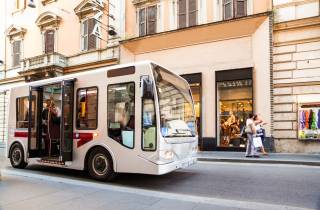
Speaking of buses, there are plenty of them, including night services. Rome’s bus network is extensive and will get you to virtually every corner of the city. These are supplemented by several tram lines, though these often don’t serve the main tourist routes, plus of course numerous taxis. Be warned: fares can be quite steep.
Finally, you can choose to drive around Rome, whether in your own car or a hire car. Rome’s traffic is complex, as is finding parking, particularly if you’re unfamiliar with the city. If you’re bringing your own vehicle, it’s almost essential to choose a hotel with private parking. That said, having a car is nearly indispensable for organising excursions beyond the city or day trips.
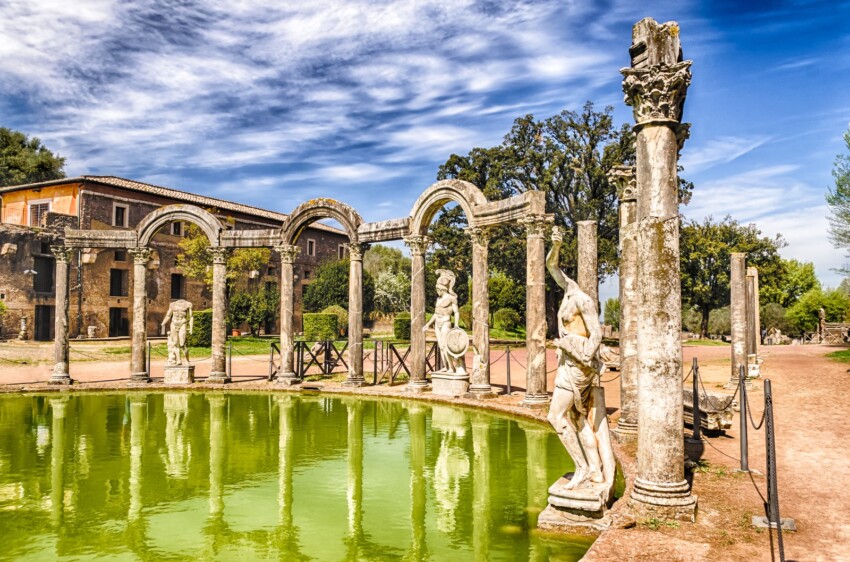
Rome sits at the heart of Lazio and is so rich in attractions that if you only have a few days, dedicating one to an excursion may not make sense. However, if you’re staying longer, Rome’s surroundings offer some genuinely remarkable sites and experiences.
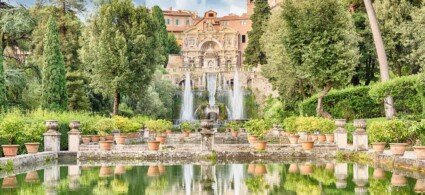
If you want to maintain your focus on art and history, make straight for Tivoli, a town in Rome province less than 40 minutes’ drive to the west, home to two breathtaking attractions: Villa d’Este, a masterpiece of Italian Renaissance architecture and a true gem, and Villa Adriana, which encompasses the ruins and archaeological remains of a vast villa complex built around 120 AD by the Roman Emperor Hadrian.
Alternatively, to explore the surroundings of Rome, particularly upper Lazio, head towards the beautiful Lake Bracciano, entirely contained within the Bracciano-Martignano Regional Nature Reserve. Several charming villages are worth visiting, including Anguillara Sabazia, Trevignano Romano and Bracciano itself, which lends its name to the lake.
Venturing further north into Viterbo province, you’ll encounter first the small Lake Vico, followed by the more famous Lake Bolsena, home to the appealing towns of Capodimonte, Montefiascone and Bolsena. Take time to explore the provincial capital Viterbo, and visit two of the area’s most interesting attractions: the Park of the Monsters in Bomarzo and the abandoned village of Civita di Bagnoregio, made famous by its many appearances in films and television series.
Among the most popular day trips from Rome is a visit to the Castelli Romani area, a zone south-west of the capital built around the Alban Hills. Here you’ll find numerous villages, fortifications, churches and—naturally—castles, along with a wealth of archaeological remains from ancient Rome. Among the most famous Castelli Romani towns are Castel Gandolfo, whose Papal Palace served as the papal residence until the papacy of Benedict XVI, and also Frascati, Ariccia and Grottaferrata. Don’t leave the area without visiting Nemi, which offers stunning views.
Finally, remember that Rome is close to the sea. In fact, administratively it’s a coastal city, as its district of Ostia sits on the Tyrrhenian coast. So if you’re in Rome during summer and fancy a break from art and culture, take a bus or train to relax on Ostia’s beaches, or head south to discover the Lazio coastline, passing through Anzio, Sabaudia, San Felice Circeo, Terracina and Sperlonga, destinations well-loved particularly by beach enthusiasts.
City Card allow you to save on public transport and / or on the entrances to the main tourist attractions.
 Hotel
Hotel 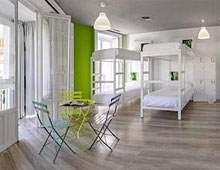 Budget accommodations
  Apartments
  Family Hotel
  Luxury Hotel
  Resorts